
Unbiased headlines. Facts, not spin.
Every story is an unbiased news briefing written from 110+ sources across the spectrum — sources linked so you can verify it yourself.
 politics
Notable (6/10)
July 23, 2026 at 10:16 PM
politics
Notable (6/10)
July 23, 2026 at 10:16 PM
India Cuts Mobile Internet Near Delhi Protest Site for Sixth Time in a Week as Modi Government Faces Student-Led Movement
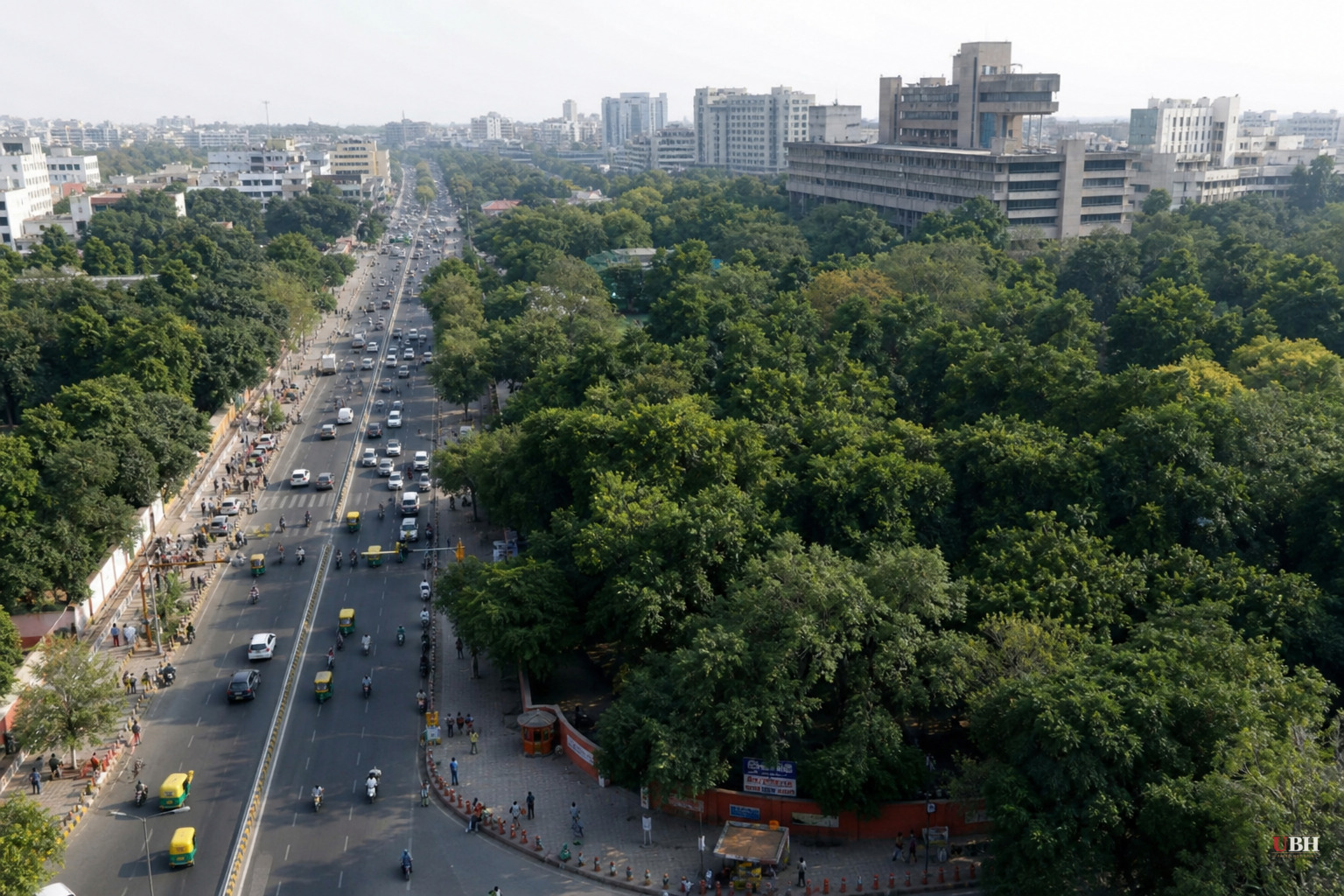
India's government shut off mobile internet again around Delhi's Jantar Mantar protest site on Thursday, July 23, 2026. It's the sixth such order in a week, according to the Indian Express. The Ministry of Home Affairs said the suspension was necessary "in the interest of public safety and averting public emergency" and to prevent "incitement to the commission of any offence."
The shutdown covers a 1.5-kilometer radius around Jantar Mantar, reaching as far as the Mandi House metro station nearly two kilometers away, the Indian Express reported. It was originally set to lift at 4 p.m. but got extended until midnight, according to an industry executive cited by the outlet.
Vendors, shopkeepers and restaurants in the area told Reuters they couldn't accept digital payments. An Airtel text message reviewed by the Indian Express, sent to a customer near Mandi House, read: "Dear customer, as per Government directive, internet services have been temporarily stopped in your area. Inconvenience caused is regretted." Mandi House isn't even the protest epicenter. It's a business district that got caught in the blast radius.
What Sparked This
The protests, now in their 34th day according to NDTV, are led by a group calling itself the Cockroach Janta Party. They want Education Minister Dharmendra Pradhan gone over leaked medical school entrance exam papers that affected roughly 2 million students in May, according to Reuters. Several student suicides have been linked to the fallout, per Reuters reporting.
This has become the biggest youth-driven challenge to Prime Minister Narendra Modi since he took office in 2014, and the biggest political crisis of his third term, which began in 2024. Opposition parties have piled on, disrupting the monsoon session of parliament that opened this week.
Tens of thousands of protesters tried to march on parliament this past Monday, July 20. Police used batons against demonstrators, according to Reuters photo documentation from that march. CJP spokesperson Ashutosh Ranka said in a statement carried by Geo.tv that it was a "positive development" Modi had finally acknowledged the crisis after a month and a half of protests, adding sarcastically: "Perhaps his foreign visits are over, and he has returned to India."
Both Sides Dug In
The government says it has reached out four times for talks without a response, according to NDTV. Union Minister Jitendra Singh said after meeting Home Minister Amit Shah that "the government's doors are open always for talks with students," offering to meet at BJP president J.P. Nadda's residence or office. The CJP says it will only meet at "a neutral place near Jantar Mantar," per NDTV.
CJP spokespersons Saurav Das and Ashutosh Ranka did meet with Nadda on Monday, the same day protesters marched on parliament, and the party says it handed over a letter outlining its demands. Contact has occurred, though the two sides disagree on whether that counts as real negotiation.
Section 163 of India's Bharatiya Nagarik Suraksha Sanhita, which bans large public gatherings, has also been imposed outside Home Minister Amit Shah's residence, with police issuing warnings in that area, according to NDTV. All shops and restaurants in the Connaught Place business district were ordered shut after 6:30 p.m. Thursday following an advisory from the New Delhi Traders Association.
Delhi's opposition figures pounced. AAP chief Arvind Kejriwal shared the traders' advisory on X and asked whether the government was planning a crackdown at Jantar Mantar overnight. Delhi Police pushed back directly, stating: "There is no plan of Delhi Police to crack down on the ongoing protest tonight as is being conveyed. You are advised to refrain from spreading or circulating any misleading/unverified information." No crackdown has been confirmed or reported as having occurred.
The Free-Speech Problem
India has used targeted internet shutdowns before during unrest, with the government arguing they curb misinformation and prevent the kind of violence that can spiral out of a large, angry crowd. Crowds can turn, and misinformation spreads fast on encrypted apps.
But the tradeoff is real. These shutdowns knock out digital payments, app-based transport, navigation and communication for anyone in the zone, protester or not, according to the Indian Express. Sixteen metro stations were closed around the protest zone, according to ZeroHedge, cutting off tens of thousands of ordinary commuters who have nothing to do with the demonstrations. That's a blunt instrument hitting a lot of people who never showed up to protest anything.
No independent, verified evidence has been presented in these sources that the shutdowns have actually prevented violence, as opposed to simply suppressing coordination and coverage. A government claiming a public-safety justification for a tool that also happens to make it harder for protesters to organize, for reporters to document police conduct, and for businesses to function raises questions about whether the safety rationale is actually driving the calls or being used as convenient cover.
The protests have already spread beyond Delhi to Ranchi, Pune, Thiruvananthapuram and Kolkata, according to local media cited by ZeroHedge. Nationwide demonstrations were called for Friday, July 24. Whether Modi's government sits down at a neutral location, as the CJP demands, or whether Education Minister Pradhan stays in his post regardless, remains unresolved as of Thursday night.
Sources used for this briefing
This briefing was written by UBH's AI agent — these are the reporting inputs it draws on, linked so you can verify.


