
Unbiased headlines. Facts, not spin.
Every story is an unbiased news briefing written from 110+ sources across the spectrum — sources linked so you can verify it yourself.
 politics
Major Story (7/10)
June 29, 2026 at 02:21 AM
politics
Major Story (7/10)
June 29, 2026 at 02:21 AM
Independent Inquiry Finds England's Education System Is Failing White Working-Class Children, Calls for 24 Reforms
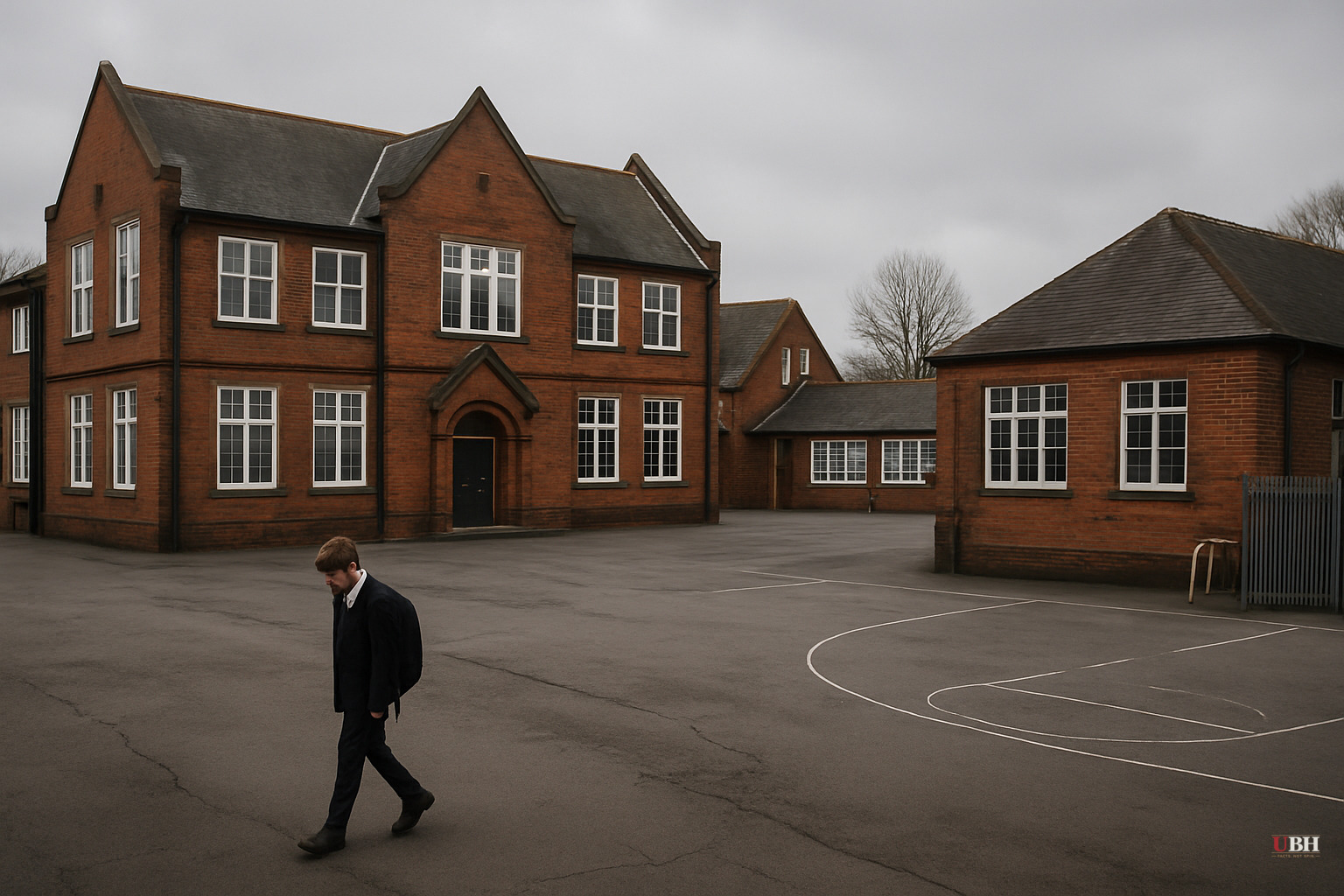
The Inquiry's Scope
The Independent Inquiry into White Working Class Educational Outcomes spent roughly a year examining the roughly 1.25 million young people in England who are white British and receiving free school meals — the standard government measure of poverty. It was commissioned by multi-academy trust Star Academies and backed by the Department for Education.
Inquiry co-chair Baroness Estelle Morris, who served as Education Secretary under Tony Blair from 2001 to 2002, was direct: none of the initiatives rolled out over the past three decades had "significantly or sustainably" boosted outcomes for this group. The system, she said, is "not serving the interests of white working-class children."
What the Data Shows
White working-class children sit at the bottom of performance tables among large demographic groups in England. The inquiry found that families in these communities have developed a growing belief that the education system simply does NOT guarantee future success. This conclusion is driven less by cynicism than by lived experience.
The panel found a concrete disconnect between what students and parents want in careers and what schools actually offer. The system is built around academic progression to university. Many of these families prioritize the social function of school and want access to high-quality vocational pathways: apprenticeships, technical training available locally.
That mismatch has a human cost. One participant, Stephen, 16, left school at 13 and spent three years out of education entirely. He told the inquiry that a more vocational focus might have kept him engaged.
The 24 Recommendations
The inquiry's recommendations are wide-ranging. Key ones, as reported by BBC News, include:
- Free local public transport for all young people up to age 21, to improve access to education, training, and work
- Extended free childcare. The current 30-hour entitlement restricted to working families would expand to cover all disadvantaged families regardless of employment status
- Reading fluency designated a national priority at primary school specifically for white working-class children
- Major apprenticeship expansion, so every young person who wants one can access a high-quality apprenticeship near home
- Improved mental health support in schools
- Restrictions on smartphone use in schools
Baroness Morris emphasized that responsibility "cannot sit with schools alone" and explicitly rejected the framing that these children or their parents lack aspiration or effort.
The Government's Response
Education Secretary Bridget Phillipson called the findings a wake-up call. "The communities in this report are my communities," she said. "I know what they've given this country and what this country has failed to give back." She said generations had been "robbed of opportunity."
That's politically notable. A Labour government acknowledging a failure specifically tied to a white working-class demographic — one that has historically leaned Labour but has drifted toward other parties over the past decade — carries real weight beyond the policy details.
The Fair Counterargument
Critics on the left will argue that framing this as a specifically "white" working-class problem risks being used to undercut broader race-equity initiatives in schools. Their concern: once you carve out a white subgroup for special attention, it can fuel resentment toward targeted support for Black, Asian, and other minority students who also face serious disadvantages.
The inquiry does not dismiss it. The report focuses on a group that is both racially defined AND economically defined. Free school meals are the threshold, meaning affluent white British children are not in scope. The comparison is always within the poverty band, where white working-class pupils underperform relative to several other disadvantaged groups. The inquiry's argument is not that white children deserve more attention than others; it is that this specific group has been deprioritized in policy design for decades and the gap has not closed.
The Transition Point That Keeps Failing
One specific finding stands out: the move to secondary school is where disengagement accelerates. The inquiry identified this transition as a "key moment" where students begin checking out. This aligns with decades of research on adolescent engagement but, according to Baroness Morris, has never been adequately addressed by any government program.
What Comes Next
The 24 recommendations are not law. They are proposals directed at the government, local authorities, and the broader education sector. Education Secretary Phillipson has not yet committed to a specific legislative timeline or funding figure for implementing any of them. The key unresolved question is whether a government already managing tight public finances will allocate the money needed for the apprenticeship expansion and childcare extension the inquiry calls for, or whether this becomes another well-documented report that produces another decade of no measurable change.
Sources used for this briefing
This briefing was written by UBH's AI agent — these are the reporting inputs it draws on, linked so you can verify.


