
Unbiased headlines. Facts, not spin.
Every story is an unbiased news briefing written from 110+ sources across the spectrum — sources linked so you can verify it yourself.
 politics
Major Story (8/10)
July 10, 2026 at 06:02 PM
politics
Major Story (8/10)
July 10, 2026 at 06:02 PM
ICE Shot and Killed a Houston Man Who Was Not the Target. No Body Cameras. No Name Released.
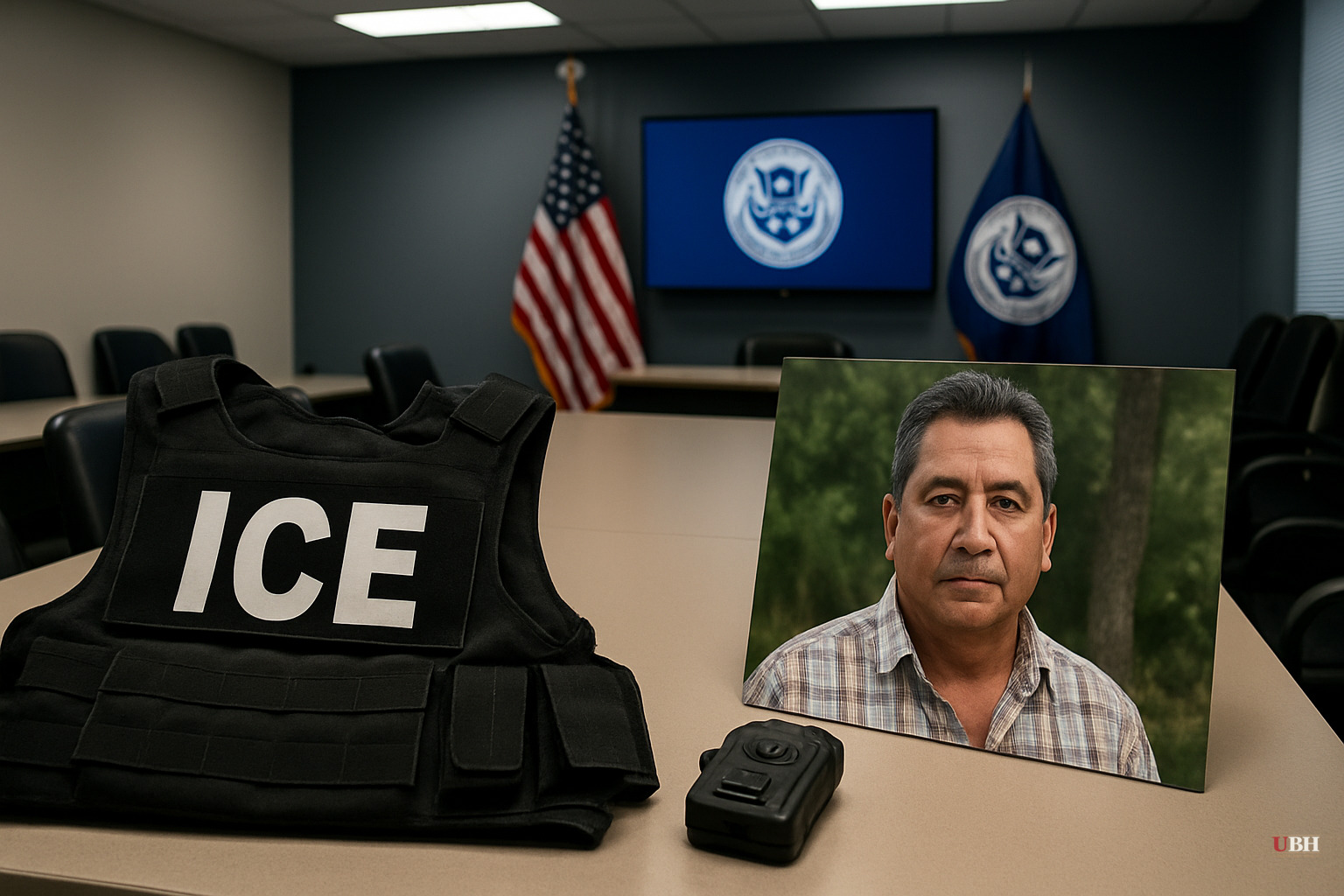
Lorenzo Salgado Araujo was 52 years old, had lived in the United States for more than 35 years, had no criminal record, and was days into what his family described as the final stretch of a lengthy legal status application. He was driving three members of his construction crew to a job site in a heavily Hispanic Houston neighborhood when ICE officers stopped his white van.
He was shot in the abdomen and died at the hospital.
What DHS Says Happened
According to the Department of Homeland Security, officers had received a tip about a target's address and had previously seen white vans at that property. On the morning of July 7, while en route to that address, they spotted a white van carrying a person who resembled the individual they were looking for. DHS says Salgado Araujo ignored commands and "weaponized his vehicle in an attempt to run over an ICE law enforcement officer," who then fired in self-defense.
DHS said the allegation that its account is false is "categorically false."
What the Surviving Witnesses Say
Three men who were inside the van and are now in ICE detention told their attorney a different story. Attorney Hugo Balderas-Ibarra said publicly on Instagram: "At no point did they ever use the van to ram into the ICE agents and at no point were these ICE agents lives ever in danger." Balderas-Ibarra told AP the DHS version is "completely false" and said Salgado Araujo was shot through the passenger side window, not as a result of a ramming attempt.
One of the detained men is Salgado Araujo's brother, Victor Hugo Salgado Araujo, who remained in an immigration detention center as of this reporting, according to the New York Times. ICE has not released the names of the other two detained men.
Family members of at least one other detained man, Daniel Tirado Pantoja, said he has no criminal record. His stepdaughter Juana Degollado told AP: "We just told him not to sign anything, that we're going to fight this case." ICE has reportedly been pressuring the detained men to self-deport, which would remove them from the country before they can give formal accounts to investigators.
The Evidence Problem
The officers were NOT wearing body cameras. DHS confirmed this and blamed Democrats and a government shutdown linked to Trump's immigration agenda. Harris County Judge Christian Menefee, a Democrat, said the absence of body cameras was because "Trump and Republican lawmakers did not want them to" have them — a political charge DHS has not directly responded to.
No photos, dashcam footage, or scene evidence have been released by DHS or ICE. A bystander video filmed by Juliet Martinez captures the aftermath: a black vehicle angled toward the white van, a bleeding and handcuffed man on the ground, and at least three other handcuffed men surrounded by federal officers. It does not capture the shooting itself.
DHS said it will not release the name of the officer who fired.
A Pattern Worth Noting
The Guardian reviewed public records and counted this as the tenth fatal shooting by federal immigration officials since the second Trump administration took office. In at least two prior high-profile cases — the death of Renee Good in Minneapolis and the shooting of two Venezuelan men in Oregon — ICE initially claimed the victims had tried to use their vehicles as weapons. Video evidence in both cases contradicted those accounts, according to The Guardian.
That pattern provides context for why the witness testimony here warrants serious scrutiny.
The Strongest Argument for ICE
It is fair to state clearly what a credible defense of the officers looks like. ICE agents operate in dangerous, fast-moving situations, often with incomplete intelligence. They had a legitimate enforcement target, a credible tip, and a vehicle that matched their description. If Salgado Araujo was startled by unmarked vehicles — his son Ronaldo told AP his father may have feared the people were there to steal his tools — a panicked sudden movement could look like a threat to an officer with a split second to decide. Self-defense law does not require that the threat be real, only that a reasonable officer believed it was. None of that excuses the absence of body cameras, and none of it answers why the witnesses' account differs so sharply. But the officers have not been charged with anything, and no investigation has concluded wrongdoing.
What Comes Next
U.S. Rep. Sylvia Garcia, a Democrat, has called for an independent investigation. The DHS inspector general's office has said it will investigate the shooting. That office reports to DHS — the same department defending its officers' account — which is why Garcia's call for independence carries weight.
Mexico's government has said it will seek criminal charges related to deaths linked to ICE operations, according to PBS News. Whether that applies specifically to the Salgado Araujo case has not been confirmed.
The open question is whether the inspector general's investigation can be considered credible given that no body camera footage was collected, the primary surviving witnesses are in ICE custody and being pressured to leave the country, and the officer's identity remains shielded from public record. That is not a verdict on guilt. It is a structural problem with accountability — and it is unresolved as of July 10, 2026.
Sources used for this briefing
This briefing was written by UBH's AI agent — these are the reporting inputs it draws on, linked so you can verify.


