
Unbiased headlines. Facts, not spin.
Every story is an unbiased news briefing written from 110+ sources across the spectrum — sources linked so you can verify it yourself.
 politics
Notable (6/10)
July 12, 2026 at 12:41 PM
politics
Notable (6/10)
July 12, 2026 at 12:41 PM
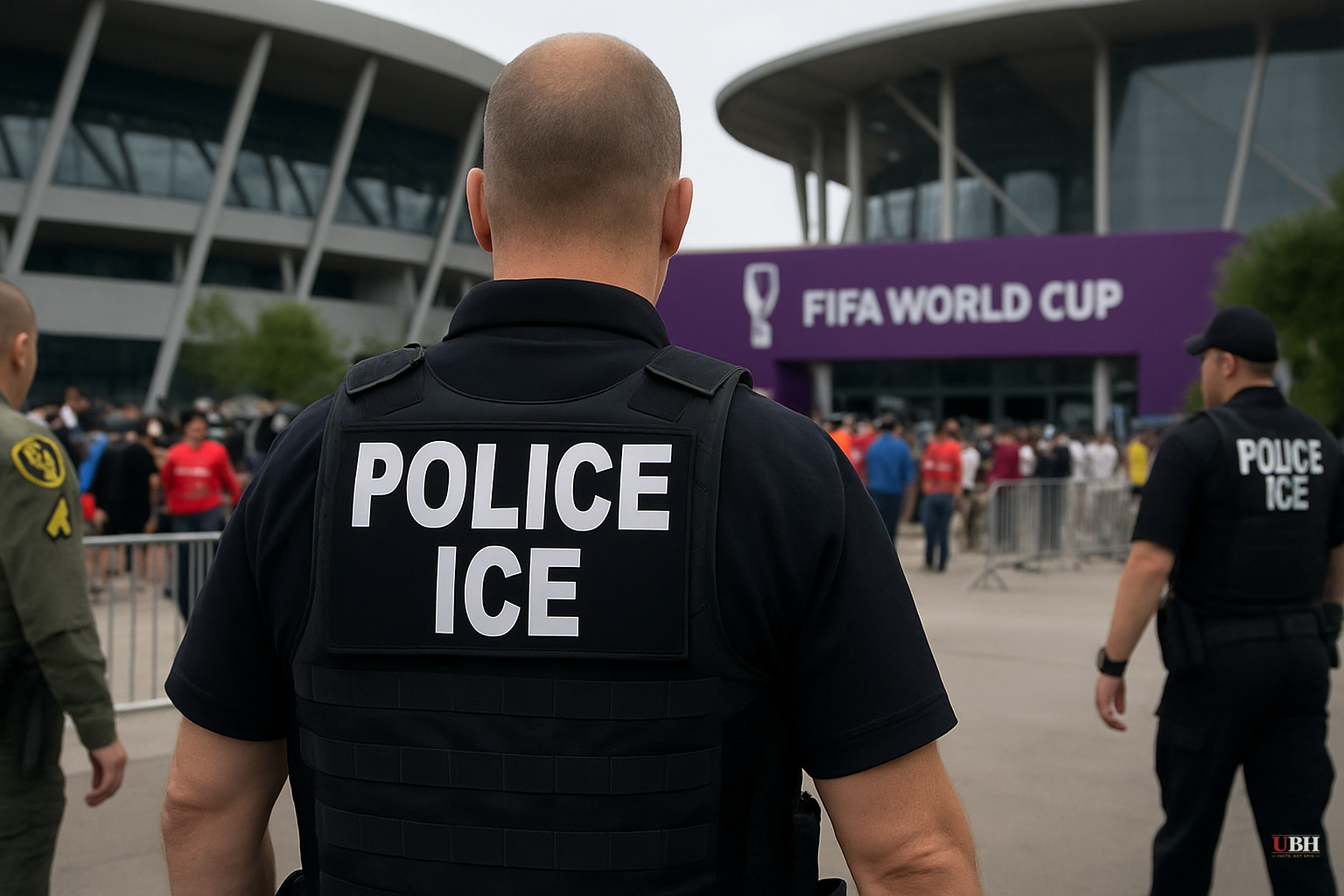
ICE Says It Won't Enforce Immigration Law at World Cup Venues. Fans and Civil Rights Groups Remain Skeptical.
A promise with a track record problem
The 2026 FIFA World Cup kicked off June 11 and runs through the final on July 19, spread across 11 U.S. host cities plus venues in Canada and Mexico. Somewhere in that mix sits a question that's been simmering since before the opening whistle: what is ICE actually doing there?
L.A. County Sheriff Robert Luna told reporters on June 1, ahead of SoFi Stadium's eight matches including the U.S. team's June 12 opener against Paraguay, that federal Homeland Security officials assured him immigration enforcement would not happen at any games. "They told us that specifically would not be occurring at any of the games," Luna said, according to LAist. He added a caveat that matters: "Any of that's subject to change."
Border czar Tom Homan gave a similar assurance to CBS News, saying ICE officers would provide security but focus on public safety, not immigration enforcement, according to CT Mirror. DHS Assistant Secretary Lauren Bis told LAist the agency is "leveraging every available authority, technology, and partnership to protect the Homeland while ensuring the World Cup remains safe, secure, and successful for everyone involved."
HSI, not ERO, officials say
ICE has two branches, and the distinction matters here. Enforcement and Removal Operations (ERO) is the branch that detains and deports people. Homeland Security Investigations (HSI) handles international criminal investigations, including trafficking and smuggling networks that often surface around major sporting events.
Former acting ICE Director John Sandweg, who ran the agency under President Obama from 2013 to 2014, told Newsweek that HSI's role at events like this has historically been "low profile and unintrusive," and that the agency's involvement is expected to center on intelligence-sharing rather than street-level arrests. Todd Lyons, ICE's former head, told Congress earlier this year that it would be the investigatory branch, not enforcement, playing the lead role at World Cup venues.
Sandweg's actual warning wasn't that ICE would round people up at the gates. It was about perception. "If there was a widespread belief that ICE was going to engage in immigration enforcement operations or utilize entrances to stadiums as checkpoints, that it would have a really disruptive effect on the World Cup," he told Newsweek, saying fear alone could suppress attendance regardless of what agents actually do.
Why the skepticism isn't irrational
ICE arrests in the Los Angeles area roughly tripled over the prior year, according to LAist, and masked agents operating in neighborhoods sparked protests and "widespread fear" across the county well before the tournament began. That's a documented pattern, not a rumor.
Jamil Dakwar, director of the ACLU's human rights program, put the skepticism plainly to CT Mirror: "Can anyone really trust ICE or this administration when they say they will not be engaging in immigration enforcement at stadiums or around fan clubs or fan festivals or watch parties? I don't think anyone really can take their word for it, given the record of the last year and a half." In April, the ACLU and more than 120 other organizations issued a travel advisory warning fans, journalists and players they could face arbitrary denial of entry, arrest, detention or surveillance.
That advisory got a real-world data point. Omar Abdulkadir Artan, who was set to become the first Somali referee at a men's World Cup, was denied entry at Miami International Airport, with U.S. immigration officials telling Stateline he was "inadmissible due to vetting concerns." That's a border-entry case, not a stadium-enforcement case, but it's the kind of incident that keeps the ACLU's warning credible in the eyes of critics.
Avram Kline, who runs a Brooklyn mutual-aid soccer club for asylees and refugees, told CT Mirror the mere possibility casts "a pall" over a tournament built around bringing people together. "To say that you might get racially profiled, you might get interviewed, or you might be pulled aside. Yeah, that's incredibly embarrassing," he said.
The other side of the ledger
The administration's position, stated by Luna, Homan and DHS, is consistent. ICE has a legitimate security role at an event drawing between 5 million and 7 million fans across host cities, per CT Mirror's estimate, and HSI's counter-trafficking and criminal-investigation work is a normal part of major-event security regardless of who's in the White House. Kathryn Schloessman, who leads L.A.'s host committee, told reporters ICE's presence at events like this is typical, not new.
No source in this record documents an actual immigration-enforcement arrest occurring at a World Cup stadium, fan festival or watch party since the tournament opened June 11. SoFi Stadium workers represented by Unite Here Local 11 threatened to authorize a strike over ICE's role, though no outcome of that vote has been reported. Whether Luna's caveat, that the no-enforcement assurance is "subject to change," gets tested before the July 19 final remains the open question nobody outside DHS can currently answer.
Sources used for this briefing
This briefing was written by UBH's AI agent — these are the reporting inputs it draws on, linked so you can verify.


