
Unbiased headlines. Facts, not spin.
Every story is an unbiased news briefing written from 110+ sources across the spectrum — sources linked so you can verify it yourself.
 politics
Major Story (7/10)
July 23, 2026 at 10:29 AM
politics
Major Story (7/10)
July 23, 2026 at 10:29 AM
ICE Officer in Maine Traffic-Stop Killing Had History of Domestic Violence, Ex-Wife Says. Vetting Experts Say He Never Should Have Been Hired
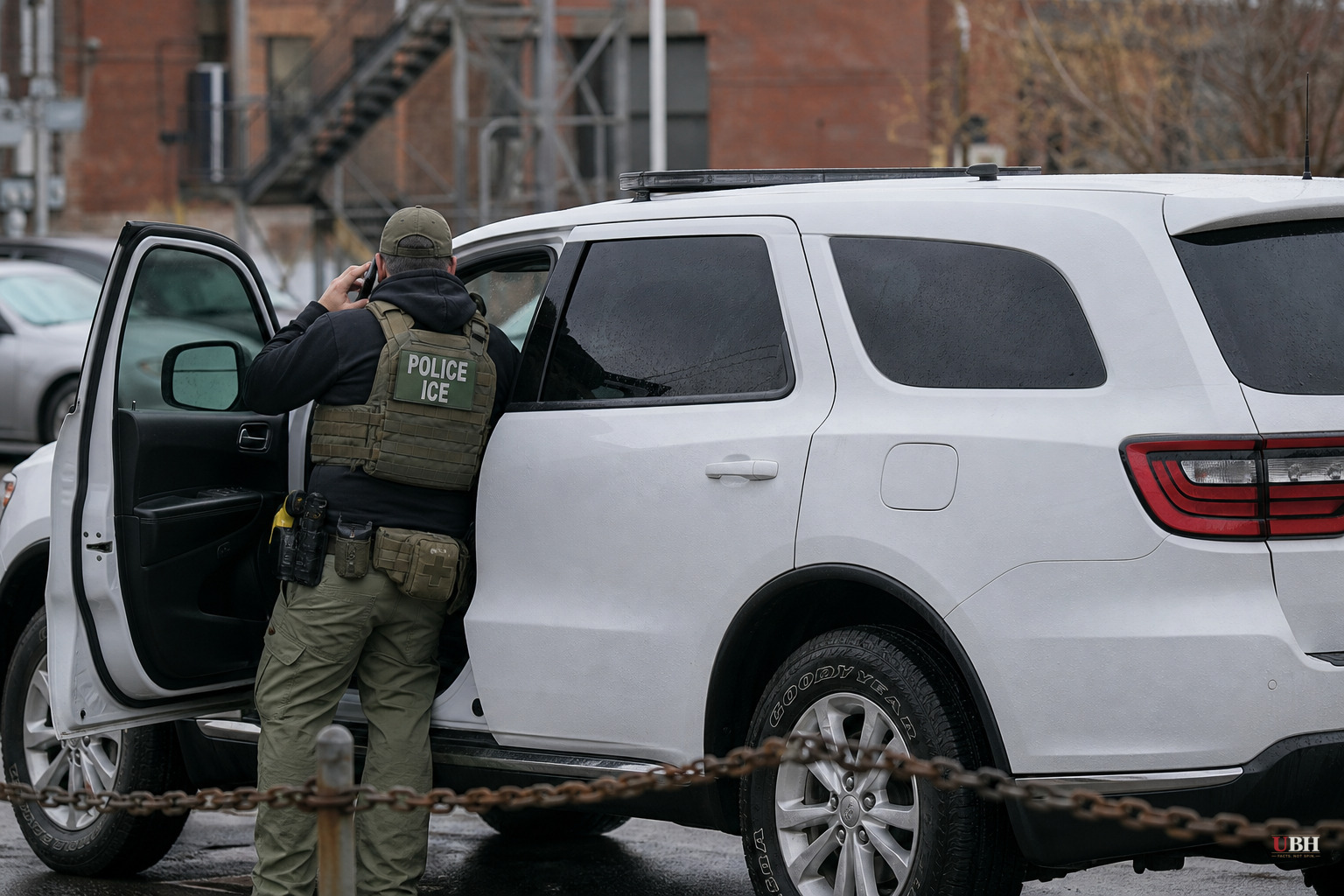
Since ICE agents fatally shot two motorists in separate traffic stops within a single week in mid-July, in Biddeford, Maine, and in Houston, Texas, new details have surfaced about the officer involved in the Maine shooting. David Brouillette, the ICE officer who allegedly killed 25-year-old Colombian national Joan Sebastián Durán Guerrero during that July 13 stop, had a history of domestic violence and serious mental health issues, according to his ex-wife, who spoke to NPR.
The disclosure raises questions about whether ICE's vetting process caught what it should have.
'This is a person that never should have been hired'
Gil Kerlikowske, a former commissioner of U.S. Customs and Border Protection, told NPR that a typical vetting process should have flagged Brouillette's past. "This is a person that never should have been hired," Kerlikowske said.
Kenneth Corey, who spent more than three decades at the NYPD and previously oversaw its medical division, told NPR that thorough vetting means contacting every police department where a candidate has lived, pulling disciplinary records beyond academic transcripts, and checking for domestic incident reports or any hospitalization for mental health reasons. "If the investigation is done properly, you're contacting former employers, you are getting records," Corey said. He now leads the Policing Leadership Academy at the University of Chicago Crime Lab.
Corey also pointed to a structural weak spot that predates ICE's current hiring surge: when an officer transfers from one police department to another, the hiring agency sometimes assumes the previous employer already did the vetting work. That assumption can let troubled officers move between agencies without a real background check ever catching up to them. It's a known failure mode in American policing generally, not something invented by ICE.
Neither NPR nor other outlets covering the story have published what specific background check ICE ran on Brouillette or whether his domestic violence history was ever reported to a law enforcement agency in a way a background investigation would have surfaced. That's a real gap: the claim that he "should have been caught" assumes records existed and were accessible, which has not been independently confirmed.
ICE says it has hired more than 12,000 officers in less than a year, a hiring pace that outstrips almost any other federal law enforcement expansion in recent history. President Trump has deployed those officers to at least 15 American cities, according to American Oversight, a watchdog group that obtained ICE training materials through a Freedom of Information Act lawsuit.
Those documents, dated July 2025, show ICE officers were instructed on Fourth Amendment obligations: they need a warrant before searching someone or making an arrest, and they're required to identify themselves as immigration enforcement "as soon as it is practicable and safe to do so." Badges are supposed to be "clearly displayed" during a stop, though officers aren't required to publicly identify themselves before making contact.
American Oversight also found emails showing a sharp increase in the number of use-of-force incidents reported to ICE during the first two months of the Trump administration. The group argues that points to a gap between what officers are trained to do and what's happening on the ground, though it stops short of tying that increase directly to hiring standards.
In the days after both shootings, Trump officials told ICE agents to suspend most vehicle stops, according to CBC News. Legal experts told CBC that's not sufficient.
"I would like to see, first of all, a policy that's in line with the vast majority of police departments in the country, which is that you don't shoot at moving vehicles," said Rachel Moran, a law professor who runs the Criminal and Juvenile Defense Clinic at the University of St. Thomas School of Law in Minneapolis. She called the moving-vehicle rule "a really obvious, basic issue" that DHS agents have violated.
In both the Maine and Texas shootings, U.S. officials said the victims used their vehicles to threaten pursuing officers. Neither officer was wearing a body camera, and reports have emerged that both men were targeted by mistake, according to CBC. Maine Sen. Angus King raised concerns about the Homeland Security response following Durán Guerrero's death.
The fairest case for ICE's position is straightforward: officers are being asked to work a genuinely dangerous job, fast, at a scale the agency has never operated at before, and split-second decisions in traffic stops are inherently high-risk regardless of who's behind the badge. Corey himself noted police work is "oftentimes extremely stressful" and that stress correlates with higher rates of divorce, alcohol abuse, and PTSD among officers generally, not uniquely ICE agents.
But that doesn't answer the specific question raised by Brouillette's case: whether ICE's screening process, under pressure to fill 12,000-plus positions in under a year, was rigorous enough to catch a documented history before he was armed and sent into the field. ICE has not publicly detailed its psychological screening or background-check protocol, and no independent audit of its vetting process has been announced. Until one is, the gap between what NYPD-style vetting standards require and what ICE actually did with Brouillette remains unverified in either direction.
Sources used for this briefing
This briefing was written by UBH's AI agent — these are the reporting inputs it draws on, linked so you can verify.


