
Unbiased headlines. Facts, not spin.
Every story is an unbiased news briefing written from 110+ sources across the spectrum — sources linked so you can verify it yourself.
 politics
Major Story (7/10)
July 28, 2026 at 06:18 AM
politics
Major Story (7/10)
July 28, 2026 at 06:18 AM
ICE Launches Promised New York Surge, Starting in Queens
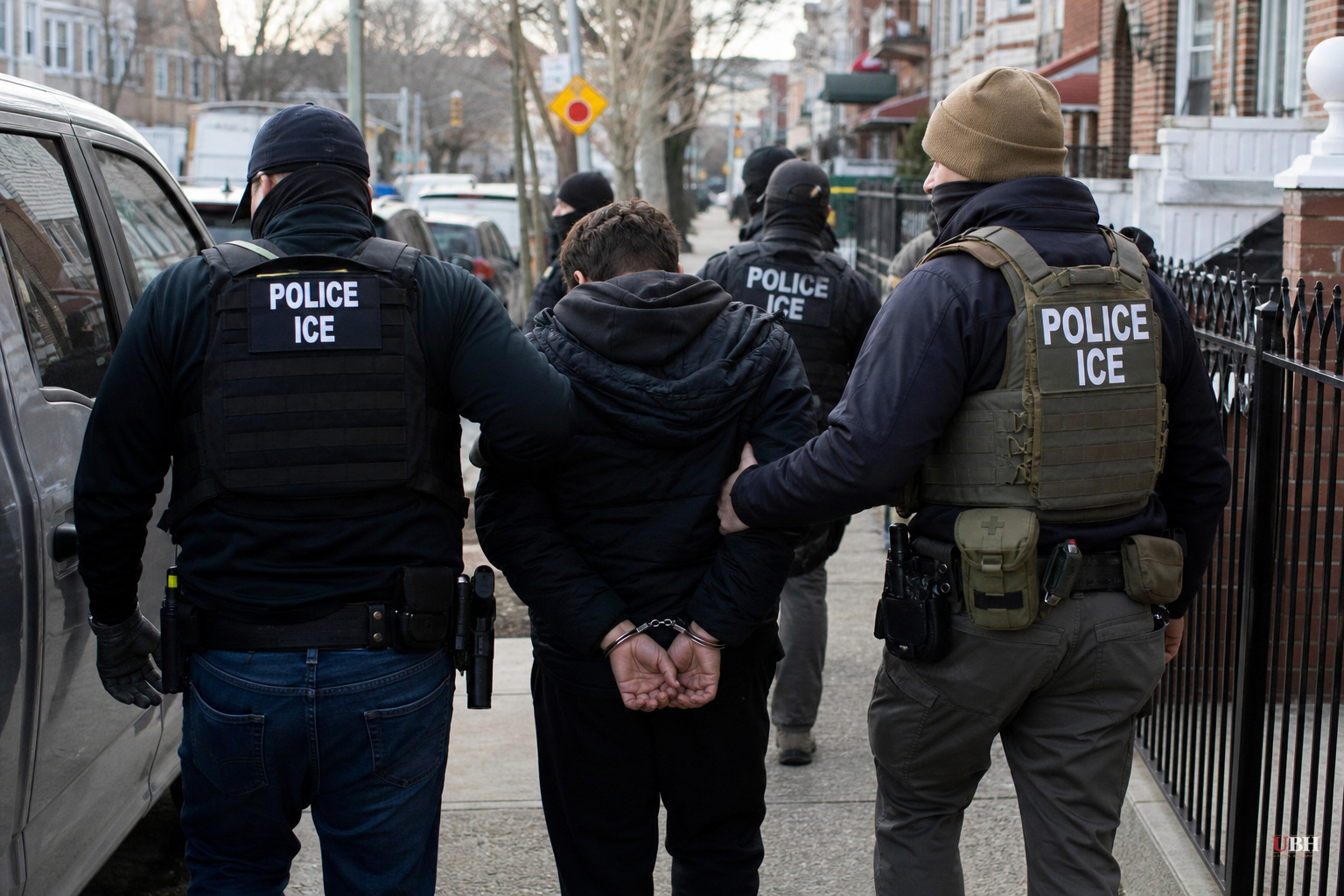
ICE agents moved into Queens on Monday, kicking off the surge Tom Homan has been promising New York since June. According to NewsNation, which first reported the deployment citing sources familiar with the plans, the operation is expected to expand into other boroughs starting Tuesday.
Officers already assigned to the New York field office are running the operation. No agents have been pulled in from other cities so far, though Homan has said the surge could last more than a month without giving a firm timeline or officer count.
Homan told Fox & Friends back on June 8 exactly what was coming. "You're going to see more ICE agents than you've ever seen in New York City, and it's coming," he said, aiming the warning directly at Governor Kathy Hochul.
His reasoning is straightforward. New York's Democrat-controlled legislature passed sanctuary laws that bar county jails from honoring ICE detainers, meaning agents can no longer just pick up criminal aliens when local law enforcement releases them. "We're going to send more ICE agents to New York because you took away the efficiencies of safer arrests at county jails," Homan said in June.
The Protect Our Courts Act adds another layer, generally blocking ICE from making civil immigration arrests at state courthouses. That pushes agents into neighborhoods and workplaces instead of controlled settings like jails and courts, according to IBTimes UK.
Collateral Arrests Are the Real Flashpoint
Officials are warning upfront that this surge will produce collateral arrests, meaning agents show up looking for one person and end up detaining others at the scene, according to IBTimes UK. That's a fair concern and it's not hypothetical. IBTimes UK cites a case last year in Corona, Queens, where agents detained a construction worker on his way to work, later admitting they'd actually been looking for his neighbor.
Targeting people who committed crimes and were released instead of handed to ICE is one thing. Sweeping up bystanders, including possible U.S. citizens and legal residents who happen to be standing nearby, is another. IBTimes UK reports the economic fallout hits fast too, with workers staying home and shoppers avoiding the street, hurting small businesses in immigrant neighborhoods within days.
Hochul has tried to keep the surge from happening at all. She signed a bill in May banning the kind of local-ICE cooperation agreements that Nassau County and others have used. She's also repeated, including Monday during an appearance in Buffalo according to Newsday, that Trump personally told her there wouldn't be a surge unless she asked for it. "So, I encourage Tom Homan to talk to the big boss and ask him his position," she said, "because I am not giving that invitation nor that permission."
At a Queens roundtable earlier this summer, Hochul put it more bluntly: "Not here, not New York, not ever." She's argued public immigration arrests risk the kind of unrest seen in Los Angeles and Minneapolis. Immigrant advocacy groups have gone further, accusing the administration of racial profiling, according to IBTimes UK.
Timing and Politics
The surge lands just over a week after the World Cup final at MetLife Stadium on July 19, an event Hochul had specifically cited when asking the administration to hold off, per IBTimes UK. Homan has said the operation was planned before an alleged attack on a Manhattan federal building housing ICE, the FBI, and an immigration court, tied to a 43-year-old Army veteran, and wasn't a response to it.
Bruce Blakeman, the Republican Nassau County executive challenging Hochul this fall, has taken the opposite approach. He deputized 10 Nassau County police officers as ICE agents and rented jail space to hold detainees. "By cooperating with ICE, a surge is not necessary in my county as we have removed many illegal migrants with criminal records for rape, robbery and other heinous crime without raiding any schools, churches and daycare centers," Blakeman said, according to Newsday.
Syracuse University political science professor Grant Reeher told Newsday that a sustained ICE presence in the city could reshape the governor's race, which so far has centered on affordability. "Physical proximity is always important, so something in New York would focus the attention in New York for a while," Reeher said. He noted the outcome depends partly on what else is competing for headlines.
For now, a Siena University poll cited by Newsday found only 9% of state voters named immigration as a top priority last month, well behind affordability. Whether a month-long, multi-borough ICE operation changes that number is the open question heading into the fall election.
Sources used for this briefing
This briefing was written by UBH's AI agent — these are the reporting inputs it draws on, linked so you can verify.


