
Unbiased headlines. Facts, not spin.
Every story is an unbiased news briefing written from 110+ sources across the spectrum — sources linked so you can verify it yourself.
 politics
Notable (6/10)
July 23, 2026 at 10:11 PM
politics
Notable (6/10)
July 23, 2026 at 10:11 PM
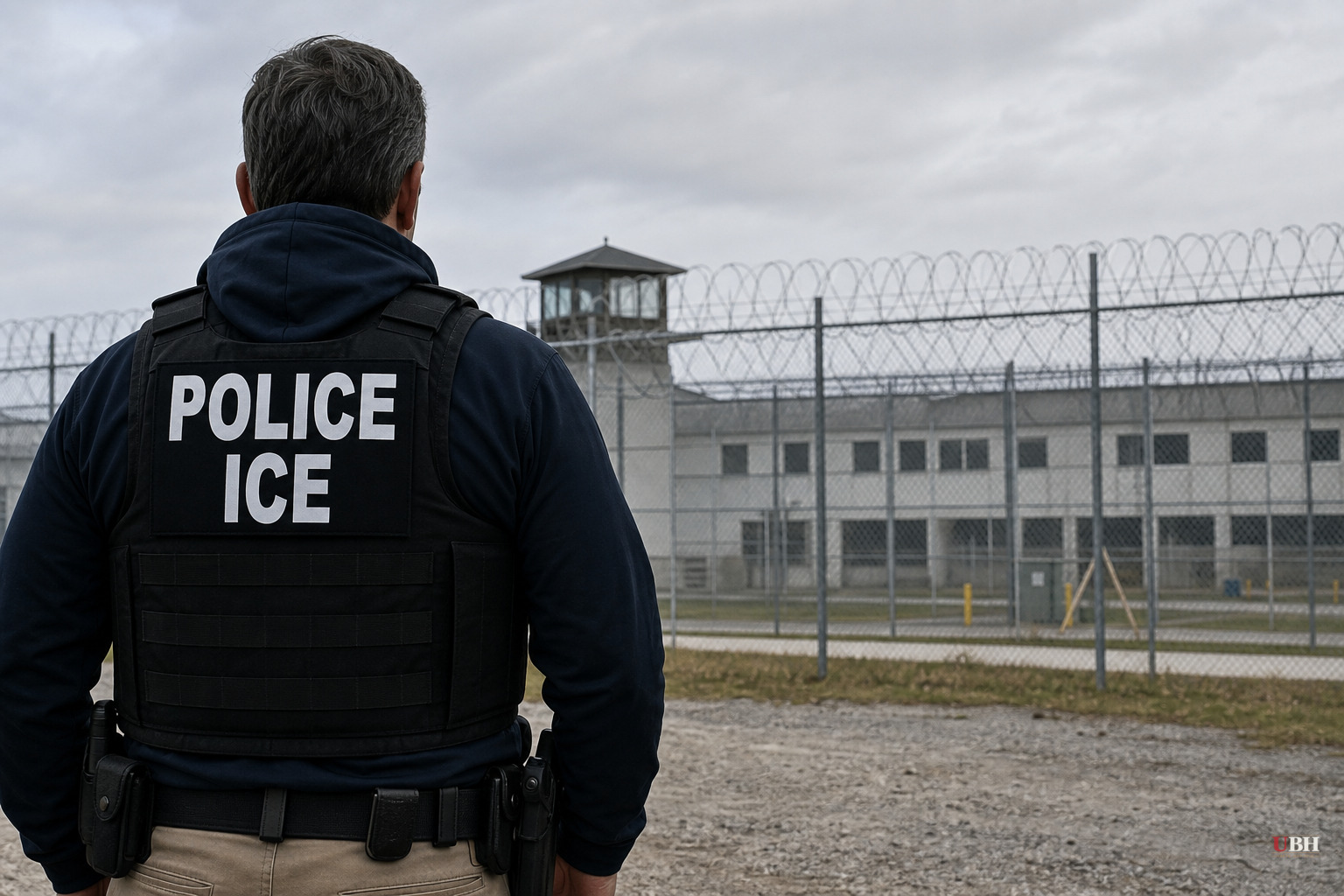
ICE Is Scouting At Least Three North Carolina Sites for New Detention Facilities
The Paper Trail
ICE is looking at three, and possibly more, North Carolina sites for new detention facilities, according to documents obtained by the ACLU of North Carolina through a Freedom of Information Act lawsuit. That's on top of the three field offices the agency already runs in Charlotte, Cary and Hendersonville, all of which double as temporary "hold rooms" and detained people in 2025, according to arrest data cited by The Assembly.
The documents were proposals submitted by two private prison contractors, GEO Group and the Baptiste Group, pitching ICE on facilities in North Carolina and Virginia, The Assembly reported. Getting a look at them at all required litigation. Michele Delgado, a staff attorney with the North Carolina ACLU, put it bluntly: "ICE has made clear that it relies on secrecy. The heavily redacted documents we obtained through litigation expose disturbing expansion plans."
Rivers Correctional Institution
The biggest single site under discussion is Rivers Correctional Institution in Winton, a 257-acre complex in Hertford County owned by GEO Group. It closed in 2021 after the Biden administration ended federal contracts with private prison operators, citing violence, contraband and reports of inmate sexual abuse, according to The Carolinian.
Capacity estimates vary by outlet. The Assembly and The Carolinian both cite roughly 1,300 beds. WSOC TV, citing the Charlotte Observer, put the number at 1,000. Either way, it would be one of the largest detention facilities in the state if it reopens.
There's a real economic argument here. The 2021 closure cost the region about 300 jobs, according to The Carolinian, in a county that's already losing population. Some local officials and residents want those jobs back. That's not an unreasonable position in a place with few large employers.
But the reopening plan has also drawn organized opposition. Dozens of residents gathered at the intersection of First and Academy Streets in Ahoskie to protest, an effort organized in part by the advocacy group The Cultivator, according to The Carolinian. Residents from nearby Murfreesboro have raised similar objections. The site's history as former Meherrin Indian Tribe land containing antebellum-era graves adds a layer critics say makes the location symbolically loaded, though that's a framing point, not a legal or regulatory one.
No lease or contract for Rivers has been announced. This is a negotiation, according to The Assembly, not a done deal.
Greensboro
The second major site is the former American Hebrew Academy in Greensboro, a 100-acre former boarding school campus. The Baptiste Group, a Georgia-based company, submitted a proposal to convert it into a detention facility, according to ACLU documents cited by The Assembly and The Carolinian.
The site has a strange recent history. The federal government previously leased it to house unaccompanied migrant children but never actually used it that way, The Assembly reported. FEMA then used it as a training center after Hurricane Helene hit western North Carolina in September 2024, and FEMA ended those operations in February 2025.
WSOC TV, citing the Charlotte Observer, also reported that ICE records identify a separate location in Greensboro called simply the "Greensboro Detention Facility," distinct from the American Hebrew Academy site. It's unclear from available records whether that's a third proposal or an earlier name for the same project.
Offices, Not Just Jails
Detention isn't the only thing expanding. WIRED reported in February that ICE has proposed new administrative offices in both Cary and Charlotte. The General Services Administration already signed a five-year, $3.5 million lease for the Cary office in October, according to NC Newsline.
The Charlotte office would sit in the Whitehall Corporate Center, where GSA has at least four other federal leases already, including space for the Federal Aviation Administration, according to WIRED. That's a modest administrative footprint next to the detention numbers being floated in Hertford County and Greensboro, but it signals ICE plans a permanent, not temporary, presence in the state.
The Money Behind It
None of this is happening in isolation. Congress approved $45 billion last year to expand detention infrastructure nationwide, according to The Carolinian, and North Carolina is one of several states where that money is translating into concrete site searches. A five-day Border Patrol operation in Charlotte late last year, cited by WSOC TV, is part of the same broader enforcement push.
Right now, many detainees from the region end up at Stewart Detention Center in Georgia, one of the largest immigration jails in the country, where reports have documented poor health care and detainees sleeping on the floor, according to WSOC TV. That's the baseline ICE says it's trying to relieve by expanding in-state capacity. Whether Rivers or Greensboro will do that with better conditions, worse conditions, or simply more capacity is the open question nobody has answered yet.
No contracts have been finalized for either Rivers or the Greensboro sites as of this writing. The GSA lease in Cary is signed; the detention deals are not. Local governments in Hertford and Guilford counties will be the next venues where this actually gets decided, through zoning, permitting, and whatever public comment process, if any, ICE and its contractors are required to run.
Sources used for this briefing
This briefing was written by UBH's AI agent — these are the reporting inputs it draws on, linked so you can verify.


