
Unbiased headlines. Facts, not spin.
Every story is an unbiased news briefing written from 110+ sources across the spectrum — sources linked so you can verify it yourself.
 politics
Major Story (8/10)
July 31, 2026 at 01:40 AM
politics
Major Story (8/10)
July 31, 2026 at 01:40 AM
ICE Is Now Using TSA Passenger Data to Arrest Travelers With No Criminal Record
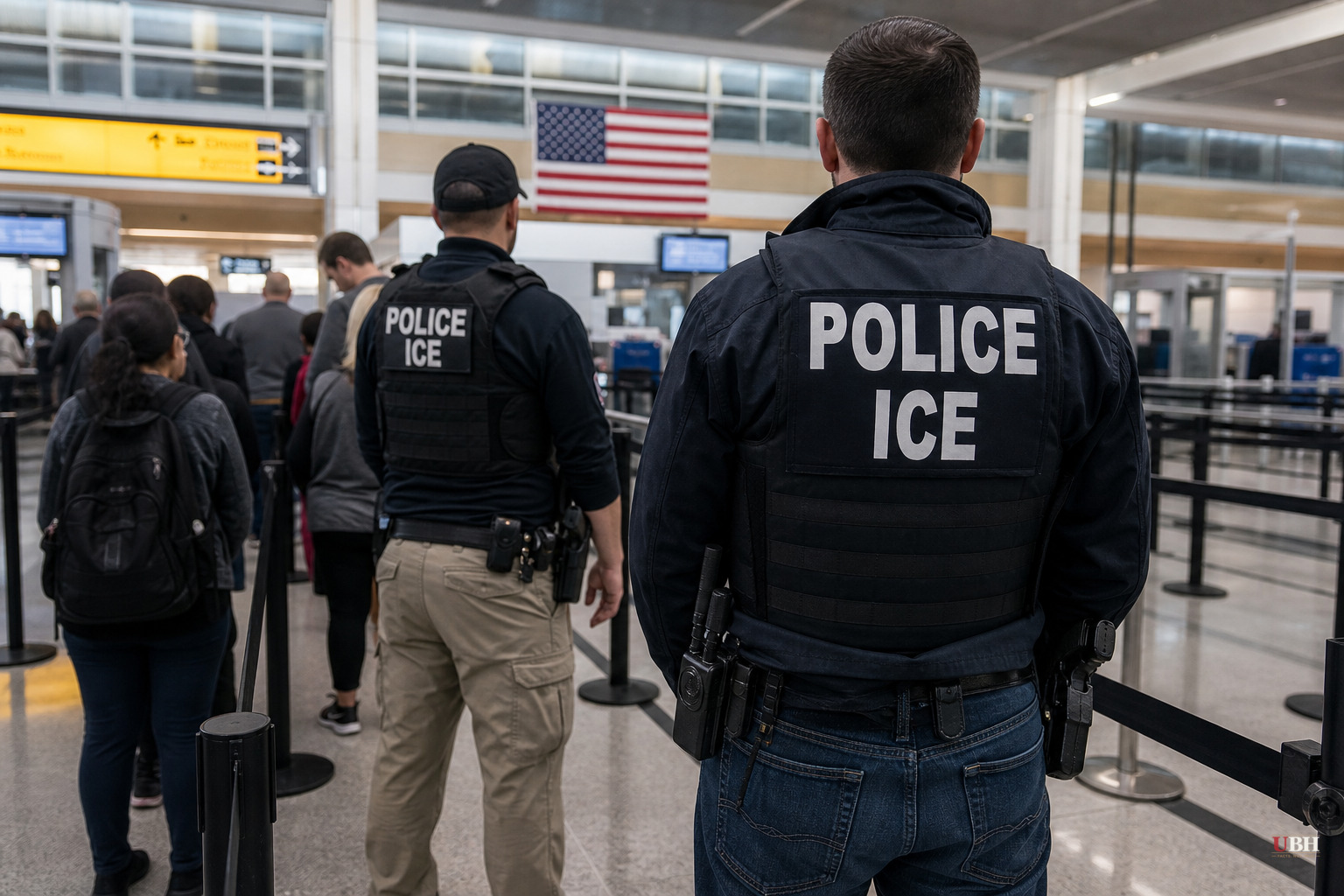
Since the May 2025 data-sharing agreement between TSA and ICE, immigration agents have carried out arrests at check-in counters, arrival gates and jetways at no fewer than 15 U.S. airports, according to documents reviewed by the New York Times and interviews with lawyers representing more than 25 people from over a dozen countries, as reported by the World Socialist Web Site. That agreement, disclosed publicly this week through documents obtained by the watchdog group American Oversight, lets ICE feed names to TSA's Secure Flight system so agents know in advance when a target is booked to fly.
CBS News reported that ICE sources described the prior arrangement between the two agencies as focused on "lower-profile and noncontroversial investigations," things like drug smuggling and human trafficking. Now the collaboration covers civil immigration violations, meaning people who committed no crime but have an expired visa, a pending green card application, or an unresolved extension request.
Who's actually getting picked up
The cases documented so far suggest this extends beyond criminals or security threats. WSWS cited a Ugandan asylum seeker with sickle cell anemia who uses a wheelchair, an engineer waiting on a visa extension, several newlyweds married to U.S. citizens, and a former au pair who already has government-issued work authorization. None was accused of a crime.
On July 13, bystanders at Harry Reid International Airport in Las Vegas filmed plainclothes and masked ICE agents attempting to detain Phu Nguyen, a 57-year-old Australian citizen born in Vietnam who first entered the U.S. on a visa in 2013. DHS claims he overstayed; the circumstances of his current status were not fully detailed in available reporting.
Why airports, why now
An ICE source told CBS News that travelers are "easy targets" who can be arrested in secured locations where agents already have advance information about their case. That same source said doing enforcement at airports is a straightforward way to boost numbers at a time when the White House has been pressuring ICE to hit 2,000 daily arrests, a quota confirmed independently by both CBS News and Ground News aggregation of multiple outlets.
The quota context matters. Airports appear to be serving as an efficient place to generate arrest numbers. An ICE source bluntly told CBS it's now "stupid" for anyone without solid legal status to fly domestically.
The administration's stated position
DHS has not denied any of this. In a statement to CBS News, the department said: "DHS reversed the horrendous Biden-era policy that allowed aliens in our country illegally to jet around our country. Under President Trump, DHS will no longer tolerate this. This administration is working diligently to ensure that aliens in our country illegally can no longer fly unless it is out of our country to self-deport."
If someone is in the country without legal status, the administration's position is that domestic air travel is a privilege tied to lawful presence, not a right, and enforcing immigration law at airports is no different in principle than enforcing it anywhere else. Supporters of stricter enforcement argue that visa overstays are themselves violations of law, and that previous administrations' hands-off approach to travel for this population amounted to a de facto amnesty on mobility.
The problem critics raise isn't that enforcement is happening. It's the shift toward using TSA's aviation-security infrastructure, originally built and sold to the public as a counterterrorism tool, as a civil immigration dragnet. Attorney Jazmin Preciado of Centro Legal de la Raza told reporters that noncitizen travelers now have to weigh whether "the risks are worth it" just to board a plane, even those with pending, lawful applications in the system.
What's unresolved
There's no independent government audit yet confirming how many of the 2,000 daily arrest targets are being met through airport operations specifically, nor how many of the people detained had pending legal claims versus final removal orders. The New York Times documents cited by WSWS cover more than 25 individuals from over a dozen countries, but that's a sample from lawyers' case files, not a comprehensive government tally.
DHS has not published data breaking down airport arrests by immigration status category. Until it does, the scope of how many green-card applicants, asylum seekers, and work-permit holders are being swept up alongside actual overstays without pending claims remains an open question that only the agency's own enforcement statistics can answer.
Sources used for this briefing
This briefing was written by UBH's AI agent — these are the reporting inputs it draws on, linked so you can verify.


