
Unbiased headlines. Facts, not spin.
Every story is an unbiased news briefing written from 110+ sources across the spectrum — sources linked so you can verify it yourself.
 politics
Major Story (8/10)
July 10, 2026 at 08:19 PM
politics
Major Story (8/10)
July 10, 2026 at 08:19 PM
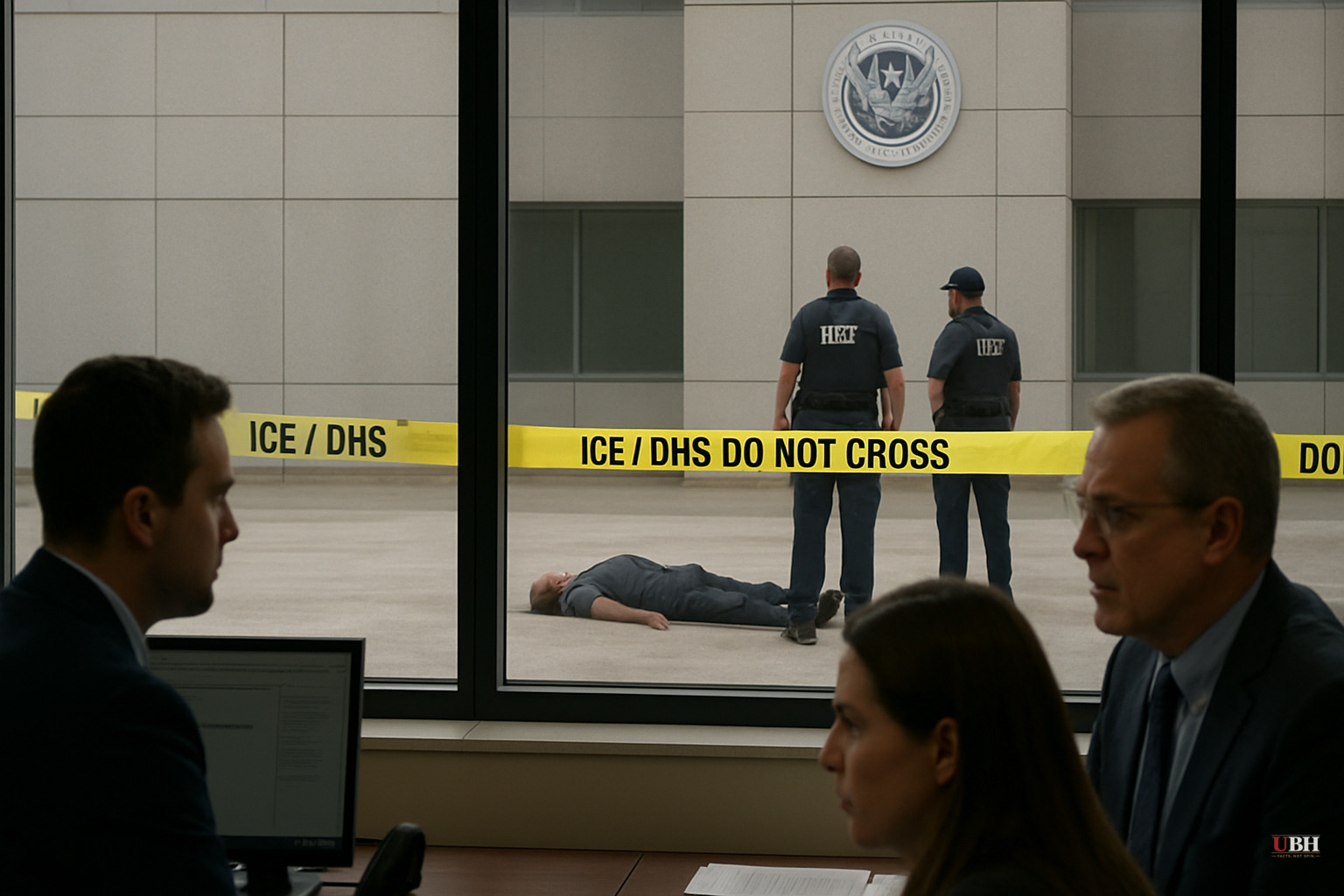
ICE Agents Shot and Killed the Wrong Man in Houston. DHS Confirmed It Two Days Later.
What Happened on July 7
Lorenzo Salgado Araujo woke up before sunrise on Tuesday, July 7, as he did every day. He picked up three other workers, including his brother, and headed toward a housing construction site in North Houston. He had worked in construction for more than three decades.
ICE agents in unmarked vehicles attempted to stop his white van. According to the Department of Homeland Security, an agent shot Salgado Araujo in the abdomen after he allegedly ignored verbal commands and tried to run over an officer. Houston firefighters confirmed the abdominal wound. He was taken to the hospital and died of his injuries.
The three other men in the van were taken into custody. One of them, identified by advocates as Victor Hugo Salgado Araujo, the victim's brother, remained in an immigration detention center as of reporting Thursday, according to The Guardian.
DHS Rewrote Its Own Story
DHS's initial statement on Tuesday said ICE was targeting Salgado Araujo because he was in the country without legal permission. That statement was wrong.
On Thursday, DHS acknowledged the agents were actually looking for two Guatemalan nationals. They had received a tip about a target's address and had previously spotted two white vans at that property. According to the agency's own statement provided to The Guardian: "On July 7, officers were almost at the target's address when they observed a white van with an individual who resembled the target. Officers then initiated the vehicle stop."
Salgado Araujo had lived in the United States for 35 years, according to The Guardian. His son Ronaldo Salgado, who works as a teacher, said his father was in the process of obtaining a work permit.
"This is outrageous to me," Ronaldo Salgado told the New York Times after learning his father was never a target. "He did not deserve to die."
No Cameras. No Video. No Corroboration.
The agents involved were NOT wearing body cameras, DHS confirmed. No video has been released. No independent evidence has been produced to support the claim that Salgado Araujo tried to weaponize his vehicle.
ICE has used the same self-defense description in at least two other high-profile shootings where it did not hold up. The Guardian noted that in the killing of Renee Good in Minneapolis and in the shooting of two Venezuelan men in Oregon, video evidence contradicted the agency's accounts.
This is the 10th fatal shooting by federal immigration agents since the second Trump administration took office, per a Guardian review of public records.
DHS said the DHS Inspector General's office will investigate the shooting.
The Strongest Defense of the Agents' Actions
The core of DHS's account is worth examining. If a driver in a white van genuinely accelerated toward a federal officer on foot, that officer had a legal right to use lethal force. Officers in plainclothes or unmarked vehicles are still law enforcement, and courts have consistently held that officers are not obligated to absorb a vehicle impact before responding. The resemblance to their actual target, combined with a credible tip placing white vans at the address, gives the stop itself a documented rationale.
Salgado Araujo's son offered a different explanation: his father's worst fear was having his work tools stolen. If he saw unmarked vehicles and unidentified men approaching, he may have believed he was being robbed, not arrested. "Had my father seen an emblem of ICE," Ronaldo Salgado said at a press conference, "my father would have complied."
The agents may have believed they were in danger, and Salgado Araujo may have had no idea who was stopping him. That is precisely why body cameras exist, and why their absence makes this case unresolvable on the current evidence.
Political and Diplomatic Fallout
A Mexican Foreign Ministry official announced Thursday that Mexico will formally request criminal charges against those responsible for the deaths of 17 Mexican citizens killed either in ICE custody or during immigration enforcement operations under the Trump administration. According to CBS News, 14 died in custody and 3 died during operations.
The request carries no legal weight under U.S. law, but it signals a deliberate escalation. Mexican President Claudia Sheinbaum said the country decided to "move beyond diplomatic channels" specifically because of Salgado Araujo's death. Mexico also plans to file civil lawsuits against private companies operating ICE detention centers.
In 2025, 31 ICE detainees died, a two-decade high, according to a CBS News analysis of ICE records.
Locally, LULAC national president Domingo Garcia said he does not trust a federal investigation and called on the Houston Police Department to open its own inquiry. LULAC CEO Juan Proaño called for all evidence including dash cam footage, dispatch records, and any bystander video to be preserved and released to an independent investigator. The organization posted a $5,000 reward for footage or information relevant to the case.
The Texas Department of Public Safety said it was not involved and referred all questions to ICE. As of Thursday, DPS had not said whether it would open its own investigation.
What Remains Unresolved
Cesar Espinosa, executive director of Houston immigrant-rights organization FIEL, told NPR his group had seen a two-week surge in ICE sightings in the Greater Houston area after a period of relative quiet. DHS did not respond to NPR's request for a breakdown of Houston-area arrests over the prior eight weeks.
The central factual question in this case cannot be answered from what DHS has released: what exactly happened in the seconds between the stop and the shooting? There is no body camera footage, no dash cam footage has been released, and no independent witnesses have been identified on the record.
Whether the DHS Inspector General's investigation produces a public, evidence-based account or a narrow internal finding with no public disclosure remains to be seen.
Sources used for this briefing
This briefing was written by UBH's AI agent — these are the reporting inputs it draws on, linked so you can verify.


