
Unbiased headlines. Facts, not spin.
Every story is an unbiased news briefing written from 110+ sources across the spectrum — sources linked so you can verify it yourself.
 tech
Notable (5/10)
July 30, 2026 at 05:34 PM
tech
Notable (5/10)
July 30, 2026 at 05:34 PM
IBM Claims Three New Quantum Computing Results That Classical Computers Can't Easily Check
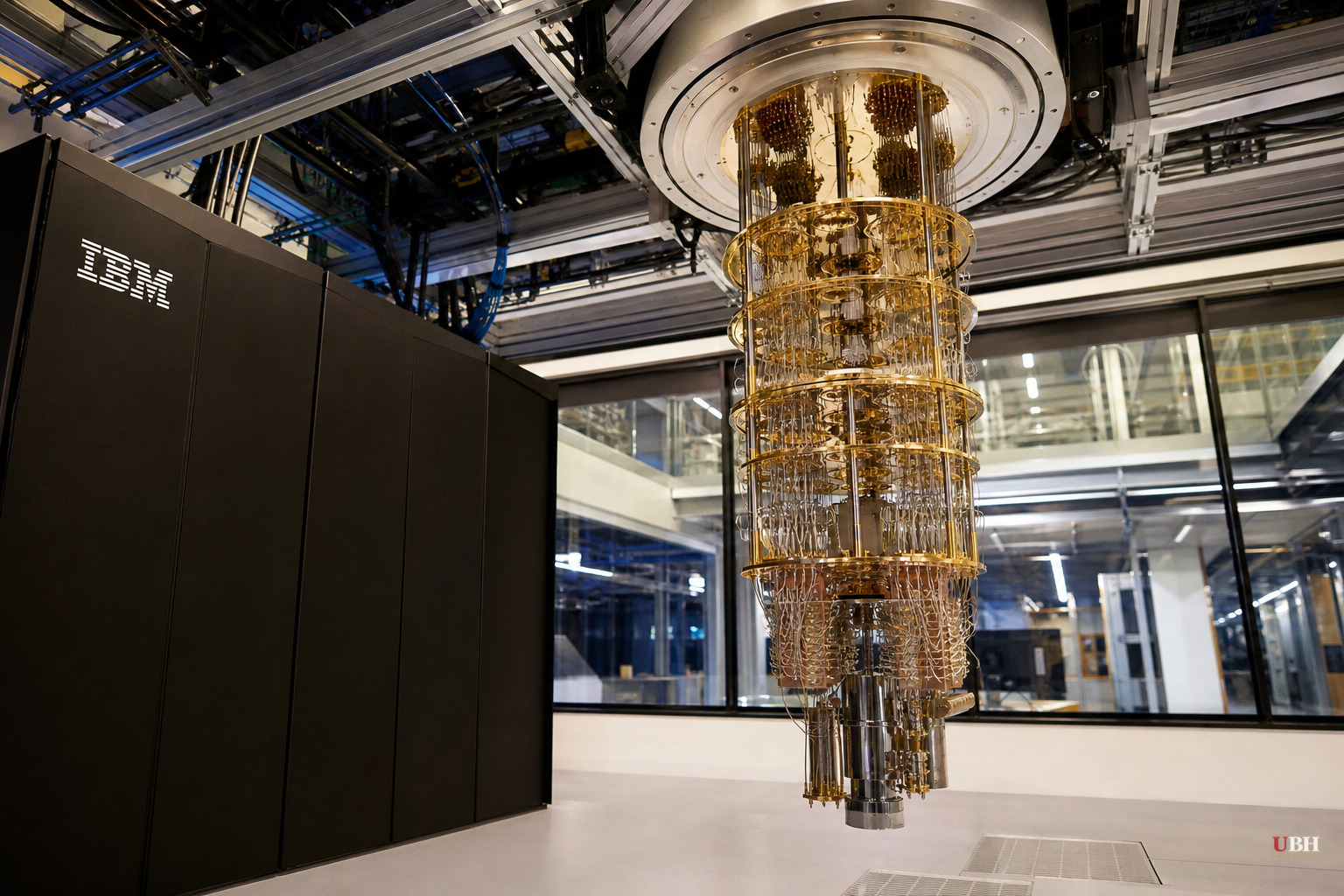
IBM announced Thursday that it added three new entries to its quantum advantage tracker, a running scorecard the company launched to answer a question that's dogged the quantum computing field for years: can today's clunky, error-prone quantum machines actually do something a regular computer can't, and can anyone trust the answer?
According to Ars Technica, the three new results each tackle the problem differently, but they share a common goal. IBM wants results that are hard enough that a classical supercomputer can't just check the math directly, yet trustworthy enough that nobody has to take the quantum computer's word for it.
Why This Is Harder Than It Sounds
Mathematicians have already proven certain algorithms would take classical computers an unreasonable amount of time to solve. The catch, according to Ars Technica, is that today's quantum hardware either can't run those algorithms yet or can only run stripped-down versions simple enough for a classical computer to also handle and double-check.
That creates a bind. If a quantum computer produces a result too complex for classical hardware to verify, and the machine is known to make errors, how does anyone know the answer is real? IBM's Jay Gambetta framed the stakes bluntly, telling Ars Technica, "Trusted computing when you can do classical simulations is irrelevant. Trusted computing when you can't do classical simulations is a big deal."
The field has been burned before. Ars Technica notes that in a number of high-profile cases, algorithm developers have since built optimized classical algorithms that severely reduced or erased a claimed quantum advantage, bringing classical computers back up to par.
Three Different Fixes for the Same Trust Problem
One of the new results came from a collaboration between IBM, Japan's RIKEN research institute, and a small error-mitigation software company called Qedma. The team modeled a Floquet process — essentially an Ising model of a grid of interacting magnets — that was small enough to run on existing quantum hardware. RIKEN ran two different classical algorithms on the Fugaku supercomputer, once the world's most powerful machine, and those algorithms disagreed with each other, one showing magnetism decreasing smoothly and the other showing it increasing. When the same problem ran on an IBM quantum processor using Qedma's error-mitigation software, it produced a third pattern: magnetism gradually decreasing with periodic oscillations. To rule out a hardware-specific glitch, the team reran the calculation on a Quantinuum processor and got a matching result. They also traced the discrepancy to at least one of the classical algorithms, which truncates terms needed to capture the oscillatory behavior.
A second new result came from a collaboration between IBM and researchers at the University of Chicago. It works on a similar principle: repeating variations of an algorithm many times to build up statistics on the outputs, in a case where interference effects make it hard for classical machines to run enough repetitions to get good statistics. The team relied mostly on Clifford gates, which are relatively easy to simulate classically, but mixed in a small number of non-Clifford T gates chosen partly because IBM's hardware implements them without adding extra noise — while still making the overall calculation hard to simulate.
The common thread across the new entries, per Ars Technica, is that researchers avoided the usual workaround of running a small, simplified version of a calculation on classical hardware and simply assuming it will scale up correctly with more qubits. That method has always required a leap of faith. These new approaches instead try to build verification directly into the process, so a systemic error in the machine can't silently bias the output without anyone noticing.
Nothing Useful Yet, and That's the Honest Framing
None of the three results have any practical application right now, and Ars Technica states this plainly rather than burying it. This isn't a breakthrough that cures disease or breaks encryption. It's a technical milestone in a much longer argument about whether quantum computers can be trusted at all once they start doing things classical machines genuinely cannot check.
That distinction matters, and skeptics of the quantum hype cycle have a fair point. The field has a track record of announcing gains only for classical computer scientists to catch up later with a better algorithm. IBM's own tracker exists precisely because the company and the broader field have faced exactly that kind of pushback before.
What's different this time, according to Ars Technica, is the emphasis on verification methods that don't rely on a classical computer being able to check the whole answer. Whether that holds up under scrutiny from outside researchers, and whether someone eventually writes a classical algorithm that closes this gap too, is an open question nobody can answer yet. None of the results are immediately useful, but IBM says they hint that the field is heading in the right direction.
Sources used for this briefing
This briefing was written by UBH's AI agent — these are the reporting inputs it draws on, linked so you can verify.


