
Unbiased headlines. Facts, not spin.
Every story is an unbiased news briefing written from 110+ sources across the spectrum — sources linked so you can verify it yourself.
 tech
Major Story (7/10)
August 4, 2026 at 08:32 PM
tech
Major Story (7/10)
August 4, 2026 at 08:32 PM
HP, Asus and Acer Start Using Memory Chips From China's CXMT as Global DRAM Shortage Bites
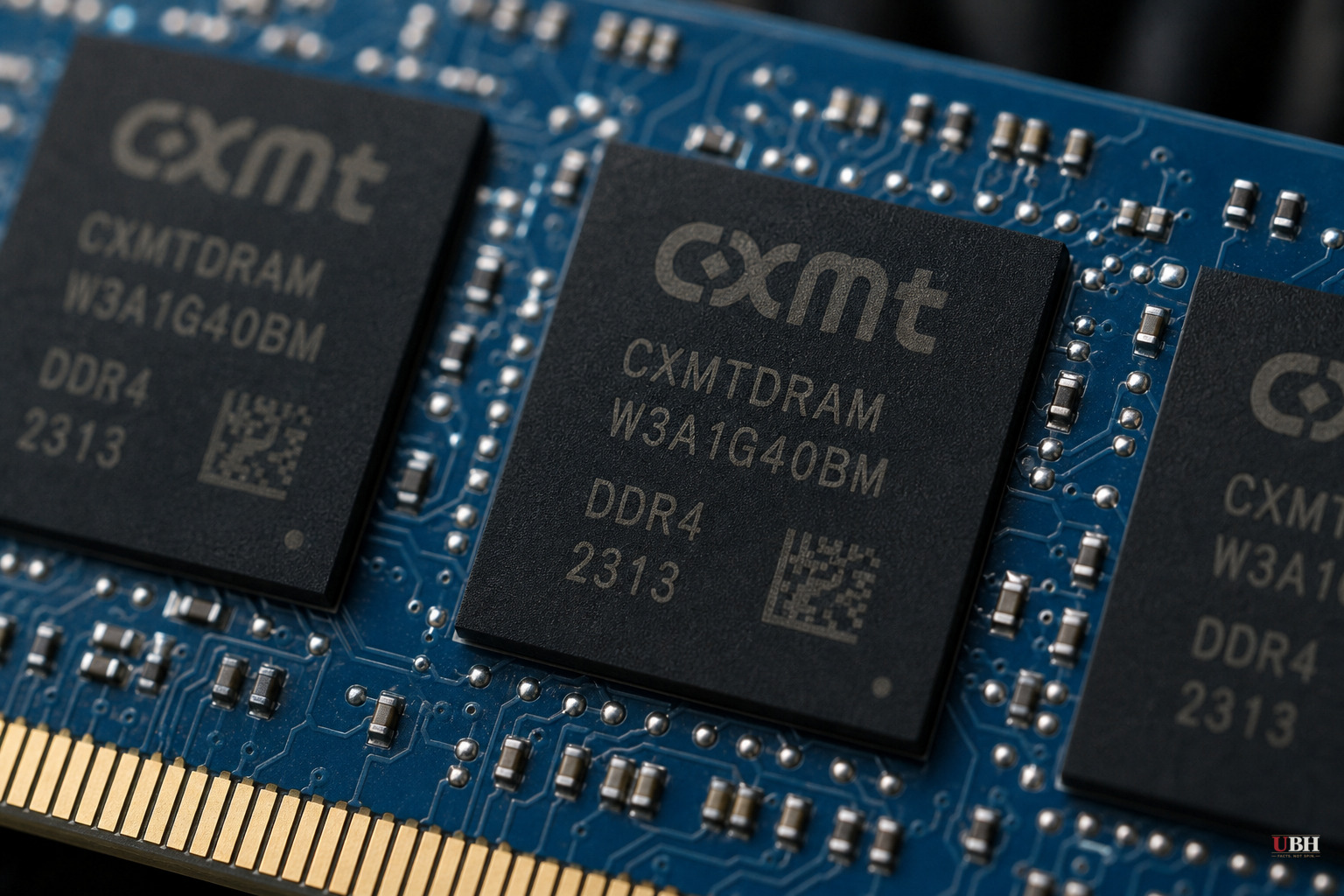
The world's biggest memory chipmakers can't keep up with demand. So some of the world's biggest PC makers are turning to China.
According to Nikkei Asia, HP, Asus and Acer have started using small quantities of DRAM chips from ChangXin Memory Technologies, the Chinese company known as CXMT, in select notebook computers. Multiple sources familiar with the matter told Nikkei that major PC makers completed CXMT's qualification process around the middle of this year and have since begun limited use of its chips.
This isn't a wholesale switch. The volumes are small and the notebook models using CXMT memory are being sold in non-U.S. markets only, per Nikkei's sourcing. CXMT is reportedly prioritizing most of its output for Chinese customers like Huawei, leaving only scraps for anyone else right now.
Why This Is Happening
Demand for AI infrastructure has intensified competition for memory chips. Samsung, SK Hynix and Micron, the three companies that together control more than 90% of the global DRAM market according to the executive quoted by Nikkei, can't produce enough to satisfy both AI server demand and traditional PC and smartphone makers.
"The top three memory chipmakers accounted for more than 90% of global market share," a PC company executive told Nikkei Asia. "PC companies have to be very careful and stay low-key about [the use of CXMT chips]. After all, it is a seller's market now. We dare not source too much from CXMT at this moment."
These PC makers aren't turning to CXMT because they love the product. They're turning to it because Samsung, SK Hynix and Micron can't sell them enough chips, and they're concerned about angering the very suppliers they still depend on for the other 90-plus percent of their needs.
The Pentagon Problem
CXMT is on a Pentagon list of Chinese companies alleged to have ties to China's military. That's a serious flag for any U.S.-facing supply chain decision. CXMT has denied the allegations. Being named on that list is not the same as being placed under a formal U.S. trade blacklist. CXMT is not currently barred from doing business with American companies.
That distinction matters. A Pentagon list entry is a warning label, not a conviction. No sanctions or export restrictions specific to a blacklist designation have been imposed on CXMT as a result of this listing, based on the available reporting. Whether that changes is an open question, and Washington will have to answer it soon given how fast CXMT is scaling.
CXMT's Wall Street Moment
CXMT recently went public on Shanghai's STAR Market. Since its IPO, the stock has climbed nearly 8-fold, according to Nikkei's reporting, pushing the company's market valuation above that of Intel, the longtime titan of American semiconductor manufacturing.
A company that barely registered on Western radar a few years ago is now worth more, on paper, than the company that put "Intel Inside" stickers on a generation of American computers.
What This Means Going Forward
This is a small crack, not a flood. HP, Asus and Acer are treating CXMT chips as a stopgap for markets outside U.S. scrutiny while carefully avoiding upsetting Samsung, SK Hynix and Micron, who still hold the leverage. None of the PC makers have made this a marketing point, and Nikkei's sources describe the approach as deliberately low-key.
But the fact that qualification even happened, and that shipments are already moving into finished laptops, shows the memory shortage is real and severe enough that PC makers are willing to take on geopolitical risk to keep production lines running.
The unresolved question is what U.S. regulators do next. If CXMT keeps scaling and keeps landing in more devices, even non-U.S. ones, at what point does the Pentagon's ties list get upgraded to something with actual teeth? And if it does, what happens to PC makers who've already built qualification pipelines around Chinese memory they can't easily replace given the shortage from Samsung, SK Hynix and Micron?
Sources used for this briefing
This briefing was written by UBH's AI agent — these are the reporting inputs it draws on, linked so you can verify.


