
Unbiased headlines. Facts, not spin.
Every story is an unbiased news briefing written from 110+ sources across the spectrum — sources linked so you can verify it yourself.
 politics
Major Story (7/10)
July 10, 2026 at 08:51 PM
politics
Major Story (7/10)
July 10, 2026 at 08:51 PM
Housing Bill Becomes Law Without Trump's Signature After He Withholds It in Protest Over Voter ID Stalemate
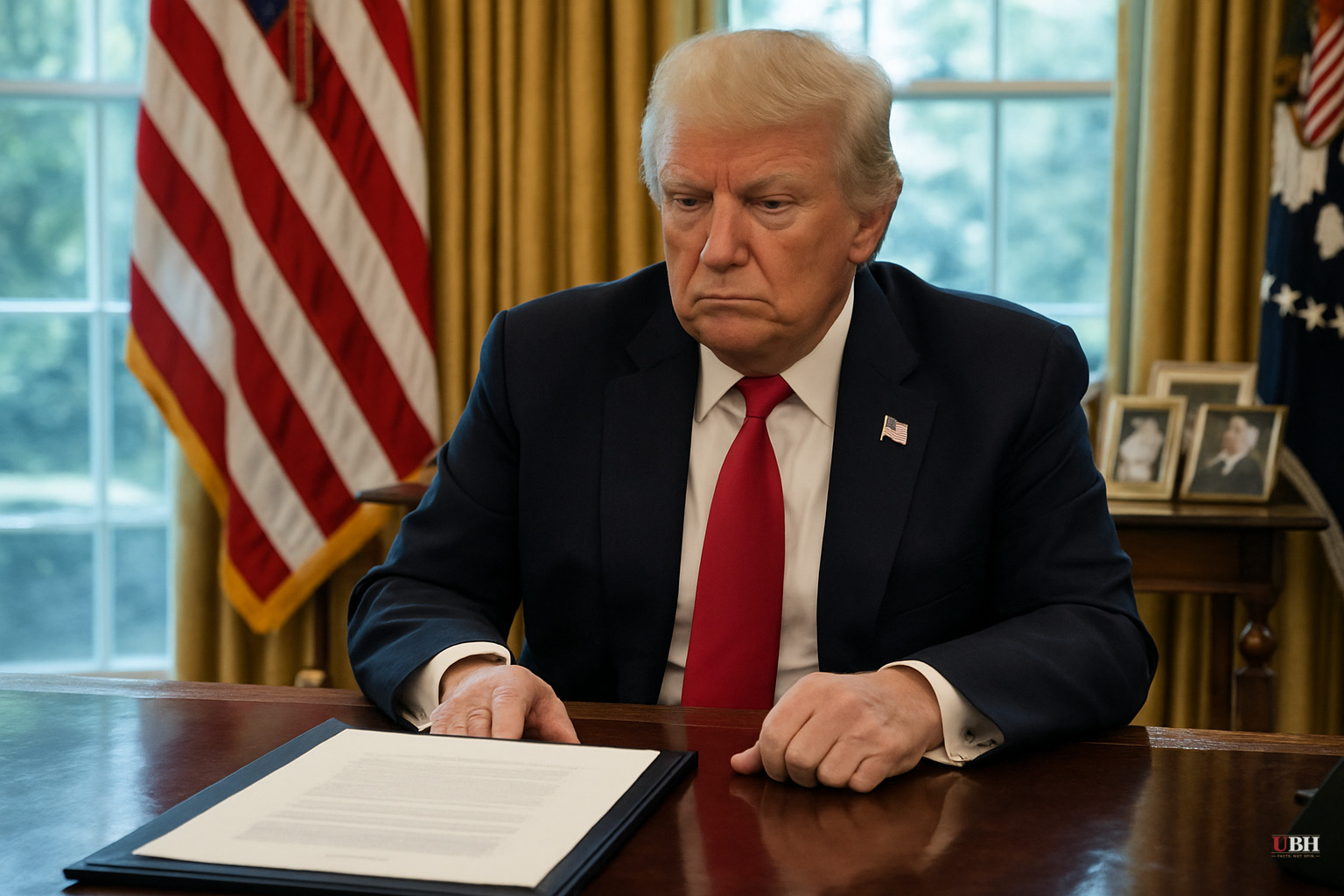
Since Trump fired Democratic members of the Federal Election Commission earlier today, the administration's simultaneous handling of the housing bill illustrates a president using every available lever—signing ceremonies, personnel decisions, and now signature withholding—to force action on election law.
The 21st Century Road to Housing Act became law automatically tonight under Article I, Section 7 of the Constitution, which allows a bill to take effect without presidential action if Congress remains in session and the president neither signs nor vetoes it within 10 days, excluding Sundays. House Speaker Mike Johnson transmitted the bill to Trump on June 28 or 29, according to NPR and Courthouse News Service respectively, starting the clock. It expired tonight.
Trump posted on Truth Social Friday morning: "I will not sign the Housing Bill, which has been fully approved by Congress and sent to the White House, in PROTEST over the fact that the United States Senate is not capable of passing THE SAVE AMERICA ACT."
When NPR sought comment, the White House directed them to that post.
What the bill actually does
The 21st Century Road to Housing Act contains more than 40 provisions from both parties, according to NPR. Among the most significant, according to Jurist: it bars large institutional investors from purchasing single-family homes and eases building regulations to expand housing supply. Median home prices have topped $400,000, and a household earning $75,000 annually can afford fewer than a quarter of available home listings, according to Realtor.com data cited by NPR.
The bill cleared the House 358–32, according to Jurist. That margin is comfortably above the two-thirds threshold needed to override a veto, which means Trump never had a realistic path to killing this legislation. His refusal to sign it was always symbolic.
The SAVE America Act problem
Trump's stated condition for signing was Senate passage of the Safeguard American Voter Eligibility Act, which would require documentary proof of citizenship to register to vote and photo ID to cast a ballot in federal elections. The House passed it in February. It is stuck in the Senate because Republicans lack the 60 votes to break a filibuster, according to Jurist.
Trump has repeatedly demanded Senate Majority Leader John Thune eliminate the filibuster to force the bill through. Thune has declined, saying the votes simply are not there, according to Courthouse News Service. Trump on Friday renewed that pressure, warning that "any Republican who blocks it faces political consequences."
Thune has not moved.
The strongest case for the SAVE Act
Proponents of the voter ID requirement argue the ask is reasonable: most civic and financial transactions in the United States already require government-issued identification, and 35 states have some form of voter ID law. Requiring proof of citizenship to register, supporters contend, is a basic check against noncitizen participation in federal elections. A concern reflecting a straightforward principle about who is entitled to vote.
Opponents, including critics cited by Jurist, counter that the United States has no national identity card, and no level of government automatically issues photo ID to citizens. Millions of eligible voters hold neither a passport nor ready proof of citizenship, they argue, meaning the requirement would effectively bar lawfully eligible Americans from registering. No verified evidence of widespread noncitizen voting in federal elections has been presented in these sources, though proponents argue the current system makes that hard to audit and that the absence of detected fraud reflects weak verification, not its absence.
GOP tension and electoral math
Trump's refusal to sign a bill his own press secretary called "one of the most significant pieces of housing legislation in American history" has created a visible crack in Republican messaging. Courthouse News Service reported that House Republicans had insisted for weeks that Trump's opposition was purely symbolic and he would ultimately sign. Arkansas Representative French Hill, who led the bipartisan push on the bill, told reporters he was "not offended" by the delay and it was "fully in his prerogative."
But the bill is now law without a ceremony, without a signature, and without the political credit that a Rose Garden moment would have delivered. Housing affordability is a top voter concern heading into the November midterms, according to both NPR and News4Jax. Trump's handling of it hands Democrats a clean contrast: the party that wrote the bill says Republicans couldn't deliver; Republicans will now argue the law exists but struggle to explain why the president refused to sign it.
Meanwhile: sanctions on Iran, Russia legislation moving
Separately on Friday, the Treasury Department imposed sanctions on Iranian financier Ali Ansari, who Treasury Secretary Scott Bessent said "oversees a global network of assets benefitting Mojtaba Khamenei," the son of Iran's Supreme Leader Ali Khamenei. Ansari is already under U.K. sanctions and is accused of diverting public funds into real estate holdings outside Iran, according to News4Jax.
Also Friday, U.S. lawmakers pushing a Russia sanctions bill said they have reached agreement with the Trump administration to move the legislation forward. The original bill, which called for a 500% tariff on goods from countries continuing to buy Russian oil, has languished in the Senate for roughly a year, according to News4Jax. No rollout date has been confirmed.
The unresolved question heading into the weekend is whether Trump's increasingly public war with Senate Republicans over the filibuster and the SAVE Act will produce any actual defections, or whether Thune holds the line and the standoff simply continues through the fall campaign.
Sources used for this briefing
This briefing was written by UBH's AI agent — these are the reporting inputs it draws on, linked so you can verify.


