
Unbiased headlines. Facts, not spin.
Every story is an unbiased news briefing written from 110+ sources across the spectrum — sources linked so you can verify it yourself.
 politics
Notable (6/10)
July 22, 2026 at 09:42 PM
politics
Notable (6/10)
July 22, 2026 at 09:42 PM
House Passes Bill Combining Stock Trading Limits With Voter ID, 198 Democrats Vote No
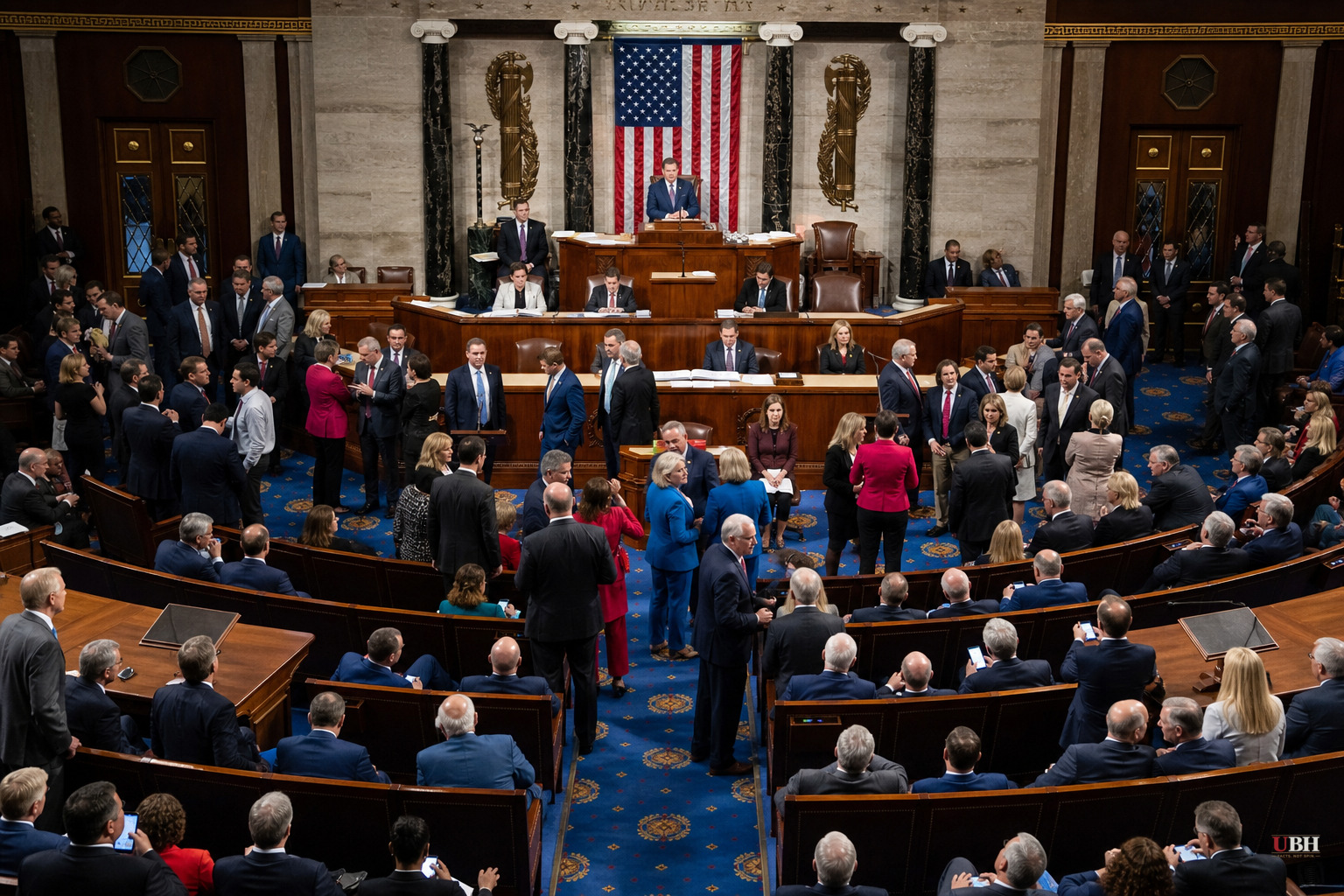
The House passed a bill Wednesday combining new limits on congressional stock trading with a federal voter ID requirement, in a 232-198 vote that split largely along party lines. Just 13 Democrats joined all voting Republicans to pass it, according to CBS News.
The legislation, built around Rep. Bryan Steil's Stop Insider Trading Act, would bar members of Congress, their spouses, and dependent children from purchasing publicly traded stocks. It would also require lawmakers to publicly disclose any planned stock sale at least seven days ahead of time. Violators face a fine of $2,000 or 10% of the transaction's value, whichever is greater, plus forfeiture of any gains, according to CBS News.
Republicans attached an unrelated voter ID mandate requiring photo identification to vote in federal elections, a measure President Trump has pushed for. That pairing is what blew up bipartisan support for the stock trading piece, which had been negotiated for months.
Why Democrats revolted
Rep. Joe Morelle of New York said the bill lets sitting lawmakers keep every share of stock they already own and cash out whenever they want, with no divestiture requirement, according to CBS News. He called the White House's financial conduct "unprecedented, absurd, and deeply offensive" and said the bill does nothing to address it.
Rep. Pramila Jayapal of Washington called it "a fake stock trading ban," according to CBS News. Rep. Yvette Clarke, chair of the Congressional Black Caucus, went further, telling reporters the combined bill "would allow members of Congress to continue owning, selling, and, in some cases, purchasing individual stocks while simultaneously imposing stricter voter ID requirements that would make it harder for millions of eligible Americans to vote," according to Common Dreams. She called it "a Trojan horse."
Rep. Alexandria Ocasio-Cortez accused GOP leaders of disguising "massive SAVE Act-style voter suppression measures" inside what had been framed as an insider trading bill, writing on social media that Republicans were trying to "pull a trick," according to Common Dreams. The Campaign Legal Center sent lawmakers a letter arguing the bill's ID requirements would exclude forms of identification that young voters and voters of color disproportionately rely on, per the same report.
Republicans defend the pairing, one GOP member breaks ranks
Rep. Zach Nunn of Iowa, a lead advocate for the stock ban, argued the two provisions belong together because both poll well with the public and Republicans want the package on Trump's desk before the August district work period, according to Fox News. "Only in Washington can you have two wins for 90% of Americans, and Democrats will say that's one win too many," Nunn said.
Rep. Stephanie Bice of Oklahoma framed the stock provision as an accountability measure. "The American people deserve to know their elected officials are serving the public, not their own financial interests," she told Fox News.
But not every Republican bought the strategy. Rep. Thomas Massie of Kentucky accused his own party of using voter ID as a wedge specifically to sink Democratic support for the stock ban, then use their no votes as a campaign attack ad. "If we really wanted to ban stock trading for members of Congress, we would offer stand alone legislation and could get a large bipartisan majority," Massie wrote on X, according to Fox News.
What the bill actually does, and doesn't, do
The underlying accountability problem is real and bipartisan in its frustration. Under the 13-year-old STOCK Act, lawmakers and executive branch officials are barred from trading on nonpublic information and must disclose trades over $1,000 within 45 days. But according to CBS News, no member of Congress has ever been prosecuted under that law despite documented violations.
Whether Steil's bill fixes that gap is genuinely contested. It bans new stock purchases but does not force divestiture of current holdings, a distinction Morelle, Jayapal, and Clarke all flagged. Republicans counter that a purchase ban plus mandatory disclosure is a meaningful first step that can pass now rather than stall in negotiations indefinitely.
The bill next heads to the Senate, where its fate is unclear. Whether the chamber takes up the House package as written, strips the voter ID language, or lets it die will determine whether either policy becomes law before the November elections Nunn referenced.
Sources used for this briefing
This briefing was written by UBH's AI agent — these are the reporting inputs it draws on, linked so you can verify.


