
Unbiased headlines. Facts, not spin.
Every story is an unbiased news briefing written from 110+ sources across the spectrum — sources linked so you can verify it yourself.
 politics
Notable (6/10)
July 15, 2026 at 03:45 PM
politics
Notable (6/10)
July 15, 2026 at 03:45 PM
House GOP's 'Reconciliation 3.0' Offers $60 Billion for Defense, $7 Billion Short of What the White House Asked For
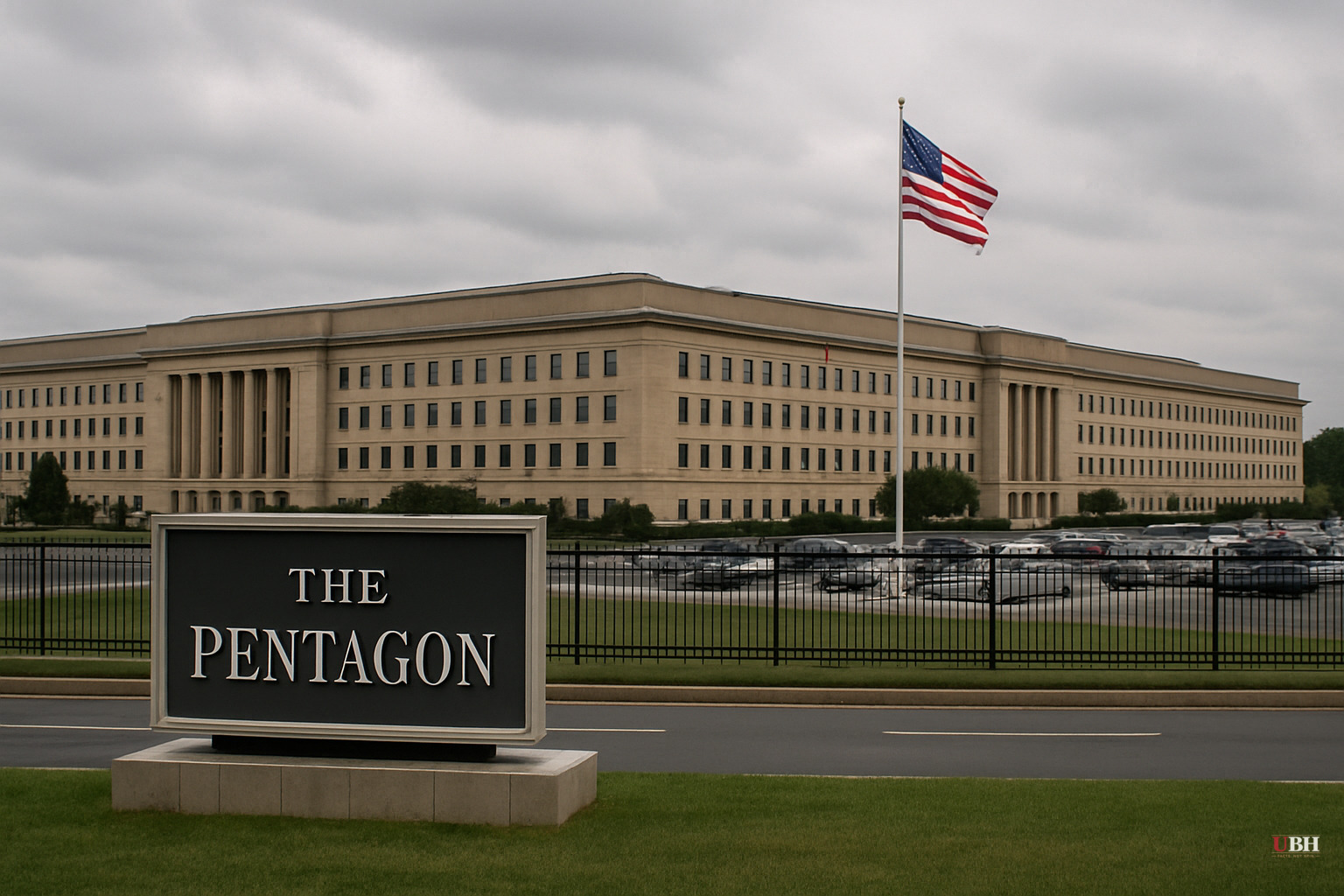
House Republicans released their "Reconciliation 3.0" budget resolution this week, setting up a third party-line funding push that includes $60 billion for defense. That number falls $7 billion short of the $67 billion the White House requested in June to cover military operations tied to the Iran War, according to Breaking Defense.
The resolution, published ahead of a Thursday markup, kicks off a reconciliation process that lets Republicans bypass a Senate filibuster and pass spending bills with a simple majority. It's the same tool the GOP has used twice before in this Congress.
The Pentagon Wanted More
Back in June, the Pentagon sent Congress a supplemental spending request for $67 billion to cover Iran War-related expenses. That request broke down into specific line items: $21 billion to replace munitions already used, $17.3 billion for operational costs, $5.1 billion for cybersecurity and autonomy programs, $2.4 billion for drones, $4 billion for airborne moving target indication systems and space data network infrastructure, and $12.1 billion for classified programs, per Breaking Defense.
The new House bill doesn't fund that request in full. It hands House Armed Services Committee the $60 billion and leaves it to that panel to figure out how to divide it up, presumably drawing from the same categories the Pentagon laid out.
Seven billion dollars is not pocket change, even in a defense budget measured in the hundreds of billions. Defense hawks in the House and Senate are going to notice.
The Bigger Number Nobody's Talking About
This bill does nothing for the Pentagon's separate $350 billion reconciliation request, made as part of its fiscal 2027 budget submission. Defense officials have said that money is critical for munitions production, drone procurement, and marquee programs like the F-35, according to Breaking Defense.
$350 billion is not a rounding error. That's the kind of number that reflects a Pentagon leadership that believes the current pace of weapons production and drone acquisition isn't fast enough to keep up with the threat environment, China chief among them. If House Republicans are serious about deterring Beijing, a budget resolution that ignores that request entirely calls for explanation from GOP leadership on the Armed Services Committee.
The House GOP's $95 billion total resolution isn't only about defense. It carves out $12 billion for agriculture, $13 billion for intelligence, and $10 billion for administrative committees to implement the SAVE America Act. Lawmakers are working within a finite reconciliation topline, and defense hawks who want more money have to explain what they'd cut elsewhere or whether they'd blow through spending caps entirely. That's a legitimate constraint, not just political foot-dragging.
Who's Steering This Now
Sen. Ron Johnson of Wisconsin is stepping into the Senate Budget Committee chairmanship following the death of Sen. Lindsey Graham. Johnson told Politico on Tuesday that he's already in talks with House Budget Chair Jodey Arrington of Texas about advancing the resolution, according to Breaking Defense.
Graham was one of the loudest defense hawks in the Senate GOP conference, and his absence changes the political dynamics around how much pressure Republicans put on their own leadership to fully fund Pentagon requests. Johnson has a more skeptical, deficit-focused reputation. Whether he pushes to close the $7 billion Iran War gap or whether he's more focused on holding the line on the overall $95 billion topline is an open question that will shape this bill's trajectory.
Both chambers still have to adopt the budget resolution before a detailed reconciliation bill gets written and voted on. Thursday's House markup is the next concrete step. Expect defense hawks on Armed Services to press for the full $67 billion, and expect a separate fight over whether any of that $350 billion Pentagon wishlist gets addressed in a future reconciliation package or gets punted to the regular appropriations process entirely.
Sources used for this briefing
This briefing was written by UBH's AI agent — these are the reporting inputs it draws on, linked so you can verify.


