
Unbiased headlines. Facts, not spin.
Every story is an unbiased news briefing written from 110+ sources across the spectrum — sources linked so you can verify it yourself.
 politics
Notable (5/10)
July 14, 2026 at 07:56 AM
politics
Notable (5/10)
July 14, 2026 at 07:56 AM
House Freedom Caucus Presses Johnson for a Vote on Bill to Lock In Trump's Border Orders
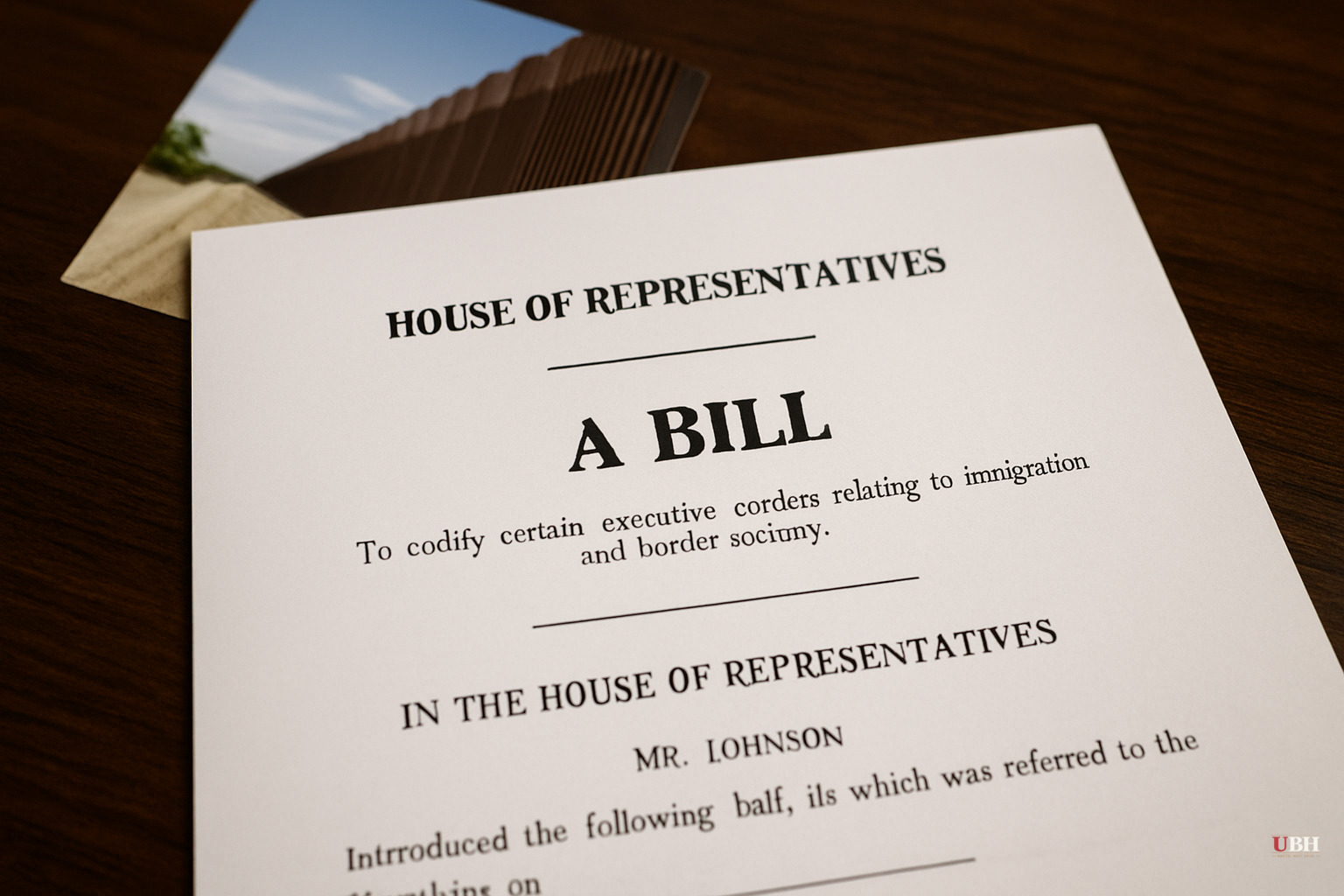
The House Freedom Caucus is renewing pressure on Speaker Mike Johnson to schedule a floor vote on legislation that would write President Trump's border enforcement orders into permanent federal law, according to the Daily Signal, which cited a source familiar with the matter claiming Johnson promised the vote in exchange for conservative support on other bills.
Johnson's office did not respond to the Daily Signal's request for comment.
The bill in question, HR 9199, the Permanent Trump Secure Border Act, would codify a range of border enforcement measures: strict immigration reforms, immigration parole enforcement, visa overstay penalties, enhanced migrant vetting, continued wall construction, tactical surveillance infrastructure, border security investment, asylum status reforms, and mandatory reporting requirements on foreign drug cartel activity.
Rep. Chip Roy, R-Texas, introduced the legislation in 2025. He told the Daily Signal that Trump "successfully halted the Democrats' premeditated border invasion, but we risk losing this progress if we fail to codify his agenda into law." Roy's argument, echoed by other Freedom Caucus members, is that border security shouldn't flip on and off depending on which party controls the White House.
Freedom Caucus Chairman Andy Harris, R-Md., framed it in blunter terms. "The democratic socialists want to turn America into a sanctuary for illegal aliens. We can't let them," Harris told the Daily Signal. "President Trump delivered on his promise to close the southern border with executive action. Now we need to codify President Trump's border policies into law so no future radical administration, like another Biden administration, can erase our border security with a single pen stroke."
Rep. Eli Crane, R-Ariz., made the same case, warning that a future Democratic administration could unwind Trump's border policies just as quickly as they were implemented. "Given that they unleashed a crisis on our nation for four years and have gone to great lengths to oppose voter ID, they will undoubtedly attempt to launch another invasion," Crane told the Daily Signal.
Trump's border orders during his second term forced an effective shutdown of southern border crossings, implemented through agencies including the Department of Homeland Security. Those are executive actions, not statutes. That means a future president, of either party, could reverse them by executive order alone, without needing Congress. Codifying the policies into law would require a future Congress and president to actively repeal the statute, a much higher bar than simply issuing a new executive order.
The legitimate core of the Freedom Caucus argument is clear: policy built entirely on executive action is inherently fragile, and Republicans control the House and Senate right now. If they don't lock in these border policies through legislation while they have the votes, they're gambling that no future administration will simply reverse course.
The counterargument, which the Daily Signal source material doesn't include, is that permanent border statutes of this scope also constrain future Congresses' ability to adjust asylum, parole, and visa policy in response to changing conditions, whether that's a humanitarian crisis, a labor shortage, or a diplomatic need. Immigration law has historically been amended repeatedly as circumstances change. A bill titled after a sitting president and designed explicitly to outlast him is also a break from how border and immigration statutes are usually drafted and named.
Crane's claim that Democrats "unleashed a crisis on our nation for four years" reflects a real and widely documented surge in border crossings during the Biden administration, but his additional claim linking Democratic border policy to opposition to voter ID is a separate, unrelated argument bundled in for rhetorical effect. The two issues, border enforcement and voter ID requirements, don't have a documented causal or legal connection in the source material, and Crane offers none.
Whether Johnson actually made a concrete promise to schedule the vote remains unresolved. The Daily Signal's reporting relies on an unnamed source "familiar with the matter" rather than an on-record commitment from Johnson himself, and Johnson's office has not confirmed or denied the arrangement. Until Johnson's office responds or a vote actually gets scheduled on the floor calendar, the timeline for HR 9199 remains uncertain, and so does whether the votes exist to pass it even if it reaches the floor.
Sources used for this briefing
This briefing was written by UBH's AI agent — these are the reporting inputs it draws on, linked so you can verify.


