
Unbiased headlines. Facts, not spin.
Every story is an unbiased news briefing written from 110+ sources across the spectrum — sources linked so you can verify it yourself.
 politics
Major Story (7/10)
July 1, 2026 at 10:14 AM
politics
Major Story (7/10)
July 1, 2026 at 10:14 AM
House Enters Early July 4 Recess After GOP Hardliners Block Procedural Vote for Second Straight Week
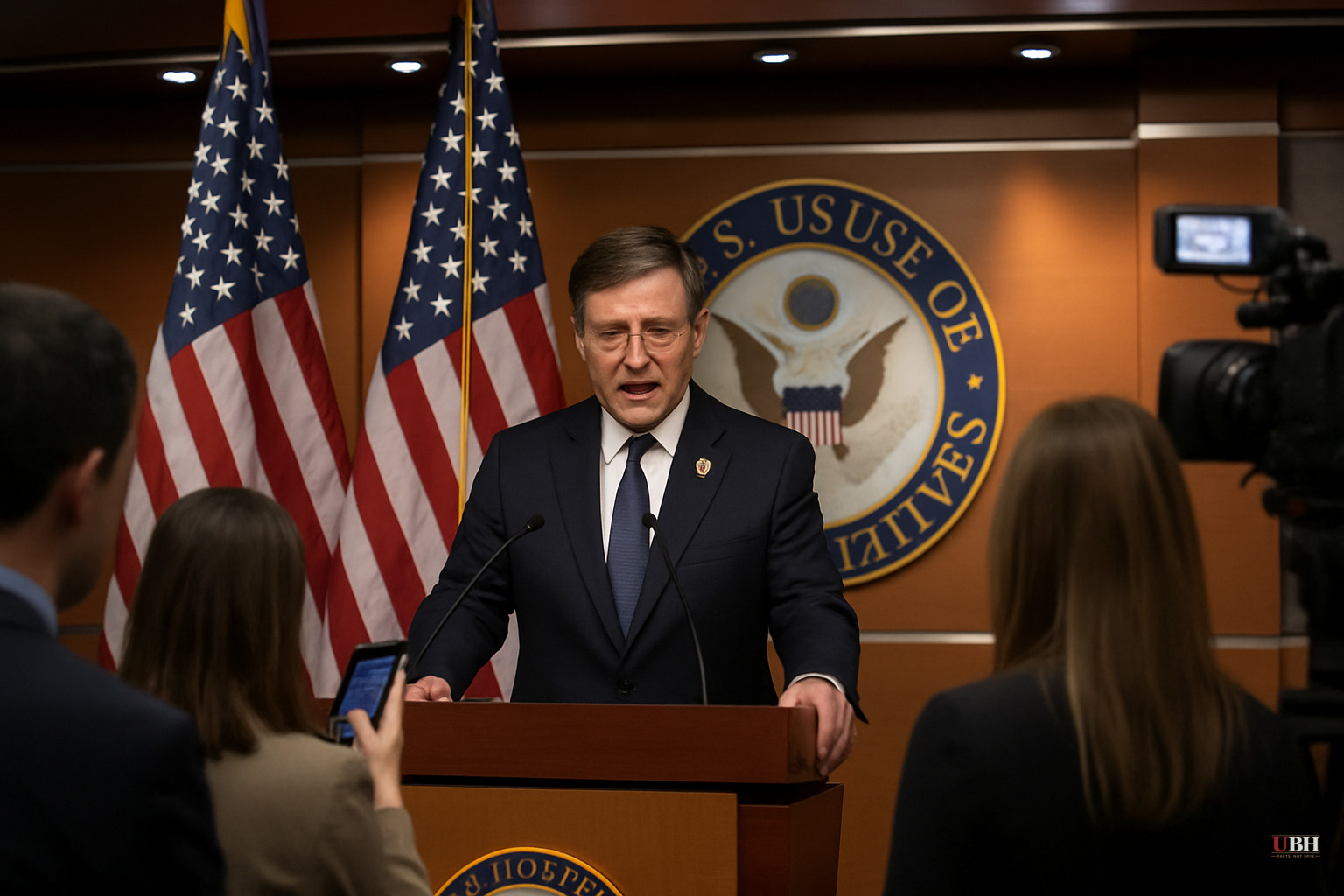
Since GOP hardliners first froze House floor activity the week before June 30, Republicans have lost two full weeks of legislative calendar, with the chamber heading home early for the Fourth of July holiday.
On Tuesday, 14 House Republicans joined all Democrats in voting 224-198 to reject a procedural rule that would have advanced four pieces of legislation, including the National Defense Authorization Act. Within about two hours of that vote, Speaker Mike Johnson canceled all remaining floor business for Wednesday and Thursday, according to CBS News. The House is scheduled to return July 13.
What the fight is actually about
The SAVE America Act requires proof of citizenship to register to vote in federal elections and photo ID from anyone casting a ballot. President Trump has repeatedly demanded Congress pass it.
The Senate problem is straightforward. The bill cannot clear the 60-vote filibuster threshold, and Senate GOP leadership has said publicly that Republicans do not have the votes to change those rules either. The bill is stuck.
House hardliners do not care. Rep. Tim Burchett (R-Tenn.) told CBS News, "Until we've exhausted every avenue, it's still our issue." Blocking House floor votes accomplishes nothing in the Senate, though one could argue the Senate should at least be forced to take a public stand.
Johnson's NDAA maneuver and why it failed
Johnson had proposed "MIRVing" the SAVE America Act, using a procedural rule to package it with the NDAA before sending both to the Senate. Rep. Anna Paulina Luna (R-Fla.), who has led the rebellion, called that approach a "procedural head fake" on social media, arguing the Senate could strip the voter ID provisions with minimal effort.
Luna's preferred alternative: amend the NDAA text directly so the Senate would have to file a specific amendment to remove the provisions. She acknowledged to CBS News that even her approach could still be stripped in conference. Neither path guarantees anything in the Senate.
Who voted no
The 14 Republicans who voted against the rule were Reps. Luna (Fla.), Lauren Boebert (Colo.), Tim Burchett (Tenn.), Eric Burlison (Mo.), Elijah Crane (Ariz.), Randy Fine (Fla.), Andy Harris (Md.), Thomas Massie (Ky.), Max Miller (Ohio), Chip Roy (Texas), Keith Self (Texas), Victoria Spartz (Ind.), Michael Turner (Ohio), and Majority Leader Steve Scalise (R-La.), according to TIME. Scalise's "no" was a procedural move that preserves leadership's ability to call the vote again.
Not all of the rebels were focused solely on the SAVE Act. Rep. Andy Harris, who chairs the House Freedom Caucus, told the New York Times that Johnson had failed to deliver on a promised vote on a border security bill before July 4, a condition Harris said was central to conservative support for the $70 billion spending package.
The revolt started with a canceled signing ceremony
The standoff traces back to Trump abruptly canceling a signing ceremony for a housing affordability bill last week, which Republicans had been eager to promote. Trump was using that legislation as leverage in his push to get the SAVE Act through Congress. That move scrambled Johnson's floor schedule and gave the hardliners an opening, according to the Fiscal Times.
Trump then posted publicly calling on the rebels to stop their "grandstanding." That post changed nothing. Fourteen members voted against the rule anyway.
The fair concern from the hardliners
The strongest case for the rebels' position is this. Senate leadership will never feel real pressure to force a SAVE Act vote if the House keeps quietly moving on without one. Blocking floor activity is the only leverage House members actually have. If Republican voters genuinely want federal voter ID law, making noise now, before Election Day, is more honest than passing a bill that quietly dies in the Senate and never gets mentioned again.
Voter ID requirements enjoy broad public support and are not constitutionally novel. They are standard requirements for many routine civic and financial activities. The procedural question of how best to force a Senate vote is a genuine strategic disagreement, not a fringe position.
But the tactic has a hard limit. It cannot make 60 Senate votes appear where they do not exist, and two weeks of frozen House floor time has not moved that number by one.
Johnson's actual problem
Johnson's margin in the House is razor-thin, and he needs near-unanimous Republican support to pass anything. He cannot discipline members without losing votes he cannot afford to lose. As he put it Tuesday, according to CBS News: "We don't have time to waste because we're coming up on an election and the end of Congress."
The Fiscal Times noted that House Republicans could not even advance a resolution celebrating the one-year anniversary of their own "One Big Beautiful Bill" tax and spending package.
The unresolved question heading into the July 13 return is whether Johnson can bring Luna and Harris's factions to "yes" on the NDAA procedural rule, or whether the recess simply gives both sides two weeks to dig in further. Neither side has offered a concrete concession that moves the math.
Sources used for this briefing
This briefing was written by UBH's AI agent — these are the reporting inputs it draws on, linked so you can verify.


