
Unbiased headlines. Facts, not spin.
Every story is an unbiased news briefing written from 110+ sources across the spectrum — sources linked so you can verify it yourself.
 politics
Major Story (7/10)
July 22, 2026 at 11:46 AM
politics
Major Story (7/10)
July 22, 2026 at 11:46 AM
House Advances $8 Billion Ukraine Aid Bill 218-204, Over White House Objections
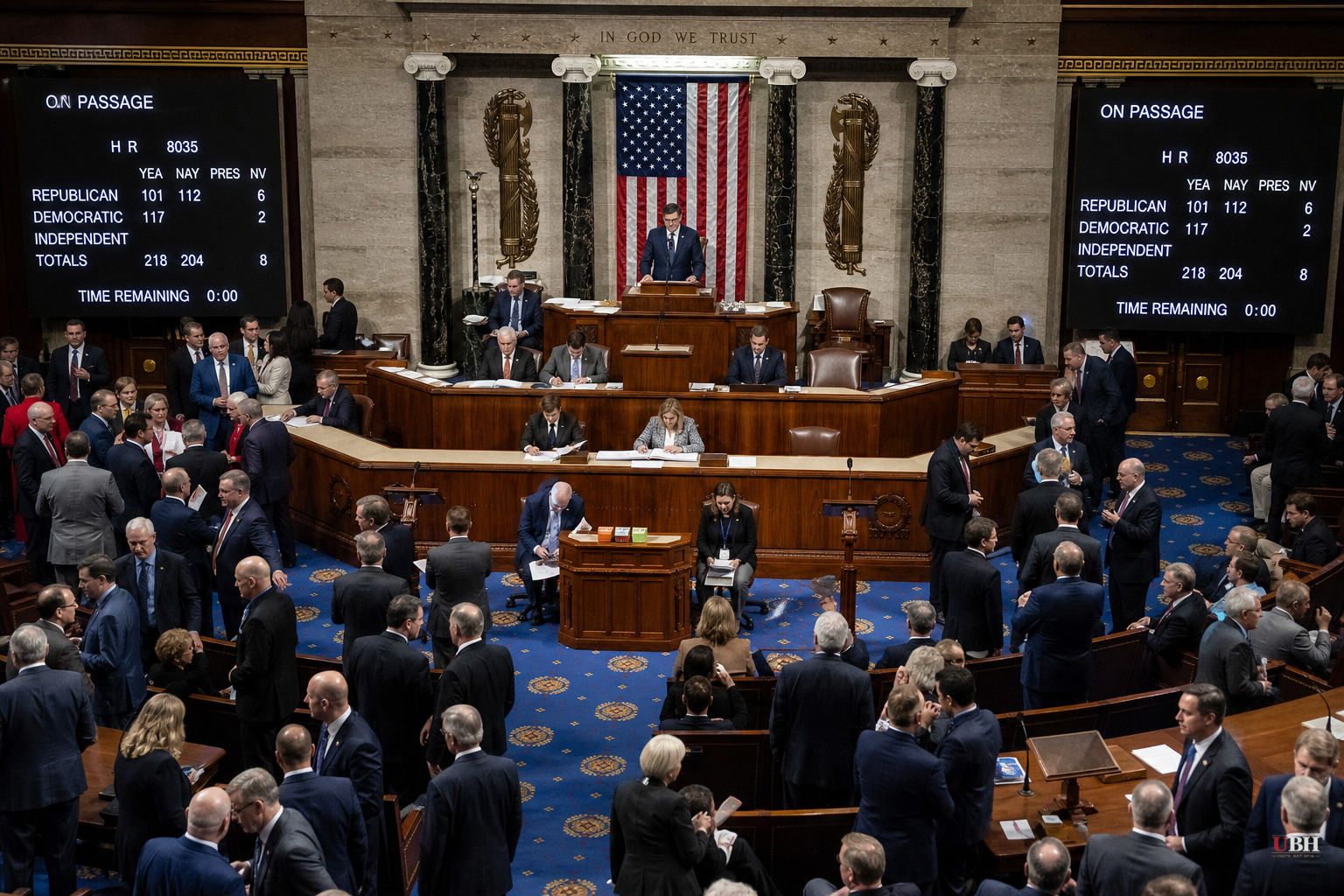
The House of Representatives voted 218-204 to advance the Ukraine Support Act, clearing a procedural hurdle for a final vote and marking the first time since President Donald Trump returned to office that major Ukraine aid legislation has moved forward over White House resistance, according to RFE/RL.
Six Republicans crossed party lines to join Democrats on the procedural vote. That's a small number, but in a chamber where GOP leadership generally controls what reaches the floor, it's enough to signal a real fracture over how the party should handle Russia's war against Ukraine.
What's In the Bill
The legislation, introduced by Representative Gregory Meeks, a Democrat from New York, would authorize $8 billion in military financing loans to Ukraine. It would also extend the Ukraine Security Assistance Initiative through 2027 and add new sanctions on Russia.
Meeks called the upcoming final vote "of historic importance," describing Russia's invasion as "the largest land war in Europe since World War II" and framing it as a test of whether Congress will keep supporting Ukraine and "stand for our values."
Representative Don Bacon of Nebraska, one of the six Republicans who broke ranks, welcomed the result. "This is our Churchill moment and we must pass the test," Bacon said after the vote, according to RFE/RL.
Bacon compared the moment to Britain's stand against Nazi Germany. Whether that comparison holds up is a matter of judgment. But it captures how seriously Bacon and the other Republican defectors are treating this vote, and it puts them at odds with a White House that has pushed for a different approach to Moscow.
Rubio's Testimony
Hours before the House vote, Secretary of State Marco Rubio gave what RFE/RL described as a notably blunt assessment of Russia's war effort during congressional testimony. Rubio told lawmakers that Russia has failed to achieve its original objectives in Ukraine and may never get what it's now demanding at the negotiating table.
"I don't think there's any doubt at this point in the minds of most observers around the world, and I would say in the minds of some inside of Russia, that the invasion of Ukraine has been a strategic disaster for them," Rubio said. "They are not going to achieve the objectives they set out on day one, for certain, and they may not even be able to militarily ever achieve the objectives they're demanding now in negotiations."
He went further, telling Congress that Ukrainian forces have made battlefield gains in recent weeks and have gotten more effective at hitting targets deep inside Russia with long-range strikes. "Not only are the Ukrainians bravely fighting, they're effectively fighting," Rubio said.
Rubio also reiterated that Washington does not consider itself a neutral party in the conflict, noting the US has sanctioned Russia and sold weapons to Ukraine, while stressing that those sanctions remain directed at Moscow, not Kyiv. Still, he argued the war "has no military solution" and "has to have a negotiated settlement," acknowledging that talks have stalled because Russian and Ukrainian demands remain far apart.
Rubio also disclosed that the administration is finalizing a new $400 million military assistance package for Ukraine, funded through the Ukraine Security Assistance Initiative, which would let the Pentagon procure equipment and ammunition directly from US defense contractors.
That assessment from Trump's own secretary of state stands apart from the skepticism that's come from other corners of the administration and from Republicans who want US involvement scaled back.
A Party Divided
RFE/RL's reporting doesn't detail the specific objections raised by the 204 House members who voted against advancing the bill, but the vote itself highlights divisions within Trump's party over US policy toward Ukraine and Russia.
Supporters counter that Russia has intensified missile and drone strikes across Ukraine in recent months, and that Ukrainian President Volodymyr Zelenskyy has repeatedly asked Washington for more Patriot air-defense interceptors to stop ballistic missiles from hitting Ukrainian cities.
RFE/RL's reporting doesn't specify how the White House itself has responded to this specific bill or whether Trump plans to veto it if it clears the Senate. Even after clearing this procedural hurdle, it was unclear whether the measure would get final approval. Until the bill reaches Trump's desk or a Senate vote happens, the practical effect of this fight remains a marker of internal GOP division more than a change in US policy.
Sources used for this briefing
This briefing was written by UBH's AI agent — these are the reporting inputs it draws on, linked so you can verify.


