
Unbiased headlines. Facts, not spin.
Every story is an unbiased news briefing written from 110+ sources across the spectrum — sources linked so you can verify it yourself.
 tech
Notable (6/10)
August 2, 2026 at 12:39 AM
tech
Notable (6/10)
August 2, 2026 at 12:39 AM
Honda Partners With QuantumScape on Solid-State Batteries After Killing Its EV Launch and Posting a Rare Loss
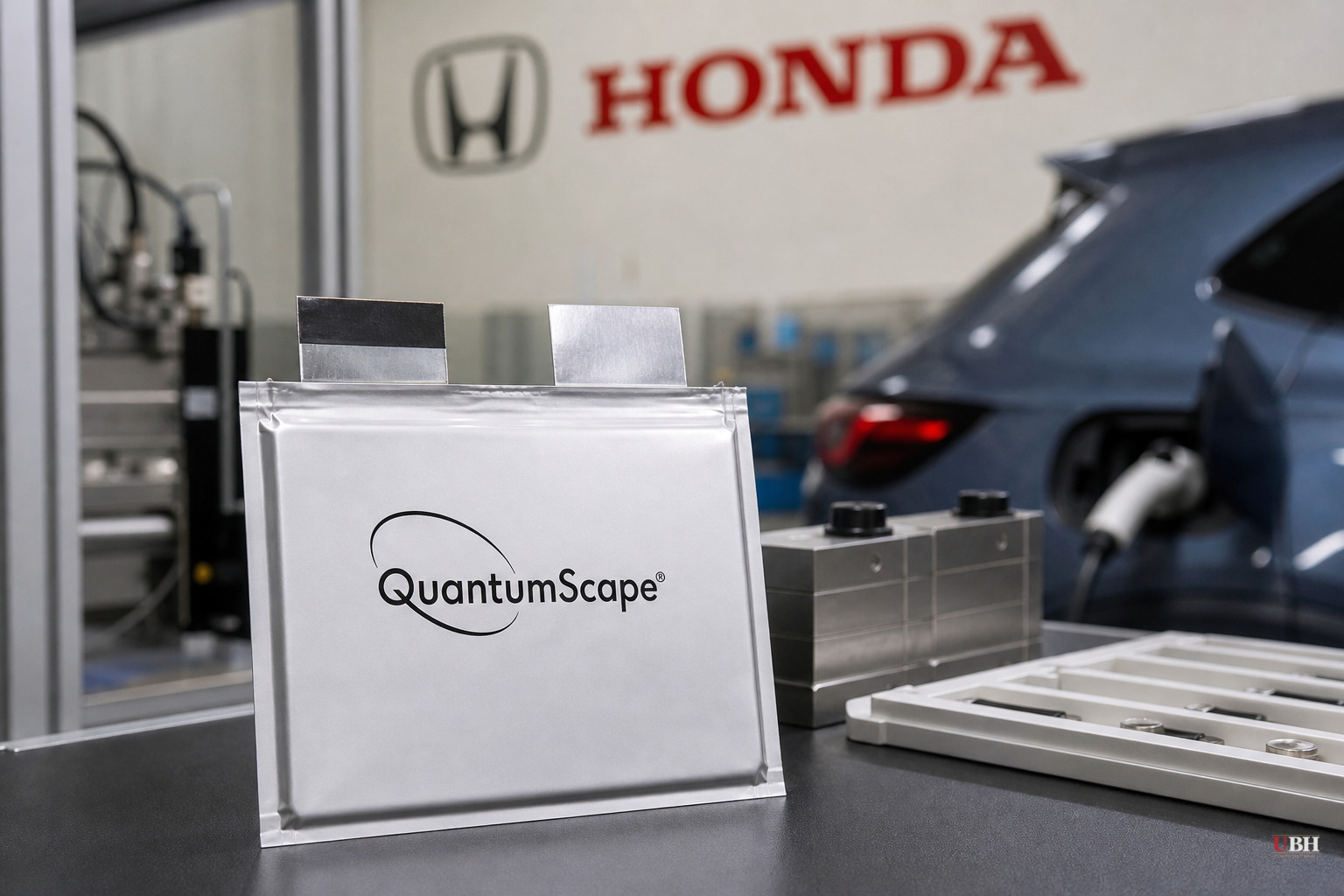
Honda just made a bet that solid-state batteries, not the lithium-ion packs in today's EVs, represent the next major investment opportunity.
The Japanese automaker announced a partnership in June 2026 with QuantumScape, a San Jose battery developer, to research and develop solid-state battery technology and the manufacturing processes needed to build it at scale, according to Engadget. The deal comes only months after Honda killed the North American launch of three electric models: the Honda 0 SUV, the Honda 0 Saloon, and the Acura RSX.
That cancellation wasn't a minor course correction. It followed Honda's first annual financial loss in nearly 75 years, per Engadget's reporting. When a company that has posted profits through multiple recessions, the 2008 financial crisis, and a global pandemic suddenly loses money, something in the business model broke. Honda's own EV rollout appears to have been part of that.
What Honda actually signed up for
Atsushi Ogawa, Chief Operating Officer at Honda R&D's Research Center of Excellence, said in a press release that QuantumScape's solid-state platform "demonstrated compelling and unique advantages" during a technical study conducted ahead of the deal. Ogawa also said the partnership could "add value across a range of applications" beyond passenger vehicles, including data centers, drones, and robotics, according to Engadget.
That last point matters. QuantumScape isn't pitching this purely as an EV play anymore. Data centers are burning through electricity at a rate that's straining power grids nationwide, and better energy storage is a real bottleneck for that industry too. If QuantumScape's technology works as advertised, Honda gets a foothold in more than one growth market.
Honda isn't QuantumScape's only automotive partner. Volkswagen's battery subsidiary, PowerCo SE, struck a similar deal with the company last year, according to Engadget. Two major automakers backing the same battery startup within roughly a year of each other signals the industry sees something real here, not just a science project.
The technical case for solid-state
Current EV batteries rely on liquid electrolytes, typically lithium salts dissolved in organic solvents, to shuttle charged particles between the cathode and anode. Solid-state batteries replace that liquid with a solid material, such as an oxide, sulfide, or polymer, according to Engadget's breakdown of the technology.
This eliminates a fire risk from leaking liquid electrolyte. It also allows manufacturers to replace the carbon or silicon anode used in today's batteries with lithium metal, which packs more energy into the same amount of space. In theory, this means longer range, faster charging, and lower long-term costs once the manufacturing process is figured out.
Solid-state batteries have been the next big thing in EV technology for the better part of a decade, and mass production at automotive scale has proven difficult. Toyota, Samsung, and others have chased the same prize with mixed results and repeated timeline slips. QuantumScape itself has pushed back production targets before. Nothing in Honda's announcement guarantees this partnership solves the manufacturing problem faster than competitors have.
The bigger picture for Honda
Honda has stated a goal of carbon neutrality by 2050, and this partnership is being framed as a step toward that target, per Engadget. But the timing tells its own story. A company doesn't usually pull three EV models off the U.S. market and announce a battery research partnership in the same year unless it's rethinking its entire electrification strategy from the ground up.
There's a case to be made that Honda's original EV push moved too fast, chasing regulatory deadlines and competitor hype rather than waiting for battery technology that actually delivers the range and cost advantages consumers want. Pulling back to invest in solid-state R&D, rather than continuing to lose money on lithium-ion models Americans weren't buying, is the more disciplined move. Critics of the broader EV mandate push, including some Republican lawmakers who have argued government-driven EV timelines outran consumer demand and battery science, would likely see Honda's retreat as vindication of that concern.
On the other hand, walking away from a launch after sinking development costs into three named vehicle programs is not a cost-free pivot. Honda ate a loss to get here, and QuantumScape's technology remains unproven at commercial vehicle scale.
No timeline has been given for when Honda-QuantumScape solid-state batteries might appear in an actual vehicle, and neither company has disclosed the financial terms of the partnership. The open question is whether Honda plans to relaunch EV models once solid-state technology matures, or whether the automaker is quietly buying itself years of runway to decide if EVs are worth the investment at all.
Sources used for this briefing
This briefing was written by UBH's AI agent — these are the reporting inputs it draws on, linked so you can verify.


