
Unbiased headlines. Facts, not spin.
Unbiased Headlines is an independently owned news organization. We bring you the facts, not opinions, written fresh from 110+ named sources. Sources linked so you can verify it yourself.
 sports
Low Interest (3/10)
sports
Low Interest (3/10)
Historian Victor Davis Hanson Says Caitlin Clark Generated $1 Billion for a WNBA That Won't Settle Its Trans Debate
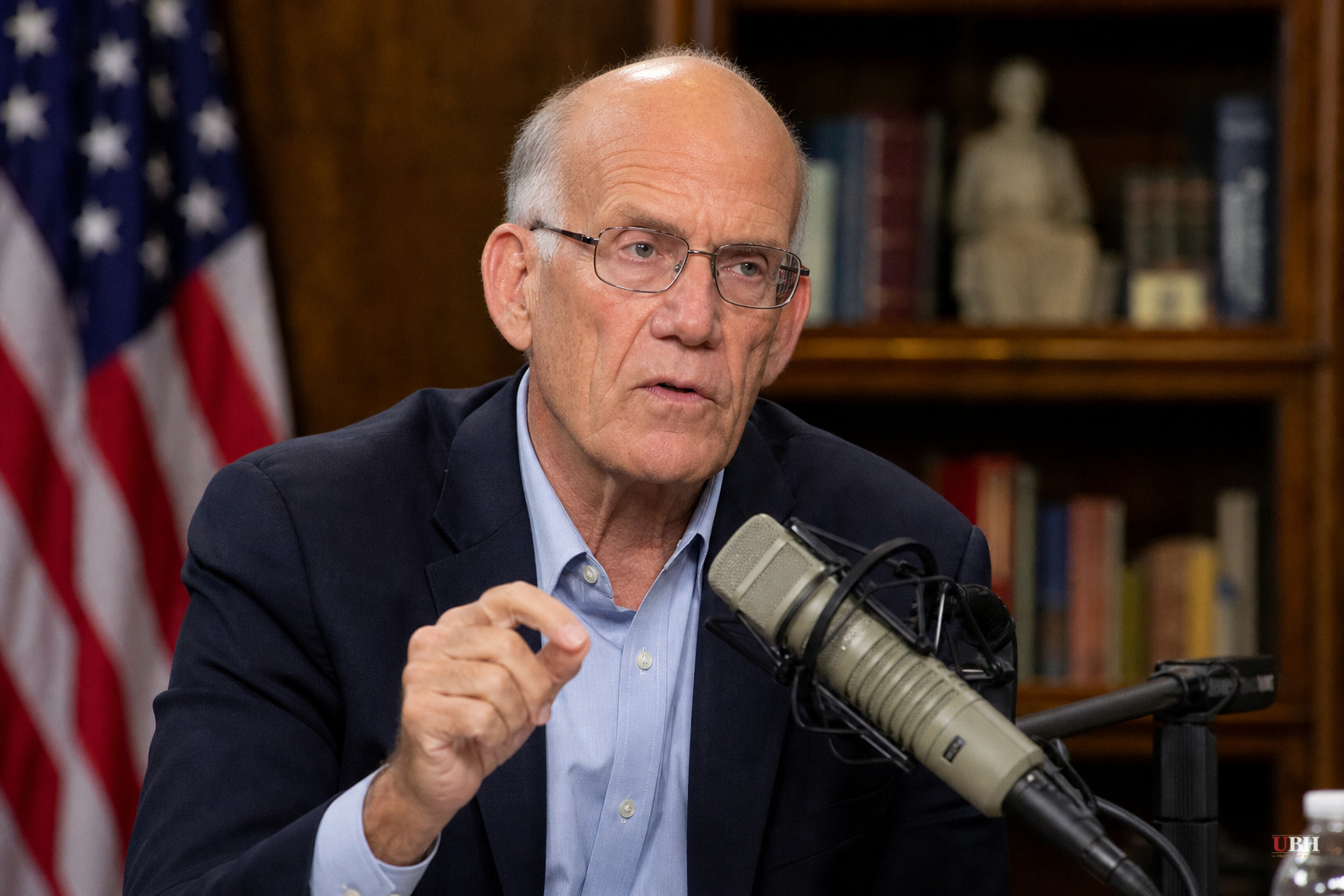
Historian Victor Davis Hanson used an Aug. 6 episode of his podcast, released through The Daily Signal, to make a specific financial claim: Caitlin Clark has generated roughly $1 billion in added value for a WNBA that spent most of its existence operating at a deficit.
Hanson said he checked "about six AI estimates" on Clark's economic impact through ticket sales, merchandising, and advertising tied to television ratings. He noted the Indiana Fever, and any team hosting them on the road, has sold out games since Clark entered the league. The WNBA is owned by the NBA's Board of Governors and, according to Hanson, only turned profitable in roughly the last three years.
That financial claim deserves scrutiny of its own. AI-generated valuation estimates are not audited financial statements, and no WNBA earnings report has confirmed a $1 billion Clark-specific figure. What is independently verifiable: Fever games have drawn record TV audiences and sellout crowds since Clark's 2024 rookie season, a pattern widely reported across sports media well before this podcast aired.
The trans-athlete question the league won't answer
Hanson's sharper point was about the WNBA's handling of transgender participation. He said WNBA coaches, when pressed, give evasive answers rather than stating plainly that only biological women should compete in the women's league.
He pointed to conservative commentator Clay Travis, who has said publicly he would consider buying a WNBA franchise and stocking it entirely with transgender players, arguing the team would win every game due to physical advantages tied to male puberty. Hanson said the league would never actually permit that, because the competitive imbalance would be too obvious to ignore.
Hanson also referenced a Minnesota Lynx coach who wore a jacket carrying a message on trans-inclusion in women's sports, while separately voicing frustration that men still dominate coaching jobs in women's basketball. Hanson called this a logical inconsistency: advocating for biological men's inclusion as players while objecting to men's dominance of the coaching ranks.
If the concern is that women deserve opportunities to compete and lead without being crowded out by men, it's reasonable to ask why that principle would apply to coaching staffs but not rosters. Critics of trans inclusion in women's sports, including groups like the Independent Council on Women's Sports, have made this same argument for several years: that fairness in athletics is supposed to be sport-wide, not selectively applied.
The counterargument, made by transgender-rights advocates and some sports scientists, is that policies vary by league and sport, that hormone therapy can reduce some physical advantages over time, and that blanket bans ignore individual variation in athletic ability. The NCAA and various Olympic bodies have adopted differing eligibility standards, reflecting how unsettled the underlying science and policy debate remains. No source reviewed here identifies a specific WNBA player who is transgender or a specific rule change under consideration by the league.
No WNBA policy change has been announced
Nothing in this reporting indicates the WNBA has changed, is changing, or has committed to changing its eligibility rules. No coach or WNBA official is quoted here confirming or denying a shift in policy. Hanson's characterization of coaches being evasive is his interpretation of public comments, not a direct quote from any named coach declining to answer a specific question.
Hanson also predicted no female-to-male transition athlete will ever play in the NBA within his lifetime or anyone else's, framing the debate as one-directional: biological males potentially competing in women's leagues, not the reverse. That prediction is his own analysis, not a sourced fact.
What's unresolved
The WNBA Players Association has not issued a public statement responding to Hanson's remarks. Commissioner Cathy Engelbert's office has not been quoted addressing the trans-eligibility question in this cycle. Caitlin Clark herself has not commented publicly on the trans-athlete debate in connection with this podcast.
The open questions are concrete: Does the WNBA have a written eligibility policy on transgender athletes, and if so, what does it require? Has any player, agent, or team executive requested a policy review? Until the league, the union, or a named player goes on record, the debate Hanson describes stays exactly where it's been for the past several WNBA seasons. Unresolved, it is argued mostly by commentators and coaches speaking in generalities rather than the league setting a clear rule.
Sources used for this briefing
1 link from 1 independent newsroom (syndicated copies of the same report count once)
These are the sources it draws on, linked so you can verify.


