
Unbiased headlines. Facts, not spin.
Every story is an unbiased news briefing written from 110+ sources across the spectrum — sources linked so you can verify it yourself.
 politics
Major Story (7/10)
July 25, 2026 at 09:48 AM
politics
Major Story (7/10)
July 25, 2026 at 09:48 AM
Hegseth Tells Senate: Not Funding Pentagon at $1.5 Trillion Is the 'Greatest Threat' to America
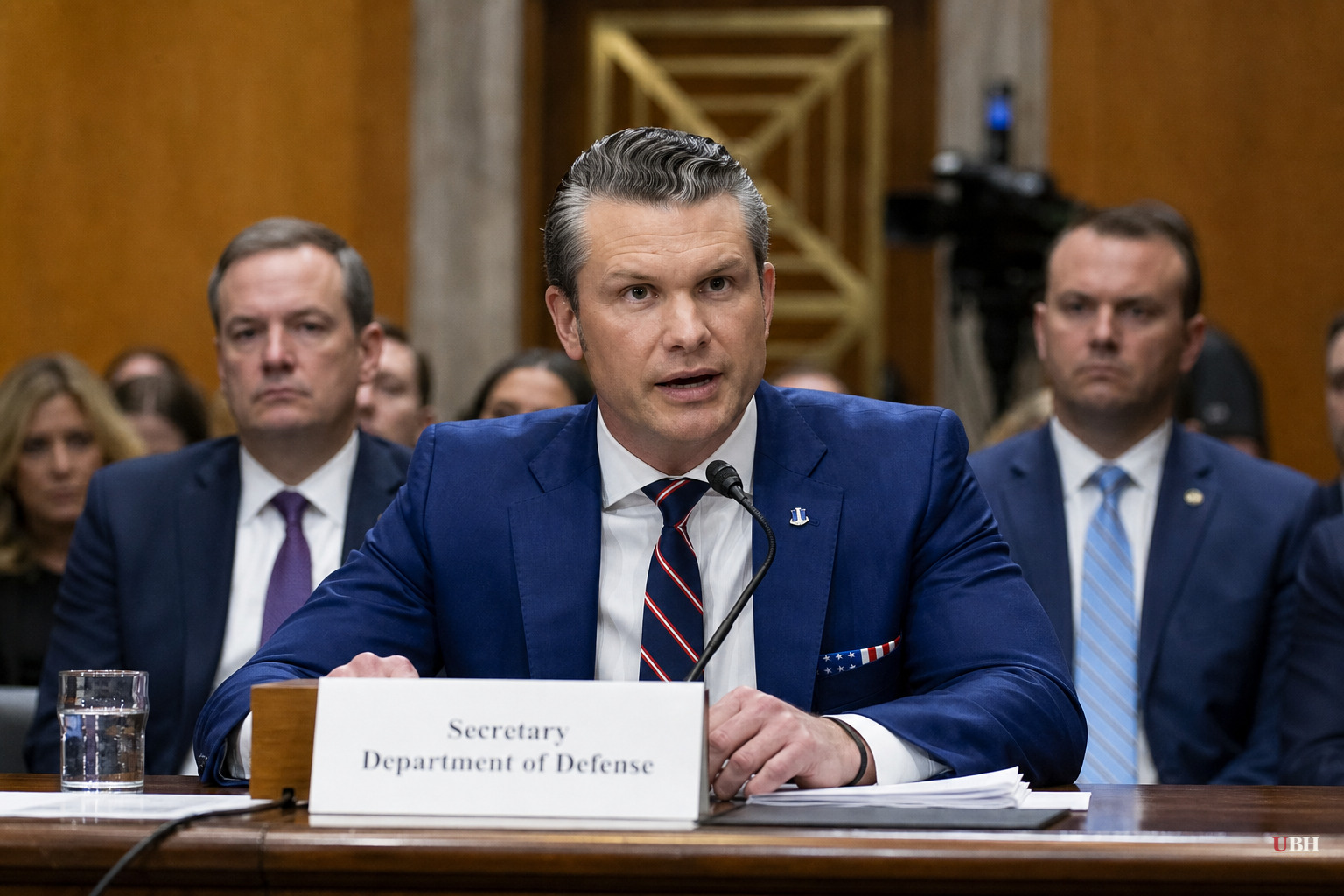
Pete Hegseth walked into the Senate Appropriations Committee on Tuesday, July 21, and said the quiet part loud: the biggest threat to America isn't China, isn't Iran, isn't a porous border. It's Congress not handing the Pentagon $1.5 trillion.
"Not funding this department at $1.5 trillion, I believe, is the greatest threat that our nation faces," Hegseth told senators, according to AntiWar.com and The Jerusalem Post. He was flanked by Joint Chiefs Chairman Dan Caine and Agriculture Secretary Brooke Rollins, who was there because the war's fallout has hit farmers too.
The administration wants $87.6 billion in supplemental funding on top of the regular budget. Roughly $67 billion of that supplemental is tied directly to military operations, with $11.1 billion earmarked for farmers hurt by fertilizer market disruptions tied to the oil shock from the Iran war, according to both AntiWar.com and ZeroHedge. Hegseth insists this supplemental isn't a separate slush fund. He says it folds into the FY27 budget request, not on top of it.
The House already moved. On Wednesday, the House of Representatives voted to authorize $1.15 trillion of the defense budget. That's short of the full $1.5 trillion the administration wants, and the Senate hasn't touched it yet. Only six House Democrats voted yes, which tells you this was a party-line fight, not a bipartisan slam dunk. Some Republican senators have also balked at the price tag, per AntiWar.com, so nothing is guaranteed.
What the war actually costs is contested
Hegseth put a specific number on the Iran war: $37.5 billion so far, per his own testimony as reported by The Jerusalem Post. That's Hegseth's number, from Hegseth, under oath before a committee that controls his budget. Take it for what it's worth.
AntiWar.com reported that "credible independent analysis" puts the real cost north of $100 billion, a figure much closer to the size of the supplemental request itself. If that estimate holds, the Pentagon may be lowballing the war's cost publicly while asking Congress privately for money that lines up with the higher number. The discrepancy is worth Congress's attention, and it's the kind of gap oversight committees exist to close. Neither figure has been independently audited in these sources, and the Pentagon remains the only one of the government's 24 major agencies that has never passed a full audit, a fact Truthout highlighted and that is well documented in Pentagon Inspector General reports going back years.
Hegseth's Biden broadside doesn't hold up on the numbers
Hegseth told the committee the military suffered "shortfalls" under President Biden and that defense funding "was not a priority" for that administration, according to The Jerusalem Post. That claim doesn't survive contact with the budget record. The Pentagon topped $1 trillion for the first time last year, and Biden's own final defense budget request for 2025 was $850 billion, up from $740 billion in his first year, a jump Truthout laid out plainly. Whatever criticisms you want to make of Biden-era military readiness or morale, "not a priority" isn't backed by the dollar figures.
The bigger-picture fight nobody's settling
Truthout framed the ask in stark terms: the extra $500 billion above last year's already-record $1 trillion budget is roughly equivalent to nearly the entire annual Medicaid budget, or the combined yearly cost of the Child Tax Credit, SNAP, school lunch programs, FEMA, the FAA, NIH, and EPA combined, citing the National Priorities Project. Roughly half of Pentagon spending historically flows to contractors like Lockheed Martin, Raytheon, Palantir, and SpaceX, a dynamic that deserves scrutiny regardless of which administration is spending the money.
At the same hearing, protesters interrupted proceedings shouting about the bombing campaign in Iran and Gaza before Capitol Police, at Senator Susan Collins's direction, removed them, according to The Jerusalem Post. That's a reminder the war itself, not just its price tag, remains deeply unpopular with a slice of the public.
The honest case for Hegseth's position is straightforward: America is in an active shooting war, service members need to get paid, munitions stockpiles are depleted, and deterrence against China requires sustained investment, not year-to-year budget gambling. Hegseth's argument that "the best way to create peace is to prepare for war" is a real strategic school of thought, not just rhetoric.
But calling a budget shortfall the "greatest threat" the nation faces, ahead of an active adversary, is a value judgment, not a fact. With the Senate still sitting on the full $1.5 trillion request, some GOP senators uneasy about the number, and a war cost that's murky even to the Pentagon's own math, this fight is nowhere near over. The next marker is whether the Senate matches, cuts, or rejects the House's $1.15 trillion authorization, a vote that hasn't happened yet.
Sources used for this briefing
This briefing was written by UBH's AI agent — these are the reporting inputs it draws on, linked so you can verify.


