
Unbiased headlines. Facts, not spin.
Every story is an unbiased news briefing written from 110+ sources across the spectrum — sources linked so you can verify it yourself.
 politics
Notable (6/10)
July 30, 2026 at 12:14 AM
politics
Notable (6/10)
July 30, 2026 at 12:14 AM
Hadi Matar Convicted on Federal Terrorism Charges in Salman Rushdie Stabbing
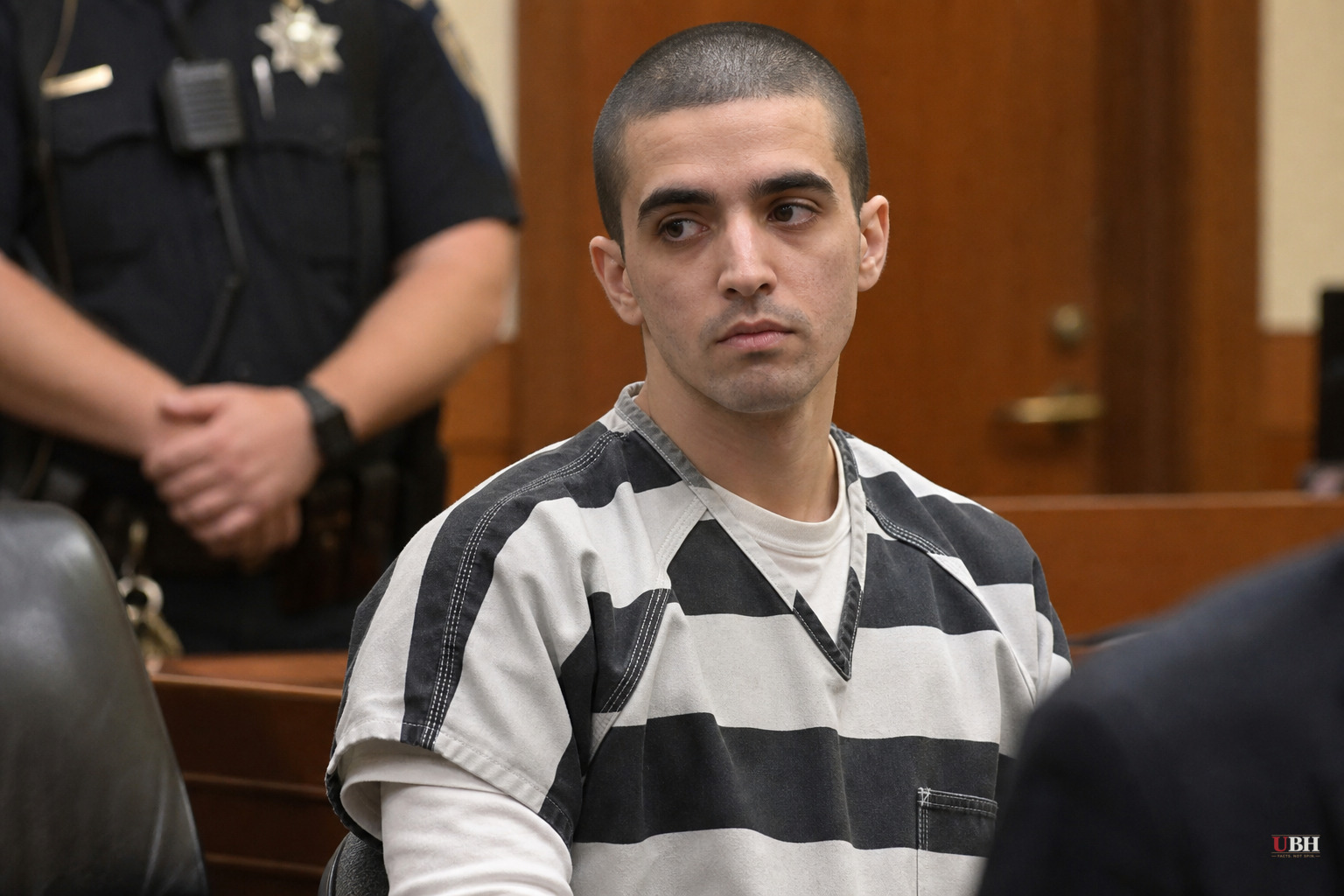
A federal jury in Buffalo, New York convicted Hadi Matar on Wednesday of terrorism charges tied to the 2022 stabbing of author Salman Rushdie. Jurors found him guilty on all counts after roughly two hours of deliberation, capping a trial that began July 21.
Matar, 28, was convicted of engaging in an act of transnational terrorism, providing material support to terrorists, and attempting to provide material support to Hezbollah, the Iran-backed Lebanese militant group designated a terrorist organization by the United States. The federal conviction carries a maximum sentence of life in prison. Sentencing is scheduled for November 3.
Matar is already serving a 25-year New York state prison sentence after being convicted of attempted murder in 2025 for the August 2022 attack, in which he stormed the stage at the Chautauqua Institution in Mayville, New York, and stabbed Rushdie 15 times as the author prepared to speak on writer safety.
What prosecutors argued
US Attorney Timothy Lynch told jurors Matar acted because he believed no one else would carry out the fatwa. "The defendant decided no one was going to do it, so he had to do it," Lynch said. "The defendant is the one who answered that call."
Prosecutors said Matar's motivation traced back to a 1989 fatwa issued by Iran's Ayatollah Ruhollah Khomeini calling for Rushdie's death over the 1988 novel The Satanic Verses, which Khomeini denounced as blasphemous. They also pointed to a 2006 speech by then-Hezbollah leader Hassan Nasrallah reaffirming the fatwa.
Prosecutors presented evidence that Matar spent more than a year researching the fatwa, exchanged messages with an Iran-based contact who claimed to know "where to find Rushdie," and asked whether the fatwa was still active. Message exhibits showed Matar expressing anger that Rushdie had "attacked Islam" and, by surviving public life for decades, had emboldened others to do the same.
Matar was born in the United States and also holds Lebanese citizenship, where Hezbollah is based.
The defense
Matar declined to testify. His attorney, Nathaniel Barone, rested the defense without calling witnesses, telling the court simply, "At this time, the defense rests."
Barone argued that prosecutors had no direct proof of what was actually in Matar's head at the time of the attack. During cross-examination of Rushdie, the defense also questioned whether the author should have anticipated backlash to a novel some Muslims considered blasphemous. Rushdie responded: "I don't believe the book is on trial. Somebody else is on trial."
Proving a defendant's specific ideological motive in terrorism prosecutions, as opposed to personal grievance or generalized violence, often rests on circumstantial evidence like messages, browsing history and prior statements rather than a direct confession of intent. Jurors here evidently found that circumstantial record, including the messages about the fatwa and Nasrallah's speech, sufficient to convict on all counts.
Rushdie's testimony
Rushdie, 79, testified for the prosecution about the attack in graphic terms. "I was on the stage, lying down, with an enormous pool of blood all around me," he said. "It was an enormous and expansive lake of blood."
He described the knife coming "within millimetres" of his brain and lifted the darkened lens of his glasses in court to show the injury that left him blind in his right eye. The attack also wounded Ralph Henry Reese, the moderator of Rushdie's planned lecture.
Rushdie has said he does not want to be defined solely by the attack. Speaking at Tulane University's New Orleans book festival in March, he said he was tired of being everyone's "free speech Barbie," adding: "I don't feel symbolic … I feel actual. I feel like I'm a working writer trying to make his work." He published a memoir on the attack, Knife, and released a novel, The Eleventh Hour, since recovering.
What's unresolved
The fatwa against Rushdie was never formally rescinded by Iran. Khamenei, Khomeini's successor, indicated in 2017 it remained in effect, and an Iranian foundation has offered a bounty exceeding $3 million for Rushdie's death. No US charges have been filed against any Iranian official or Hezbollah figure in connection with the attack, and no announcement has been made regarding further investigation into Matar's overseas contacts. Matar's sentencing on the federal charges is set for November 3, when a judge will decide whether his term runs concurrent with or beyond his existing 25-year state sentence.
Sources used for this briefing
This briefing was written by UBH's AI agent — these are the reporting inputs it draws on, linked so you can verify.


