
Unbiased headlines. Facts, not spin.
Every story is an unbiased news briefing written from 110+ sources across the spectrum — sources linked so you can verify it yourself.
 tech
Notable (5/10)
August 4, 2026 at 03:58 PM
tech
Notable (5/10)
August 4, 2026 at 03:58 PM
Hackers Leaked Alleged iPhone 18 Pro Specs From an Apple Supplier in India. China's State Media Is Using It as a Marketing Pitch.
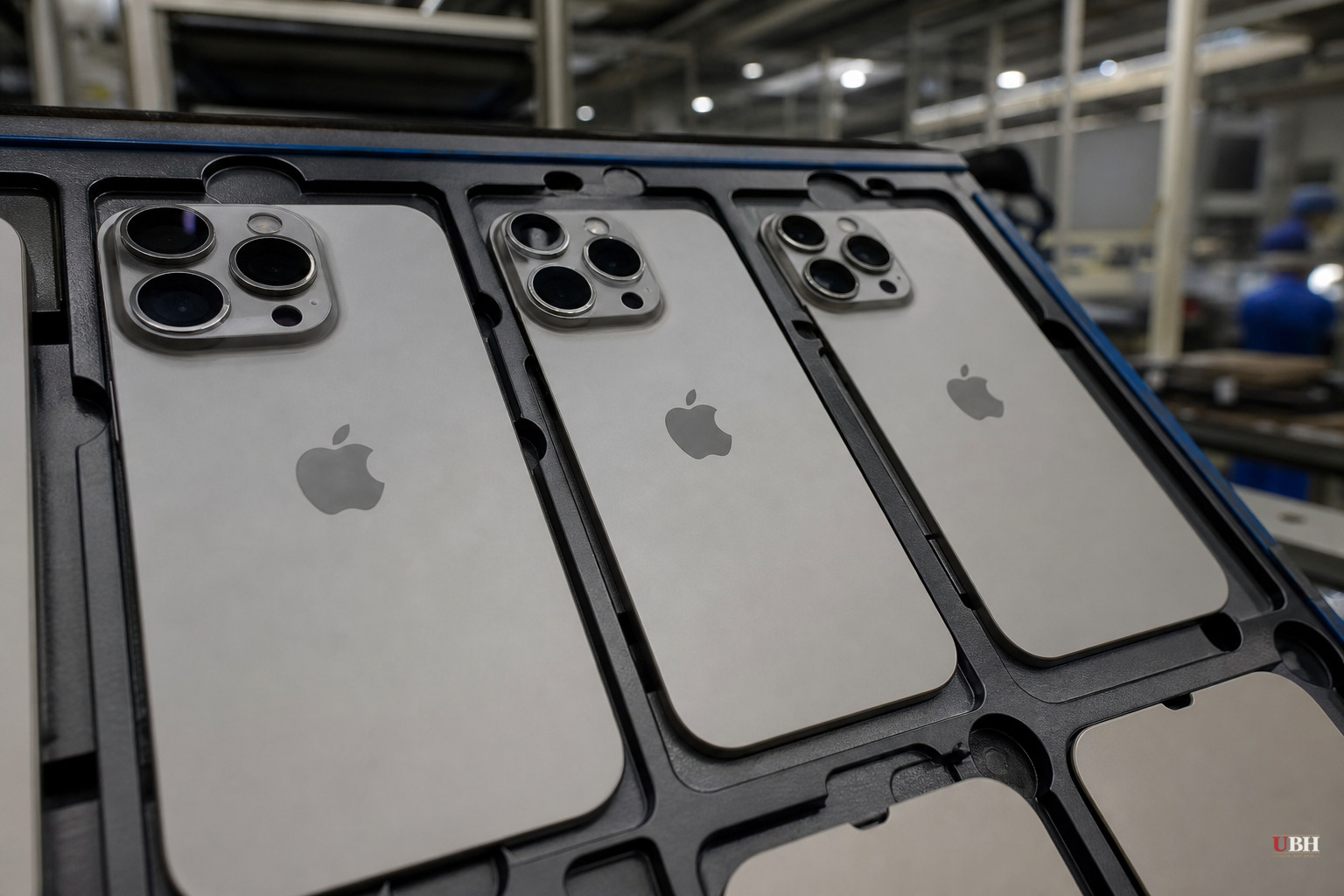
A cybersecurity breach at Tata Electronics, one of Apple's manufacturing partners in India, is being used by Chinese state media and industry voices as evidence that Apple made a mistake by shifting iPhone production away from China.
Tata Electronics confirmed to CNBC that it experienced a "cybersecurity incident" but said it "had no impact on our operations across businesses." The company did not say whether data or materials were actually stolen.
Reuters reported in June that a hacking group calling itself World Leaks claimed responsibility for the attack. According to that reporting, the stolen data included parts lists, supplier information, and photos of Apple's unreleased iPhone 18 Pro.
Apple declined to comment on the leak or on its supply chain plans, according to CNBC.
China's Reaction Was Fast, and Loud
The breach became a talking point almost immediately in Shenzhen's Huaqiangbei electronics market, the world's largest hub for phone repair and refurbishment.
Ma Shouhua, an iPhone repair specialist there, posted a viral video walking through the purported iPhone 18 Pro specifications pulled from the leaked materials. His message was blunt: "Something like this would never happen in China," he told CNBC.
The Communist Party's Global Times newspaper went further in July, warning of "systemic weaknesses in 'Made in India'" and arguing that replicating Apple's supply chain outside China is "no easy task," according to CNBC's reporting.
That framing isn't neutral commentary. It's a direct pitch to keep Apple and other multinationals anchored to Chinese manufacturing at a moment when they're actively trying to leave.
Why This Matters to Beijing
Apple has been diversifying away from China for practical reasons: tariffs, geopolitical risk, and the lesson of COVID-era factory shutdowns. Last year, Apple produced its flagship iPhone 17 series in India for the first time, a milestone that stung Chinese manufacturers who'd held a monopoly on flagship production for over a decade.
China isn't just watching this shift happen. The U.S. Chamber of Commerce and Rhodium Group wrote in a May report that Beijing is "using regulations and economic coercion" to keep control over supply chains, including tightened controls on critical minerals, restrictions on downstream products, and legal tools that "raise the cost for firms and governments seeking to diversify away from China."
A security failure at an Indian supplier allows Chinese officials and manufacturers to argue that India isn't ready.
The Technical Reality Check
CNBC reporters visited Huaqiangbei and asked the market's famously skilled repair technicians whether they could actually build a working iPhone 18 Pro from the leaked drawings.
The answer was no. "You can't really make anything from those drawings. At most, you could make phone cases," seller Guo Youliang told CNBC.
Technicians said that even with detailed schematics, they don't have access to the actual proprietary components, the custom chips, or Apple's manufacturing tooling required to build a functioning device. Leaked specs are not the same as leaked hardware.
The breach is real. The propaganda value to Beijing is real. But the practical threat—that counterfeiters or competitors could mass-produce knockoff iPhone 18 Pros before Apple's actual launch—appears overstated based on what the people who'd actually have to build the thing are saying.
What's Actually Unresolved
Tata Electronics has not disclosed what specific data was taken or how many files were involved. Apple has not confirmed the leak's contents or commented on whether it's changing sourcing decisions because of it.
No U.S. or Indian government agency has announced an investigation into the breach as of this writing. World Leaks' claim of responsibility, reported by Reuters, has not been independently verified by Apple or Tata.
The bigger question is whether this incident changes anything for Apple's India strategy. Right now, there's no evidence it will. Apple built its India production line specifically to reduce China dependency, and a leak of design specs, however embarrassing for Tata, doesn't touch the deeper economic and political reasons driving that shift: tariff exposure, U.S.-China tensions, and the hard lesson of putting all manufacturing eggs in one geopolitical basket.
What it does confirm is that Beijing is watching Apple's diversification closely and will use any stumble, real or exaggerated, to make its case that Chinese manufacturing remains irreplaceable.
Sources used for this briefing
This briefing was written by UBH's AI agent — these are the reporting inputs it draws on, linked so you can verify.


