
Unbiased headlines. Facts, not spin.
Unbiased Headlines is an independently owned news organization. We bring you the facts, not opinions, written fresh from 110+ named sources. Sources linked so you can verify it yourself.
 defense
Major Story (7/10)
Event date: October 1, 2026 ·
defense
Major Story (7/10)
Event date: October 1, 2026 ·
Gulf Crude Exports Back at Prewar Levels, but 40% Now Bypasses Hormuz and Diesel Prices Hit Records
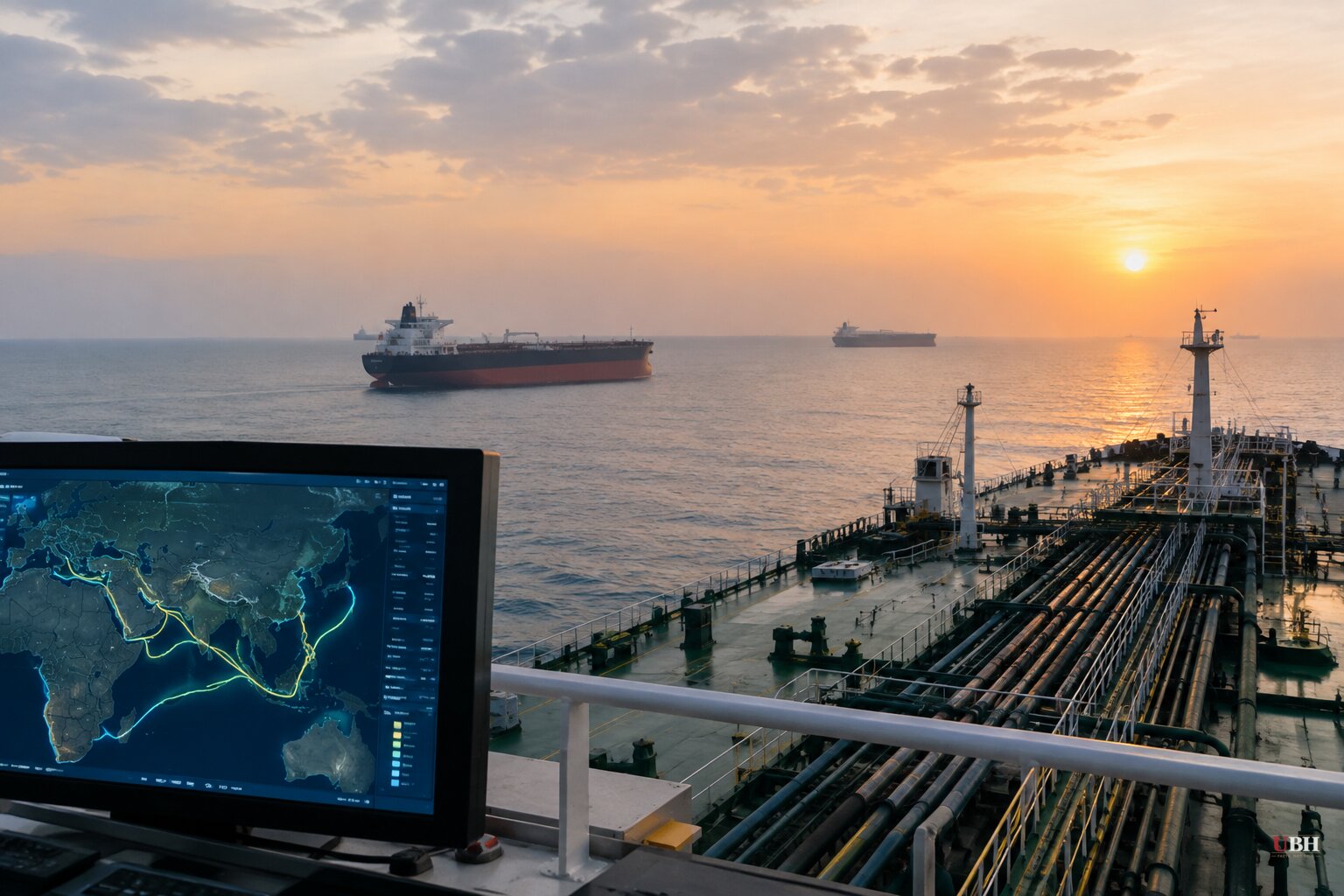
Iran's grip on the Strait of Hormuz is weaker than it was in the spring. It is not gone.
At least 16.5 million barrels per day of crude left the Persian Gulf region between Sept. 1 and 28, excluding Iran, according to the marine tracking firm Kpler. That matches the prewar average. The U.S.-Israeli operation against Iran began in late February.
The oil is moving on new routes
Before the war, 83 percent of the region's crude crossed Hormuz. In September, about 40 percent bypassed it through pipelines and ports in Saudi Arabia and the United Arab Emirates. The remaining 60 percent, about 9.9 million barrels per day, physically crossed the strait.
Oil and petroleum product flows through Hormuz averaged 13.1 million barrels per day in the latest weekly reading from Kpler. The prewar figure was 17.1 million, so that is just under 80 percent.
"The barrels are back, but the export system moving them is fundamentally different," Kpler said in its report.
JPMorgan puts total Middle Eastern crude flows, through Hormuz and around it, at 98 percent of prewar levels. Goldman Sachs estimates Persian Gulf exports at 23.3 million barrels per day, roughly the 2025 average.
Saudi exports ran about 5.2 million barrels per day, up from 2.9 million in August. Iraq exported about 2.5 million, up from near zero in April and May.
Shuttles, dark transits and U.S. escorts
Much of the crude crossing the strait does so in an unusual way. Kpler said more than 70 percent of the crude that crossed in August changed tankers offshore in the Gulf of Oman. Shuttle tankers carry oil out, transfer it to ships bound for Asia, and loop back for another load.
CNN described military-escorted shuttles making "dark" transits with considerable support from the U.S. Navy. Saudi crude that had been sent to the Red Sea has also returned to the strait route after the Iran-allied Houthis attacked a major Saudi oil pipeline.
Matt Smith, Kpler's director of commodity research, said: "Given such a strong volume passing through the strait, it is clear Iran is losing its influence over it."
President Trump went further at an Oval Office event: "Tremendous oil is coming out of the Hormuz Strait now. We're running it. We have total control."
The data shows flows at about 80 percent of prewar levels, short of total control.
Why Iran's leverage is not zero
Tehran never formally controlled the strait. Its leverage came from making passage dangerous enough that shippers had to weigh the risk and the cost.
Ellen Wald, an energy markets analyst, told RFE/RL that Iran's "ability and/or will to attack ships in the Gulf is declining," which lets vessels transit under U.S. military cover. She also warned against reading the recovery as normalization. "This is not a return to normal," Wald said. "These are significant risks and come with high costs."
Some shippers are accepting heavy risk, and some are running without insurance.
The numbers on shipping traffic are still grim. The International Maritime Organization had recorded 85 confirmed incidents involving commercial ships in and around the strait by Sept. 24, with 24 seafarers killed since the conflict began on Feb. 28.
Preliminary Kpler vessel counts cited by Geopolitical Monitor showed only nine vessels transiting in the week ending Sept. 25. Before the war it was roughly 125 large commercial vessels per day. Those counts fit awkwardly with the barrel figures, and the difference between tracked vessel transits and total flows is unresolved.
Prices have not followed the barrels
The higher volumes have not brought relief at the pump. European Union figures published Oct. 1 showed diesel pump prices at record levels, and U.S. prices have also surged. RFE/RL reported that a refinery bottleneck is driving the diesel spike.
Global oil inventories have fallen by about 2 billion barrels during the war, according to JPMorgan. Crude has stayed below its 2008 record, helped by increased production outside the Gulf and a significant drop in global demand, CNN reported.
Natasha Kaneva, JPMorgan's head of global commodities strategy, told clients in a note: "For the first time since the start of the Iran conflict, we don't have a baseline view."
CNN's analysis is that the current arrangement cannot last indefinitely. The U.S. military is spending heavily to keep oil moving while stockpiles keep shrinking.
Pressure on Tehran
The U.S. is running a naval blockade aimed at Iranian oil exports and has added sanctions. The Trump administration measures announced Tuesday target individuals and entities accused of procuring weapons and components for Iran's military.
The Iranian rial fell past 2.5 million to the dollar on Tuesday, a record low, according to the Associated Press. The previous low of 2.2 million was set 27 days earlier.
Secretary of State Marco Rubio said Monday that Iran is heading toward an economic "cataclysm."
The Islamic Revolutionary Guard Corps is making its own pitch. Spokesperson Hossein Mohebbi presented a 25-page letter addressed to Americans ahead of the Nov. 3 midterms, according to the New York Post. The letter blames Trump and U.S. support for Israel for the war and says: "The US economy is on the precipice of collapse." It urges voters to oppose the president and press Washington to end the conflict.
What comes next
The arrangement depends on U.S. escorts, costly shipper risk and pipeline capacity still being built. Saudi Arabia is expanding its Red Sea pipeline toward about 7 million barrels per day. Regional pipeline capacity could exceed 14 million barrels per day by the end of 2028.
Until then, the open question is whether inventories run low before Iran's economy cracks. JPMorgan says it cannot model that.
Sources used for this briefing
5 links from 5 independent newsrooms (syndicated copies of the same report count once)
These are the sources it draws on, linked so you can verify.


