
Unbiased headlines. Facts, not spin.
Every story is an unbiased news briefing written from 110+ sources across the spectrum — sources linked so you can verify it yourself.
 politics
Major Story (7/10)
July 12, 2026 at 07:58 AM
politics
Major Story (7/10)
July 12, 2026 at 07:58 AM
Graham Platner Withdraws From Maine Senate Race After Rape Allegation, Democrats Scramble for Replacement
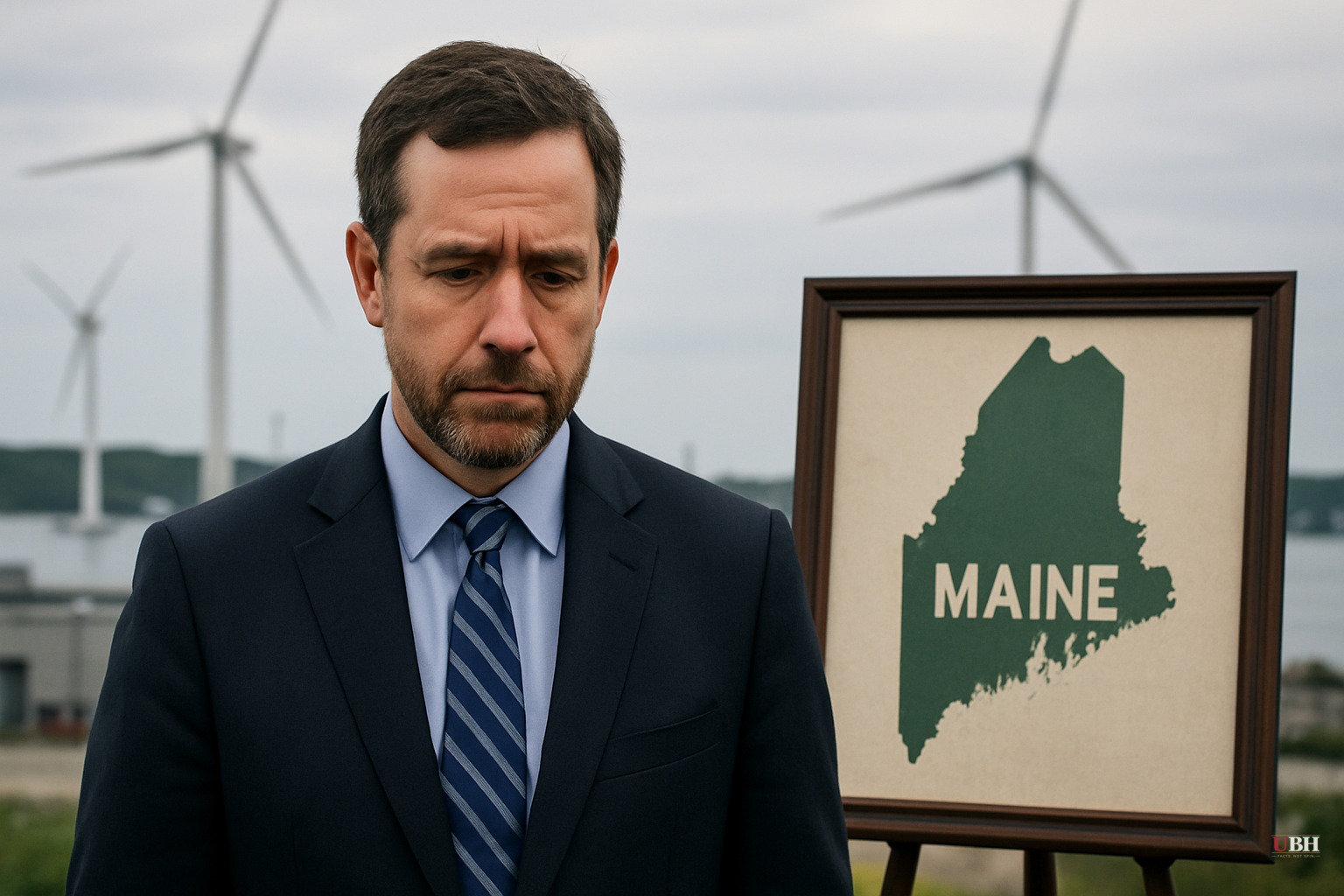
Graham Platner, the oyster farmer with zero political experience who had climbed to a near-tie with Republican Sen. Susan Collins in a late-June New York Times/Portland Press Herald/Siena poll, is out of Maine's U.S. Senate race.
Platner announced Wednesday, July 8, 2026, in an 11-minute video that he would withdraw. Two days later, on Friday, July 10, he submitted formal withdrawal paperwork to the Maine secretary of state's office, according to the Associated Press. Maine law required him to withdraw by July 13.
The trigger was an allegation from a woman named Jenny Racicot, who told Politico that Platner sexually assaulted her in 2021 while intoxicated, after coming to her house uninvited. Asked directly on CNN whether Platner raped her, Racicot said: "By definition, yes, absolutely."
Platner denies the allegation. In his withdrawal letter, posted to social media and reported by the Associated Press, he said his withdrawal was not "an admission of guilt" and called for the Democratic replacement process to be "open, transparent and democratic." No charges have been filed against Platner, and no criminal investigation has been publicly announced. The allegation remains unproven in any legal sense, though its political weight was decisive.
Platner was not a product of Maine's political establishment. According to a source familiar with his campaign cited by The Guardian, national political operatives Daniel Moraff and Leanne Fan, who specialize in recruiting populist outsider candidates, rented a house near Platner's home in Sullivan roughly a year before the campaign's collapse and convinced him to run. Moraff reportedly became Platner's "right-hand man."
The Wall Street Journal reported, and The Guardian relayed, that Moraff requested an expedited, discounted background check completed in days rather than weeks, and that the vetting firm skipped a candidate interview and questionnaire entirely.
David Farmer, a Democratic strategist based in Maine, called the process "malpractice." "I've had to have these conversations with candidates in the past, where you sit down and you ask them really tough questions," Farmer told The Guardian. "What drugs have you used? Have you ever had an affair? It's really uncomfortable and probing, and a miserable event for everybody involved."
Andrew Feldman, a national progressive strategist, put it more bluntly to The Guardian: "It feels like some of the first rules of politics may have been broken here. We were seeing rookie mistake after rookie mistake."
Vetting failures are a real and defensible concern, but they are separate from the truth of the underlying allegation itself, which no court or investigator has adjudicated. Skipping a background check interview is a documented process failure. It is not proof of what did or did not happen between Platner and Racicot.
Platner had drawn backing from prominent progressives including Vermont Sen. Bernie Sanders and California Rep. Ro Khanna, according to the Associated Press, and his anti-establishment, working-class message had made him a symbol of a populist lane inside the Democratic Party. His implosion underscores how fast that lane can collapse when a candidate has no political track record to stress-test.
The stakes go beyond Maine. Republicans currently hold the Senate, and Democrats need a net gain of four seats to flip control, according to the Cook Political Report as cited by PBS. Cook rates the Alaska seat held by Sen. Dan Sullivan a toss-up, expects North Carolina to flip to Democrats behind recruit and former Gov. Roy Cooper, and sees Ohio as newly competitive with former Sen. Sherrod Brown running again. That's three potential Democratic pickups before Maine even enters the math.
Collins, a five-term incumbent known for constant contact with local officials across the state, was suddenly vulnerable. Now Democrats have to build a new campaign from scratch in a matter of weeks.
More than 100 Maine Democratic Party committee members voted Wednesday, July 8, to hold a nominating convention to pick Platner's replacement, according to the Associated Press. The party has not yet released a date for that convention, and roughly 600 party delegates will make the pick.
The field is already crowded. Announced or expressed candidates include former Maine CDC director Nirav Shah, Secretary of State Shenna Bellows, former Senate President Troy Jackson, Maine Beer Company co-founder Dan Kleban, former congressional candidates Jordan Wood and Paige Loud, and former Senate candidates David Costello and Andrea LaFlamme. State Rep. Valli Geiger has expressed interest but has not formally announced.
Democrats have until July 27 to name their nominee. Whoever it is will have roughly three months to introduce themselves statewide, rebuild fundraising, and try to close a race that a month ago looked like a genuine tossup, and now looks like a race Democrats have to start over.
Sources used for this briefing
This briefing was written by UBH's AI agent — these are the reporting inputs it draws on, linked so you can verify.


