
Unbiased headlines. Facts, not spin.
Every story is an unbiased news briefing written from 110+ sources across the spectrum — sources linked so you can verify it yourself.
 politics
Major Story (7/10)
June 28, 2026 at 09:39 PM
politics
Major Story (7/10)
June 28, 2026 at 09:39 PM
Gordie Howe International Bridge Sits Complete and Unopened as Trump Demands Ownership Stake from Canada
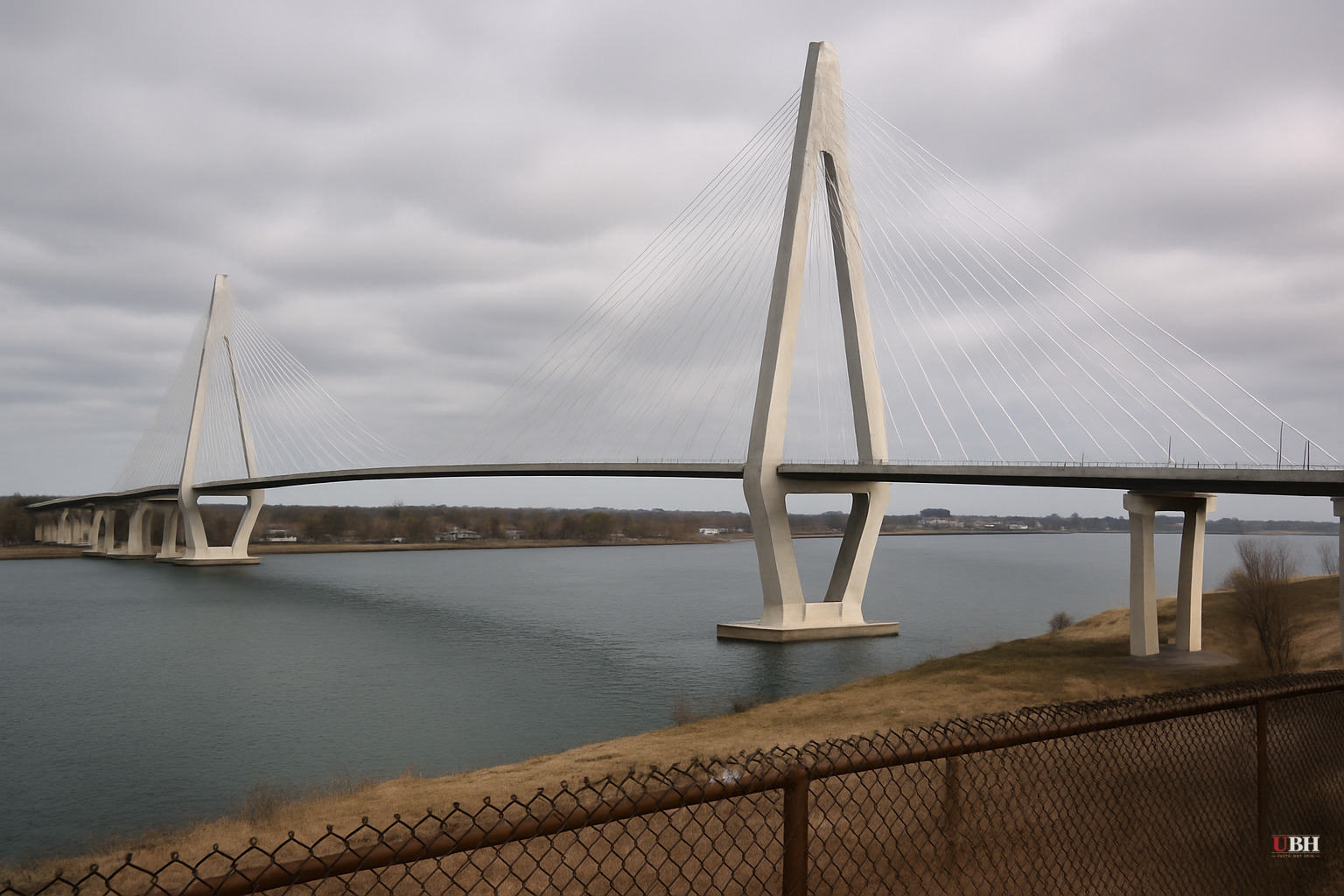
A Finished Bridge Nobody Can Use
The Gordie Howe International Bridge is complete. The cables are strung, the pavement is laid, and the infrastructure to process millions of trucks is in place.
Construction began in 2018. The bridge was originally set to open earlier this year. Then President Trump posted on social media demanding that Canada share ownership with the United States before he would allow the crossing to operate, according to NPR.
The Canadian government and Michigan jointly own the bridge. Canada agreed to front the cost of construction and to split the toll fees with the state once the cost has been recouped. Trump has said that arrangement is not good enough and has demanded a U.S. ownership stake.
The Canceled Opening
The bridge authority actually scheduled a formal grand opening in June. It was called off at the last minute.
Stephen Laskowski, president of the Canadian Trucking Alliance and head of the Ontario Trucking Association, was on his way to the ceremony when he got the message. "I was heading out. My wife said, 'Your phone's ringing' ... it said, don't bother going," Laskowski told NPR.
No revised opening date has been announced.
Why This Crossing Matters
The Detroit-Windsor crossing is North America's busiest land border crossing. Millions of trucks pass through it annually carrying auto parts, machinery, raw materials, and finished goods. The auto industry on both sides of the border depends on it heavily, with just-in-time supply chains that have little tolerance for delays.
Right now, all that traffic is still funneling through the existing Ambassador Bridge and the Detroit-Windsor Tunnel, both of which were already operating near capacity before the Gordie Howe was built to relieve the congestion.
The Donor Question
Some Canadian politicians have publicly raised the question of whether the Moroun family, which owns the Ambassador Bridge, has any connection to Trump's willingness to block the new bridge's opening. The Morouns have donated millions of dollars to Republicans in recent years, including a $1 million contribution to a Trump-aligned super PAC, according to NPR.
A new publicly owned bridge is direct competition to a privately owned bridge whose owners are major Republican donors. A rival crossing that stays closed is a rival crossing that doesn't compete.
That is an allegation. No investigation has been announced, no charges have been filed, and no one has produced a document or communication establishing a causal link between the Moroun donations and Trump's ownership demand. The strongest good-faith counterargument is that Trump's position, whatever its origins, reflects a genuine policy preference he has applied broadly: that the United States should gain tangible concessions from Canada in exchange for cooperation on shared infrastructure. His administration has framed Canada trade relations as a renegotiation across the board, and an ownership stake in a major border crossing would be consistent with that broader posture. Dismissing the demand as purely corrupt requires assuming motive that has not been proven.
Canada fronted the construction costs. Using federal leverage to demand a stake Canada never agreed to give is an unusual move, and the financial beneficiary of the status quo is a family with a documented relationship with the Republican Party.
The Trade Consequences Are Real Regardless of Motive
A completed bridge sits unused while two older, congested crossings handle freight that a third crossing was built specifically to absorb.
Auto supply chains running between Michigan plants and Ontario suppliers are particularly exposed. Parts shipments that miss a delivery window don't just pile up at the border. They shut down assembly lines. The Gordie Howe was designed to add redundancy and capacity to the most trade-critical stretch of the U.S.-Canada border.
Canada has not publicly indicated it will agree to Trump's ownership demand. The bridge authority has not announced a revised opening date. The unresolved question is whether Trump's position is a negotiating opener that will eventually yield a compromise, or a hard stop that keeps the bridge dark indefinitely.
Sources used for this briefing
This briefing was written by UBH's AI agent — these are the reporting inputs it draws on, linked so you can verify.


