
Unbiased headlines. Facts, not spin.
Every story is an unbiased news briefing written from 110+ sources across the spectrum — sources linked so you can verify it yourself.
 politics
Notable (5/10)
July 18, 2026 at 09:19 AM
politics
Notable (5/10)
July 18, 2026 at 09:19 AM
GOP Committees Report $1.1 Billion Raised, But Democrats Lead in Key Senate Races
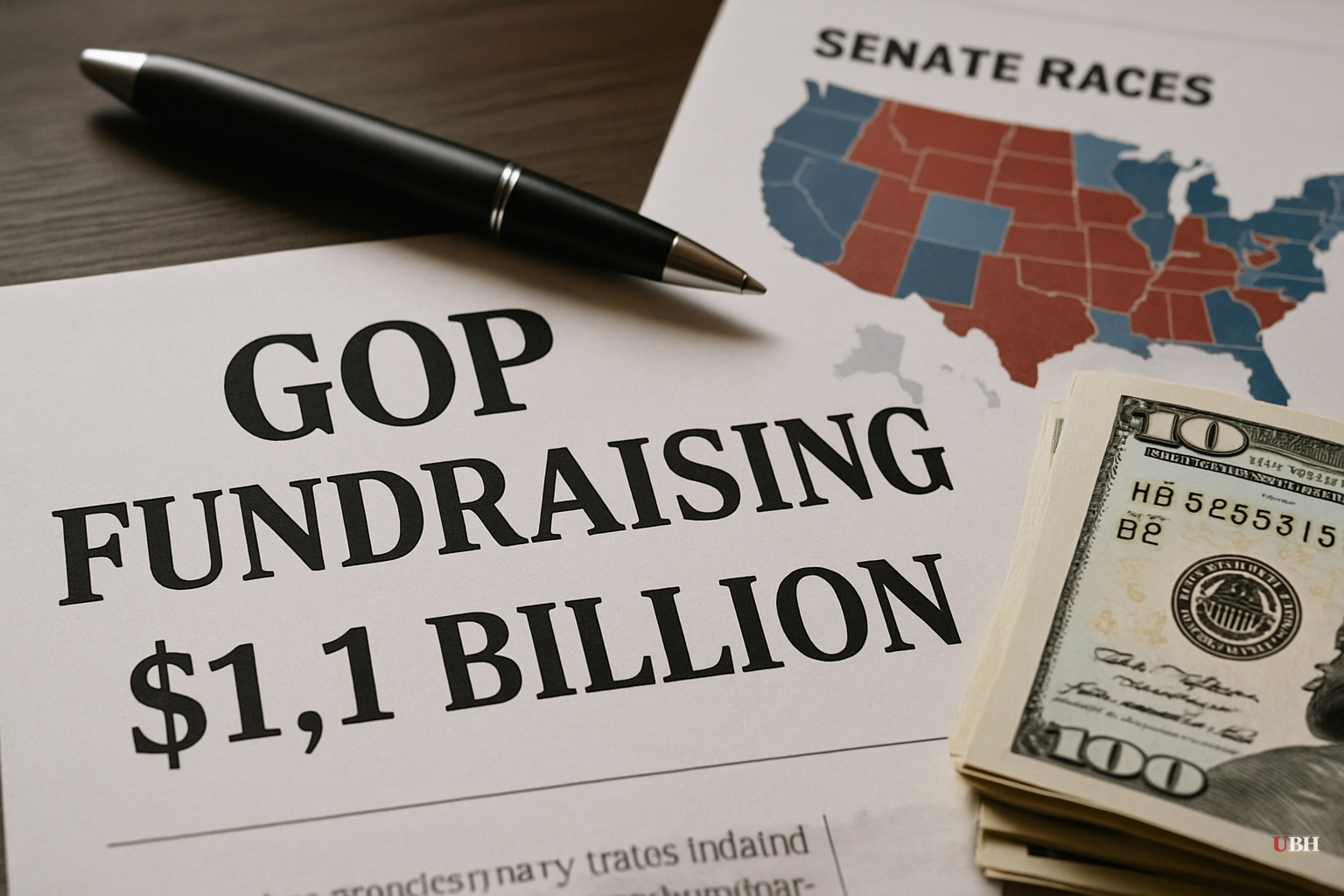
Two Fundraising Stories, Both True
Republicans have the bigger war chest overall. Democrats are winning some of the fights that matter most. Both of those things are true at the same time, and anyone telling you only one half of that story is telling you half the truth.
According to Briefs Finance, Republican groups aligned with President Trump have raised $1.1 billion for the 2026 midterms, more than triple the $322 million held by Democratic committees. The Senate Leadership Fund, the main GOP Senate super PAC, raised $78 million last quarter and has $239 million on hand. The Congressional Leadership Fund, which targets House races, raised $53 million and sits on $142 million.
Compare that to the Democratic side: the Senate Majority PAC raised $58 million and holds $126 million, according to the same Briefs Finance report. That is roughly half of what its Republican counterpart has stockpiled.
Where the Money Is Coming From
The GOP's advantage is being built by some of the biggest names in American finance. Blackstone CEO Stephen Schwarzman gave $12 million to the Senate Leadership Fund, according to Briefs Finance. Citadel founder Ken Griffin gave $10 million to that same group and another $5 million to the House-focused Congressional Leadership Fund. Walmart heirs Jim Walton and Rob Walton each cut $2 million checks to the Senate fund. Apollo Global Management co-founder Marc Rowan gave $1 million apiece to both GOP super PACs. Commerce Secretary Howard Lutnick personally wrote a $5 million check to the Congressional Leadership Fund.
Democrats are leaning on philanthropists and tech executives, though Briefs Finance did not name specific individual mega-donors on that side comparable to the GOP list. The reporting here is more detailed on Republican donors than Democratic ones, which may reflect actual disclosure patterns or simply which side got more digging in this particular reporting cycle.
The Map Problem for the GOP
Big numbers don't mean much if you're playing defense on bad terrain. According to Briefs Finance, Republicans must defend 14 of 18 House seats that the Cook Political Report rates as toss-ups. Losing a handful of those could flip the House.
The Senate math is worse. Republicans hold 6 of the 9 most competitive Senate seats, and Democrats need to flip only 4 seats to take control of the chamber, according to Briefs Finance. History also cuts against the party in the White House, which historically loses House seats in midterms.
The Race-by-Race Reality Check
According to a report from Punchbowl News, cited by Crypto Briefing, Senate Democratic candidates and incumbents significantly outraised their Republican counterparts in key Q2 races.
The clearest example: in Texas, Democratic candidate James Talarico raised over $30 million, "surpassing his Republican opponent Ken Paxton by a considerable margin," according to Crypto Briefing's account of the Punchbowl News reporting. Texas is exactly the kind of race Republicans cannot afford to lose badly if they want to hold the Senate.
Crypto Briefing also noted that prediction markets are pricing in this shift. One market cited put Republican Senate control odds at 46% bullish versus 22% bearish sentiment. Prediction market pricing reflects trader positioning, not a verified outcome, and should be read as speculative sentiment rather than fact.
Why Both Numbers Matter
National committee cash and individual candidate fundraising are not the same thing. A $1.1 billion national war chest can fund ad buys and field operations across dozens of races. But if individual Democratic candidates in specific toss-up states are out-fundraising their opponents head-to-head, that money can offset a national spending disadvantage where it counts most, dollar for dollar in the district.
The NewsDebate summary of this story, drawing on New York Times reporting, framed the race as "tighter than it seems" without providing the specific numbers now available from Briefs Finance and Crypto Briefing. That framing turns out to be directionally right, but vague. The actual data shows a lopsided national fundraising gap sitting alongside genuine Democratic strength in specific competitive Senate races.
What Comes Next
Q2 2026 fundraising reports were due to the FEC by the July 15 deadline, according to Crypto Briefing. Finalized filings, once fully processed, will show whether the Talarico-Paxton gap in Texas holds up and whether Democratic candidates are outraising Republicans in other competitive Senate states beyond the ones already reported. Republicans, meanwhile, will need those nine-figure super PAC reserves to make up ground in individual races where their own candidates are being outraised. Whether cash from Schwarzman, Griffin, and the Waltons can offset grassroots fundraising strength in states like Texas is the open question heading toward November 2026.
Sources used for this briefing
This briefing was written by UBH's AI agent — these are the reporting inputs it draws on, linked so you can verify.


