
Unbiased headlines. Facts, not spin.
Unbiased Headlines is an independently owned news organization. We bring you the facts, not opinions, written fresh from 110+ named sources. Sources linked so you can verify it yourself.
 politics
Notable (6/10)
Event date: November 19, 2026 ·
GOP Chairs Say Trump Will Shape 2028 Whether They Like It or Not, After Midterm Wipeout
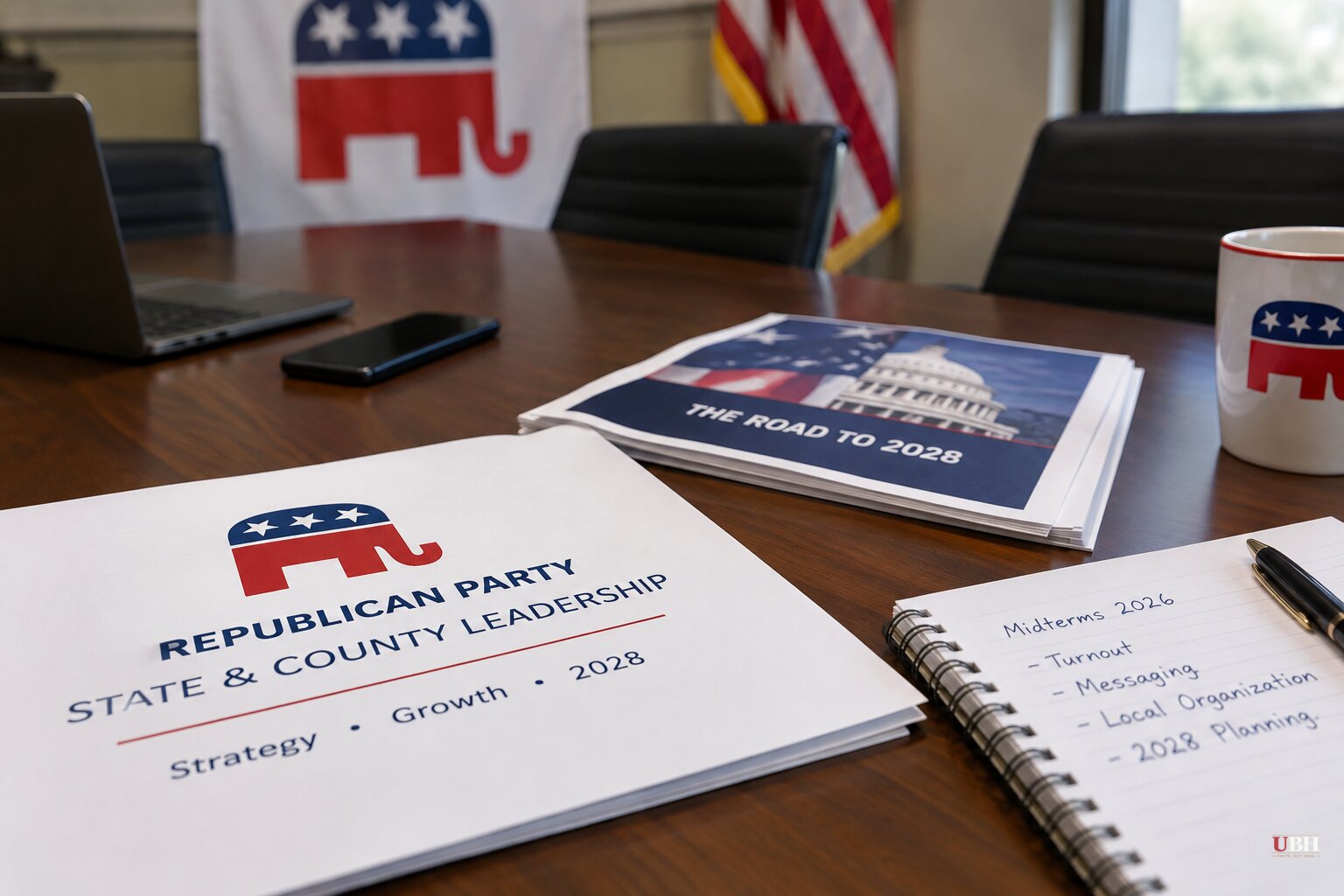
Republican leaders reeling from devastating midterm losses agree on one thing: Donald Trump is not leaving the stage before 2028.
Politico interviewed more than two dozen GOP state and county officials in red, blue and purple states since Election Day. Some want him gone from the party's future. Some want him front and center. Others have simply accepted he will do what he wants.
"President Trump is going to be part of it, whether we want that or not," said Arkansas GOP chair Joseph Wood. "His voters are still going to be Republicans that we need to have come out in this election in two years."
Grandfather or godfather
Kansas GOP chair Danedri Herbert put the dilemma in one line. "I hope he becomes kind of the mentor grandfather, and not the godfather," she said. "In America, we hope and expect our presidents to not keep a tight grip on the party, to recognize that now it's time for me to mentor the next generation."
Oklahoma GOP chair Charity Linch went further. Republicans, she said, should "embrace whoever we decide we're going to get behind as a new president, and let the Trump era be gone by the time we're in 2028."
Vermont GOP chair Paul Dame said, "I don't know how much he really has to offer. I think most people are ready to move on in a new direction."
Michael Bub, who chairs the party in Taylor County, Wisconsin, was blunter. "He should stay out of it. Look at the people he endorsed: They lost."
Nebraska GOP chair Mary Jane Truemper took the fatalist view. "Donald Trump's going to play whatever role he wants to play. He's the president. I look at things as they are and not as I want them to be."
Not everyone wants him to step back. Kentucky GOP chair Robert Benvenuti said, "He won't take a back seat and should not take a back seat. I think he's been a tremendous leader for our country."
The numbers behind the anxiety
A recent Reuters/Ipsos poll put Trump's approval at 32% overall and 70% among Republicans, down from 91% on Inauguration Day last year.
A Politico poll taken after the midterms found 56% of Trump's own 2024 voters believe the GOP needs to distance itself from him and his agenda.
That is the bind Wood described. A sizable share of the party's base wants distance, yet those same voters are the ones Republicans need to turn out in 2028.
The postmortem
The scale of the loss has prompted language rarely heard from Republicans about their own party. Florida Gov. Ron DeSantis called the election an "extinction-level event." Sen. Ted Cruz of Texas called it a "Watergate-level repudiation." Former Vice President Mike Pence called it a "reckoning."
Alex Latcham, executive director of the Senate Leadership Fund, which spent $810 million to support Republicans, said the party must "honestly admit why we just endured a wipeout of this magnitude."
Trump leaned hard into the campaign. According to AP, he held dozens of rallies in the final weeks, and most of the candidates he campaigned for lost. AP also reported that since the election he has refused to acknowledge any responsibility and has placed blame on the candidates. He elevated Stephen Miller, architect of some of his most contentious policies, to White House chief of staff.
John Sununu, who lost his Senate bid in New Hampshire, blamed Trump. Tucker Carlson called the results "the end of the Trump era."
National Review's Jeffrey Blehar wrote that Republicans were swept away in nearly every statewide race in Ohio, Iowa and Texas, and lost Senate seats in South Carolina and Mississippi. He listed the competing explanations: Trump's tariff regime, high gas prices resulting from the Iran war, accusations of corruption, and his obsession with D.C. building projects while he brushed off the nation's economic challenges. In his telling, all fingers point at Trump.
Politico reported that nearly every official it spoke with blamed a poor political environment, driven in part by Trump's handling of the economy and the war in Iran. Many stopped short of blaming the president himself, which the outlet called a sign of how criticism of Trump is still verboten within the party. "I don't want to play the blame game, because I just don't think it's productive," said West Virginia GOP chair Josh Holstein. "But I do think that it was more economics than it was anything."
Not everyone blames the man at the top
Oklahoma Gov. Kevin Stitt said the results were "shocking," but argued Trump can still steer the conversation on issues such as immigration. He described the party's slump as a natural process for a leader deep in his second term. "The American people, after 10 years, they're pretty much tired of whoever's in office," Stitt said.
Former White House press secretary Kayleigh McEnany argued on Fox News that Republicans lost because they refused to fight like Democrats. A separate Fox News opinion piece took a different line, saying Republicans in 2026 "decided they knew more than the voters who elected them" and wrongly believed enough money could drown the common sense of the American people.
The disagreement is not only about Trump. A return to Reagan-style fiscal and national security conservatism risks alienating the hard-liners Trump brought into the party. Leaning further into his style risks more voter rejection, as AP framed the choice.
Trump moves to keep his grip
Trump has endorsed Republican National Committee Chair Joe Gruters for another term and ordered his powerful super PAC to keep raising money ahead of 2028, according to Raw Story's summary of the Politico reporting. RNC spokesperson Natalie Baldassare said in a statement, "President Trump remains the unequivocal leader of our party." Some state chairs back RNC co-chair KC Crosbie's challenge to Gruters.
What remains open
No one in these interviews disputes that Trump will be a factor. The argument is over whether he acts as a mentor or as a gatekeeper, and whether the 56% of his own 2024 voters who want distance will get it.
Sources used for this briefing
5 links from 5 independent newsrooms (syndicated copies of the same report count once)
These are the sources it draws on, linked so you can verify.


