
Unbiased headlines. Facts, not spin.
Unbiased Headlines is an independently owned news organization. We bring you the facts, not opinions, written fresh from 110+ named sources. Sources linked so you can verify it yourself.
 politics
Major Story (7/10)
Federal judge rules HUD exceeded its authority in $1.3 billion homelessness grant overhaul
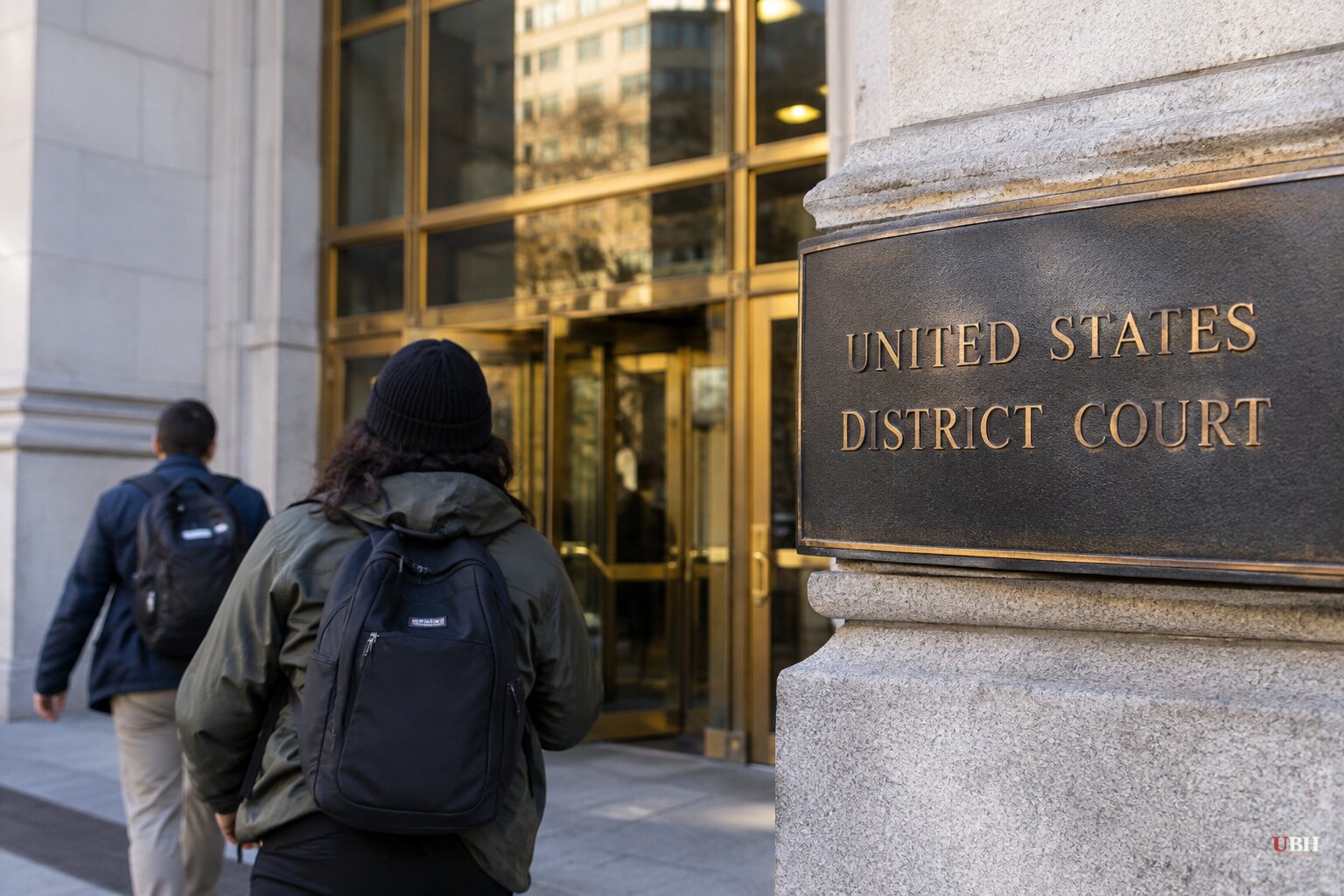
A federal judge in Rhode Island has ruled that the Trump administration broke the law when it rewrote the rules for the country's biggest homelessness grant program.
U.S. District Judge Mary McElroy, sitting in Providence, ruled Friday, Nov. 20, that the Department of Housing and Urban Development exceeded its authority under the McKinney-Vento Homeless Assistance Act. The program is the Continuum of Care, which Congress has funded since 1987 and which received more than $4 billion for fiscal year 2026.
What HUD tried to do
HUD planned to set aside $1.3 billion of that money for transitional housing and for grants that fund supportive services only. Permanent housing projects would have competed for what was left.
The program has long run on a housing-first model. People are placed in permanent housing without preconditions such as sobriety or employment. The grants also pay for childcare, job training, mental health counseling and transportation.
The administration has criticized that approach and tried to redirect the money.
What the judge decided
McElroy found that HUD added criteria that let it bypass requirements Congress wrote into the statute. Those requirements include evaluating existing projects' performance and moving people into permanent housing.
"Although Congress delegated to the secretary the power to create additional criteria for awarding funds, this residual clause cannot be read as allowing HUD to nullify the other congressionally established mandatory factors," she wrote.
She also struck down a provision letting HUD disqualify applicants that don't adequately promote "self-sufficiency." A restriction on activities aimed at drug users, such as needle exchanges, was struck as well.
The order is narrow in one respect. It rules on what the statute lets HUD do, not on whether housing-first works better than the alternatives.
McElroy ordered HUD to let applicants amend and resubmit through Dec. 1 and to award funding by Dec. 31.
A long fight in court
This is not the first round. McElroy blocked HUD's changes in 2025 and again earlier this year. A federal appeals court lifted that order.
After that reversal, 22 mostly Democratic-led states, the District of Columbia and a coalition of housing groups, including the National Alliance to End Homelessness, came back with a challenge on different grounds. They zeroed in on the $1.3 billion set-aside.
McElroy was first nominated to the bench by President Barack Obama and later nominated by President Trump.
The administration's response
HUD Secretary Scott Turner said the agency reserves the right to appeal. He said the ruling "disrupts $4 billion for our most vulnerable, just days before funding awards were set to be made."
Turner also said that under President Trump, HUD is no longer in the business of "throwing taxpayers' money at a status quo."
That is the administration's core argument: decades of spending on the existing model, and a belief that the money should go somewhere else. The court did not decide that question. It said the agency had to follow the statute as written.
Domestic violence providers weigh in
The plaintiffs' coalition said in a joint statement that the ruling "protects the ability of communities and service providers to compete fairly for essential funding without being penalized for providing permanent housing."
The National Network to End Domestic Violence and 88 other organizations raised a separate objection in an October comment to HUD. They said that "conditioning housing on participation in supportive services would effectively exclude many survivors from housing."
They argued such conditions would collide with federal family violence rules. Those rules say providers "cannot compel or force individuals to come to a shelter or participate in counseling or other services." The groups also warned that tracking participation could breach survivors' confidentiality.
The plaintiffs' statement said the decision also protects providers from being penalized for "respecting the needs of survivors of domestic violence, or using evidence-based practices to keep people safe."
What comes next
The clock now runs on two dates. Applicants have until Dec. 1 to revise their requests, and HUD must award the money by Dec. 31.
Turner has not said whether HUD will appeal. If it does, the appeals court that already lifted one of McElroy's orders this year could be asked to do so again before awards go out.
Sources used for this briefing
8 links from 8 independent newsrooms (syndicated copies of the same report count once)
These are the sources it draws on, linked so you can verify.


