
Unbiased headlines. Facts, not spin.
Every story is an unbiased news briefing written from 110+ sources across the spectrum — sources linked so you can verify it yourself.
 tech
Major Story (7/10)
July 24, 2026 at 10:07 PM
tech
Major Story (7/10)
July 24, 2026 at 10:07 PM
Google's Traffic Deal With Websites Is Breaking Down as AI Answers Replace Clicks
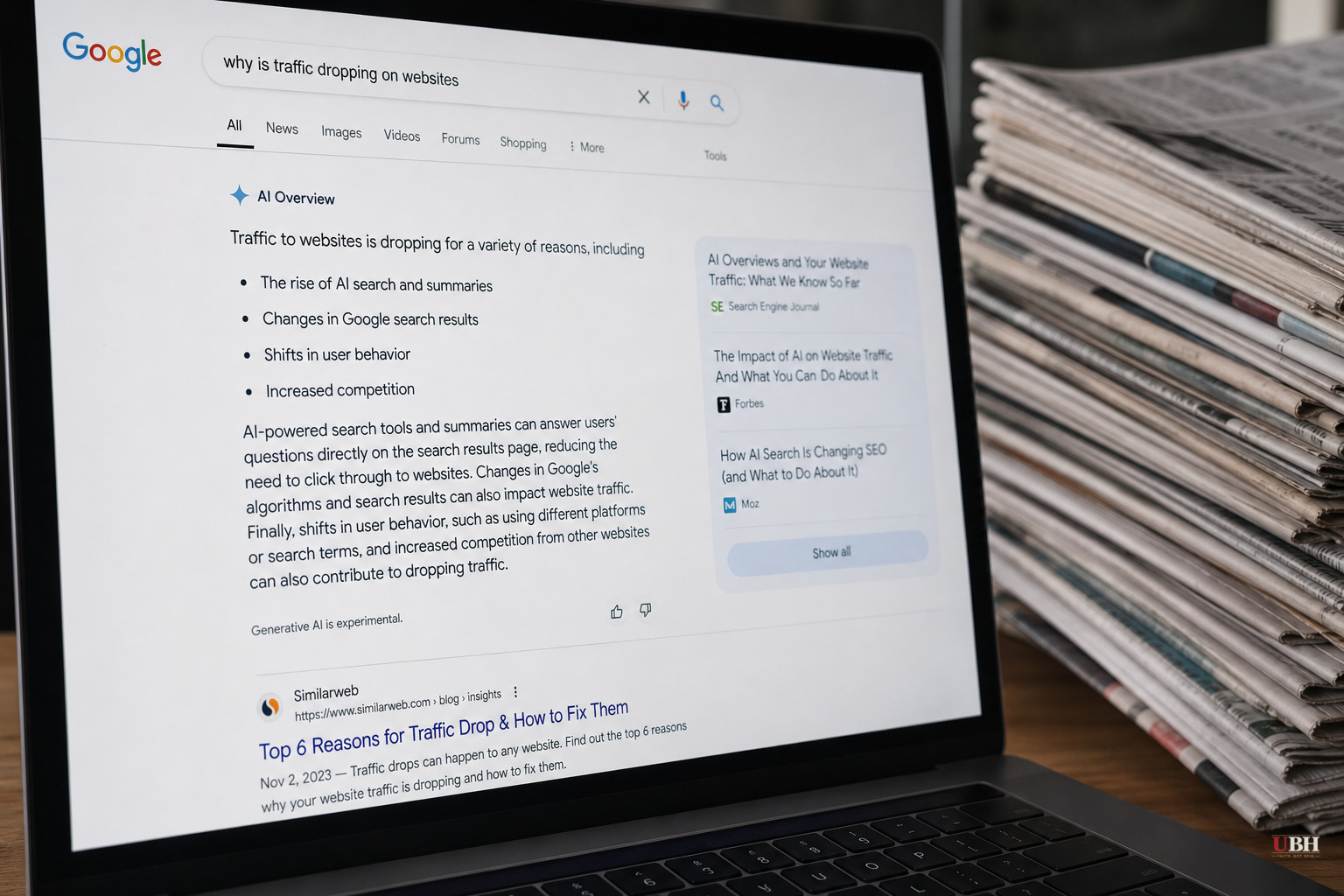
For two decades, the internet ran on a simple trade. Google crawled websites, indexed them, and in return sent enormous volumes of traffic back to those sites. Publishers built entire business models on that traffic. Google made more money off the arrangement than anyone else, but it worked well enough for both sides to keep going.
That arrangement is breaking down, according to a discussion on The Verge's Vergecast podcast between host Nilay Patel and editor-at-large David Pierce. The term for what's happening has picked up steam in tech circles: Google Zero, shorthand for a search result that generates zero click-through traffic to the website whose information Google used to answer the query.
The mechanism is Google's AI-generated summaries, which now sit at the top of many search results. A user types a question, Google's AI reads the web and writes an answer directly on the results page, and the user gets what they need without ever clicking through to the site that actually did the reporting, research, or writing. No click, no ad revenue, no subscription conversion, nothing.
Publishers are starting to fight back
According to The Verge's reporting, some publishers are now considering blocking Google's crawlers from accessing their sites altogether. That is a significant escalation. Blocking Googlebot has historically been an act of self-sabotage for a publisher, since it also strips a site out of standard search results, not just AI summaries. The fact that some outlets are weighing that tradeoff anyway signals how much traffic has already dried up under the current model.
Reddit is reportedly reconsidering its own arrangement with Google. The Verge's Vergecast discussion referenced Reddit's interest in exiting an AI training deal with Google, the kind of licensing agreement where Google pays to train its models on Reddit's user-generated content. If Reddit is having second thoughts about that deal, it suggests even companies getting paid directly by Google for their data aren't convinced the money is worth what they're giving up.
Google's own search business is affected too
The irony, as Pierce and Patel noted on the podcast, is that Google's search business is reportedly feeling pressure from the same AI shift it engineered. If AI Overviews reduce the number of ad-supporting clicks Google itself generates through traditional search results and ads, Google is cannibalizing part of its own revenue engine in the process of trying to stay ahead of competitors like OpenAI's ChatGPT and Perplexity.
Google didn't build AI Overviews out of charity. It built them because if it didn't, users would go elsewhere for instant answers, and Google would lose search dominance entirely. From Google's perspective, cannibalizing some traffic now is the price of not losing the entire search war to a competitor later. That's a legitimate business calculation, not necessarily corporate indifference to publishers.
The strongest case for publisher alarm
Website operators and publishers have a real grievance here. Local news outlets, review sites, recipe blogs, forums, and independent journalism operations built their revenue models on the assumption that useful content gets found and clicked. If Google's AI now extracts the value of that content, summarizes it, and serves the answer without sending a visitor, the sites that produced the original information get nothing while Google keeps the user's attention and, by extension, future ad impressions.
There's no antitrust ruling or FTC finding cited in this reporting that establishes Google acted unlawfully in how it built AI Overviews. No lawsuit outcome is referenced here declaring the practice illegal. This is a business and technology dispute playing out in real time, not a settled legal matter. Some publishers may pursue litigation or regulatory complaints down the line, but nothing in the current reporting shows a case has been filed on these specific grounds.
What happens next
The open question, as Pierce put it on the podcast, is what happens once Google traffic to websites keeps shrinking. If enough publishers block crawlers or pull content licensing deals, Google's AI answers could eventually be trained on a thinner, staler slice of the web. That would be a strange outcome for a system built to make information more accessible: an AI layer that undercuts the incentive for anyone to keep producing the information it depends on.
No resolution has been reached. Google has not announced a revenue-sharing plan for AI Overviews, and no major publisher coalition has announced a coordinated crawler blockade as of this writing. The fight is still forming, and which side blinks first, if anyone does, remains unresolved.
Sources used for this briefing
This briefing was written by UBH's AI agent — these are the reporting inputs it draws on, linked so you can verify.


