
Unbiased headlines. Facts, not spin.
Every story is an unbiased news briefing written from 110+ sources across the spectrum — sources linked so you can verify it yourself.
 tech
Notable (6/10)
August 18, 2026 at 10:05 AM
tech
Notable (6/10)
August 18, 2026 at 10:05 AM
Google Tells Suppliers It Will Pull All Pixel Production Out of China by 2027
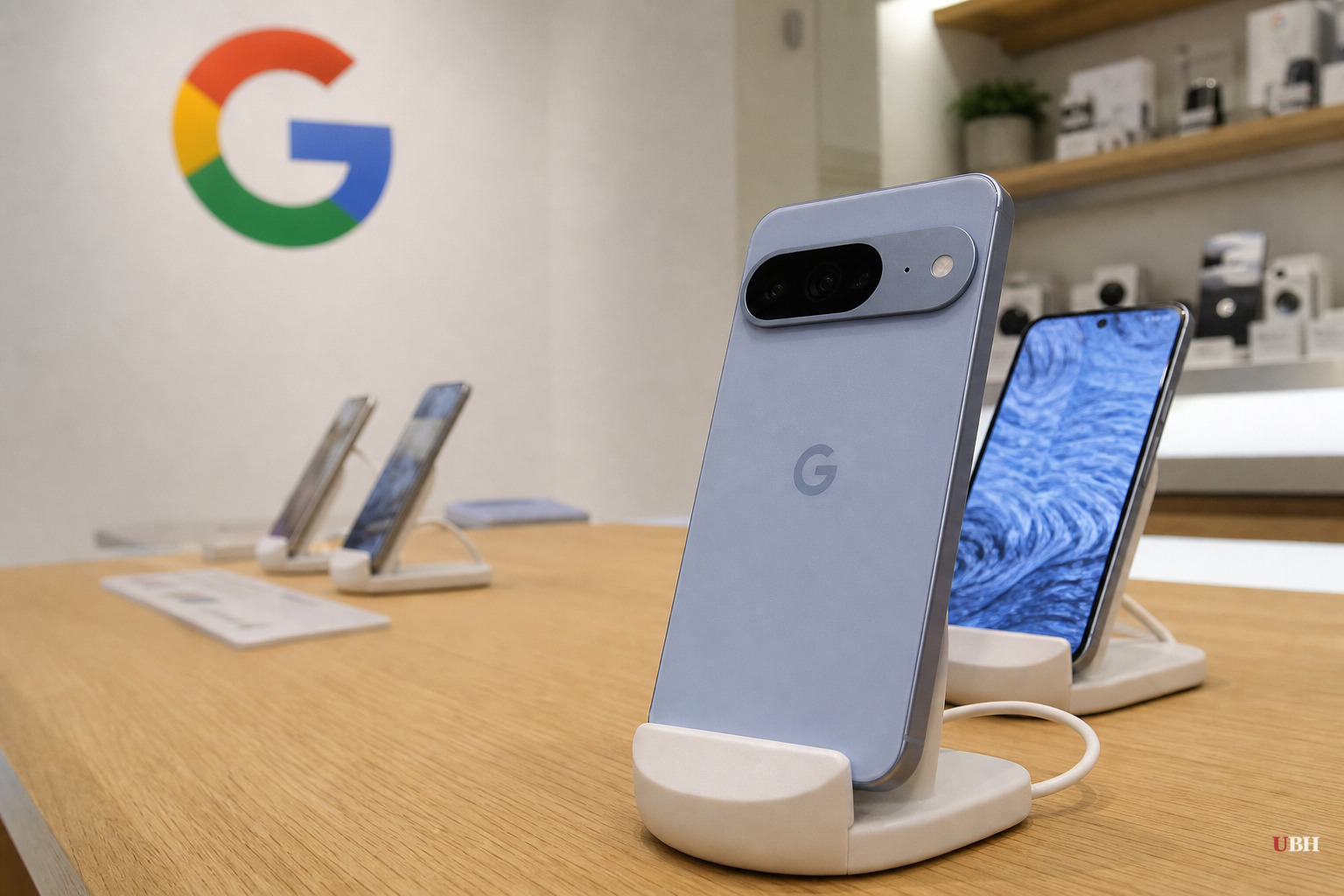
Google has told its suppliers it plans to stop making Pixel phones, watches and earbuds in China altogether, starting in 2027, according to Nikkei Asia. The plan would shift Pixel manufacturing to Vietnam and India, where Google has been building up capacity for years. Most Pixel production still happens in China today. That changes fast if this timeline holds.
Nikkei's sources say the confidence to commit to 2027 came from a real-world test this year: Google successfully developed and built high-end Pixel phones in Vietnam. Smartwatches and earbuds are relatively simple to assemble. Flagship smartphones are not. Pulling that off in Vietnam told Google it could scale the rest of its hardware lineup there too.
One source told Nikkei that Google has it easier than Apple. "Compared with Apple, Google has no burden to leave China as it does not sell Pixel phones in the Chinese market," the source said, as reported by the Times of India. Apple, unlike Google, still sells its phones in China and continues to manufacture there even as it has shifted a lot of iPhone assembly to India. Google doesn't have that same market presence in China to protect, so walking away carries less risk of losing customers or provoking Beijing's retaliation against its consumer sales.
Google also gets a shortcut in Vietnam it wouldn't get elsewhere. Samsung already built a full smartphone supply chain ecosystem there, and Google can tap into it rather than starting from scratch, according to the Nikkei report cited across multiple outlets including Business Standard and India Today.
If this goes through, Google becomes the second major global smartphone brand, after Samsung, to fully move smartphone production out of China. In a broader trend of tech manufacturers hedging against U.S.-China trade tensions, tariff risk, and export controls, this move stands out. Apple has shifted a lot of iPhone assembly to India, but it still manufactures in China. Google would be further along than that.
The shipment numbers behind the move
This isn't just a supply-chain story. Google is also pushing suppliers to grow Pixel shipments by 8% to 10% this year over 2025's total of roughly 12 million units, according to Nikkei's reporting as relayed by Engadget and BigGo Finance. One source described the strategy bluntly: "The strategy for the Pixel phone this year is: Attack. We are told Pixel phones need to keep their shipment growth momentum at all costs."
That's an aggressive target given what's happening with memory chip prices, which have been climbing sharply. Google's answer, according to the report, is to bundle its phone memory chip orders with the chip orders it places for its cloud computing business when negotiating with Micron, Samsung, and SK Hynix. More combined volume means more leverage at the negotiating table.
A components-supplier executive told Nikkei that Google was one of the few smartphone makers that hadn't cut its shipment target this year, according to prokerala's summary of the report. The same executive suggested that if Apple raises iPhone prices, Google could pick up market share in the U.S., Japan, and Europe.
Why Pixel matters enough to Google to justify this effort comes down to Gemini. Google sees its phones as a delivery vehicle for its AI assistant. More Pixel units in the field means more people using Gemini natively, which fits Google's broader push to make its AI products the default rather than an app people have to seek out.
What's still unconfirmed
None of the reporting includes an on-record statement from Google confirming the plan, the specific countries beyond Vietnam and India, supplier lists, capacity-transfer percentages, or a product-by-product schedule. An analysis circulated by ababnews noted that the shift is still in a supply-chain deployment phase, and that public reporting hasn't clarified whether the relocation covers just final assembly or also components sourcing, R&D, and after-sales service.
A full withdrawal from China touches far more than where phones get screwed together. It touches where parts are sourced, where repairs get handled, and how fast Google can scale if something goes wrong in Vietnam or India during the transition.
The Hindu's report, sourced from Reuters, is the most conservative in tone here, explicitly flagging that Reuters could not verify the Nikkei account independently and that Google hasn't responded. That caution is worth keeping in mind. Everything currently known comes from unnamed sources cited by one outlet, even though that outlet, Nikkei Asia, has a strong track record on Asian supply-chain reporting.
The open question is whether Google confirms this once its next earnings cycle or supplier disclosures roll around, and whether the 2027 timeline holds if memory chip costs keep climbing or if Vietnam's capacity ramp hits snags that didn't show up in this year's smaller-scale success.
Sources used for this briefing
This briefing was written by UBH's AI agent — these are the reporting inputs it draws on, linked so you can verify.


