
Unbiased headlines. Facts, not spin.
Every story is an unbiased news briefing written from 110+ sources across the spectrum — sources linked so you can verify it yourself.
 tech
Notable (5/10)
Event date: July 21, 2026
tech
Notable (5/10)
Event date: July 21, 2026
Google Ships Gemini 3.7 Flash Three Weeks After 3.6 Flash Couldn't Build a Working File
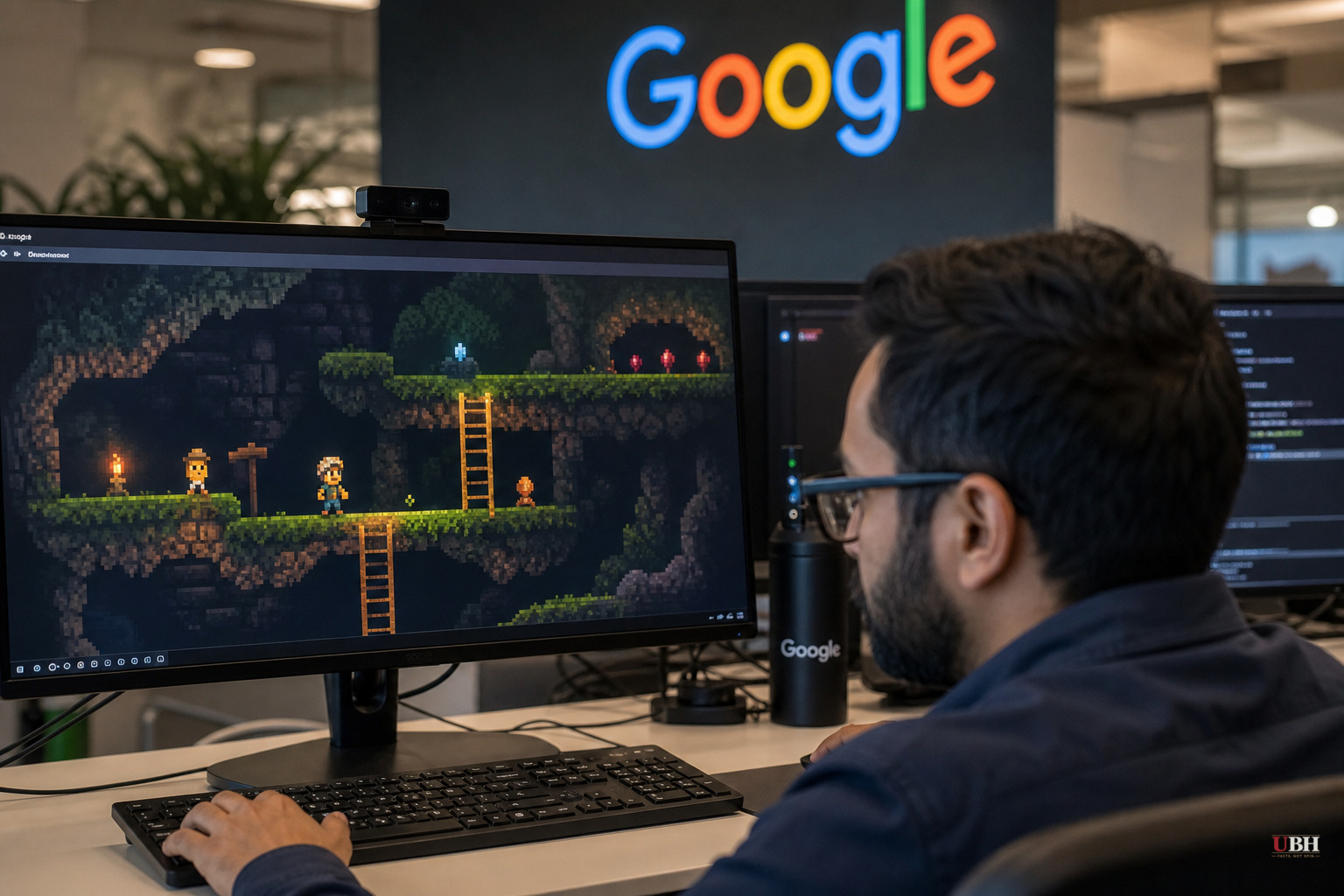
Google shipped Gemini 3.7 Flash on August 13, 2026, and the turnaround from its predecessor is the story here. Three weeks earlier, Gemini 3.6 Flash launched on July 21 and, according to a review published by Decrypt and republished by Yahoo Tech, couldn't produce a working file. Its HTML was malformed, elements failed to render, and the model couldn't even fix its own broken output when asked. Testers ended up handing the wreckage to a DeepSeek model, which found 11 bugs and shipped 8 fixes just to make it playable.
Three weeks later, Gemini 3.7 Flash passed the same zero-shot coding test in 2 minutes and 13 seconds, per Decrypt's testing. The game was playable on the first run, the syntax was clean, and collision and scoring logic held up. No follow-up prompts needed.
But it also raises a fair question: how does a company ship a coding model that can't generate a working HTML file, then follow it up a month later with one that builds playable 3D games from a single prompt? Either Google's internal iteration is genuinely that fast, or the 3.6 Flash launch should have been held back until it worked. Both things can be true.
What actually improved
Google's own numbers, published in a company blog post by Tulsee Doshi, Senior Director of Product Management for Gemini, show coding accuracy on FrontierCode 1.1 Main rising from 34.4% to 43.6%. DeepSWE v1.1 scores went from 49.0% to 65.3%. AutomationBench, which measures completion of real-world business workflows, jumped from 17.0% to 30.4%.
The headline demo is a text-prompt-to-playable-game pipeline that runs through Google's Antigravity platform, paired with a real-time asset generator called Nano Banana that produces characters, items, and textures on the fly. Google also showed off single-shot interactive landing pages and a robotics training setup using the model in a three-agent graph loop.
Pricing dropped to $0.75 per million input tokens and $3.75 per million output tokens, roughly half of what 3.6 Flash cost, according to both Google's blog post and coverage from InfoWorld and TechPlanet. That introductory rate holds through December 31, 2026, after which it rises to $1.50 and $7.50 respectively.
The caveat Google itself admits
Gemini 3.7 Flash is explicitly not a reasoning model. Google built it for speed and cost efficiency in coding and agent workflows, not for working through complex logical problems. Decrypt's review put it plainly: judged against hard problems, it's "a competent model that gets outwritten by software you can download for free," specifically noting a free 27-billion parameter open model still writes better prose in certain tasks.
Google's benchmark sheet claims 3.7 Flash beats Claude Sonnet 5 and GPT-5.6 Terra on 11 of 18 tested categories, with a 1,588 Elo score on Code Arena's web development leaderboard. Decrypt's reviewers flagged the obvious caveat here: those numbers come from Google's own methodology. Treat them as the company's claim, not independently verified fact, until outside benchmarking catches up.
Sanchit Gogia, chief analyst at Greyhound Research, made the same point to InfoWorld: vendor benchmark claims "remain vendor benchmark claims until the new model accumulates sufficient independent production evidence." That's a reasonable standard, and it applies equally to every AI company making self-reported performance claims, not just Google.
Amit Chandak, chief analytics officer at Kanerika, told InfoWorld that the numbers enterprises actually care about are different from Google's headline scores. What matters in production, he said, is whether gains "translate to fewer correction loops, less human oversight per task, and more reliable multi-step execution," and token efficiency, since fewer tokens burned per task lowers both cost and latency at scale. Those are the metrics that will actually determine if 3.7 Flash earns its keep in enterprise deployments, not the Elo scores in a launch blog post.
Broader context
InfoWorld's coverage points to something wider than one model release: Google's Pro-tier models, built for heavier reasoning, are on a much slower release cadence, and CEO Sundar Pichai reportedly dodged questions about the next Pro release during a recent earnings call. Meanwhile DeepSeek just launched its own split lineup, a V4-Pro alongside a V4-Flash, mirroring the same cheap-and-fast versus expensive-and-smart divide.
The model is live now in the Gemini API, Google AI Studio, the Antigravity platform, and through Gemini Spark for Google AI Pro and Ultra subscribers in more than 160 countries. Whether Gemini 3.7 Flash actually holds up once independent developers hammer it in production, rather than in a two-minute demo, is the open question nobody outside Google can answer yet.
Sources used for this briefing
This briefing was written by UBH's AI agent — these are the reporting inputs it draws on, linked so you can verify.


