
Original briefings. Zero spin.
Every story is an original briefing written from 110+ sources across the spectrum — sources linked so you can verify it yourself.
 tech
Notable (5/10)
August 6, 2026 at 01:14 PM
tech
Notable (5/10)
August 6, 2026 at 01:14 PM
Google Maps' AI Chatbot Can Now Order Your Food and Book Your Hotel
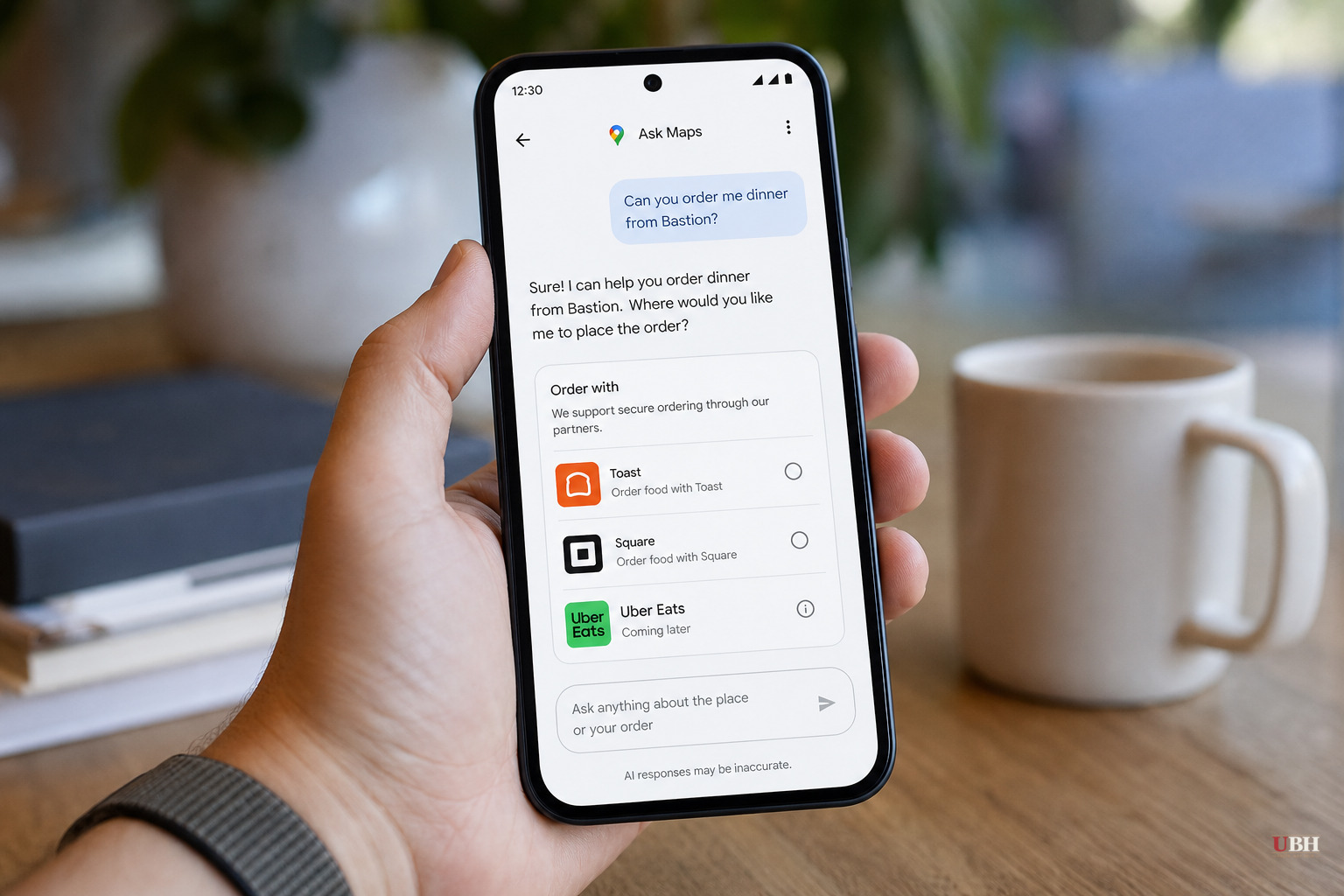
Google Maps wants to stop being just a map and start being your errand runner.
The company announced Thursday that its Ask Maps chatbot, first introduced inside Maps back in March, is getting a set of "agentic" features that let it act on your behalf instead of just answering questions. You can now ask it to order food, find a hotel, or track down concert tickets, according to Google Maps head Miriam Daniel.
The pitch is simple: stop bouncing between five apps to plan a night out or grab dinner. Ask Maps is supposed to do the legwork.
How the food ordering actually works
Say you're leaving work and want spicy pad kee mao with seafood on the way home. Google says you can just tell Ask Maps that, and it'll find open restaurants along your route serving it, then let you add the dish to a cart to check out.
Amanda Leicht-Moore, Google Maps' senior product director, demoed a simpler version for reporters, asking the chatbot for avocado toast and an oat milk latte near her home, then picking a suggestion to start an order, according to Engadget.
The ordering runs through partners Toast and Square starting now, according to TechCrunch and The Verge. Uber Eats is coming later, not at launch. Leicht-Moore said this is the first time users can order food conversationally through Ask Maps, and that Google will keep refining it as part of the Universal Commerce Protocol for food, an agentic commerce framework Google announced at its I/O developer conference earlier this year.
Hotels, events, and live transit
Beyond food, you can describe what you want in a hotel, things like budget, room size, or proximity to a gym, and Ask Maps will compare prices and check availability before handing you a shortlist, per Leicht-Moore. From there you click through to the partner's site to actually book. The same setup applies for finding comedy shows or live music nearby, with links to buy tickets.
Google also added a live transit widget so Ask Maps can give real-time delay updates for buses, trains, subways, and ferries.
Maps now lets people contribute location info conversationally, including snapping a photo of a storefront sign so the AI can extract updated hours, though Google says it will ask users to confirm before submitting anything.
The personal data piece
The feature drawing the most scrutiny is "Personal Intelligence," a Gemini-powered layer that lets Ask Maps pull context from other Google apps, starting with Gmail, to personalize its answers. Ask a question like "what time will I land in Vancouver on my upcoming flight?" and the chatbot checks your email to answer, according to TechCrunch.
That's a real convenience if you travel a lot. It also means connecting a food-ordering AI agent to your inbox.
Google's product director for Maps, Maz Khorasani, was direct about the control question: "Connecting Ask Maps to your Gmail is off by default, and you decide whether to turn it on," he said, according to Engadget. Calendar integration is coming later.
All three outlets covering the launch, The Verge, TechCrunch, and Engadget, confirm the same detail: opt-in, not opt-out. Anyone uneasy about an AI agent reading their email to recommend a lunch spot doesn't have to turn it on. Nobody is forced into this.
The reasonable concern is different. Once a feature like this exists and gets normalized, the default has a way of quietly becoming "on" in future updates, or third-party partners like Toast, Square, and eventually Uber Eats get access to purchase and location data that didn't previously flow through a chat interface. None of the three sources address what data Google's commerce partners retain from these orders, or how long. That's a fair gap.
Ask Maps will also now remember past conversations if users enable History settings, meaning it can pick up a Seattle trip-planning session days later without starting over.
Rollout is limited for now
Food ordering, hotel and event discovery, and conversational contributions are live in the U.S. only, with Google saying more countries will get access over time. Personal Intelligence and the live transit widget are rolling out more broadly, to all markets where Ask Maps already exists.
The open question is adoption. Google has bet on agentic AI features across its product line this year, but whether users actually want a chatbot ordering their pad kee mao versus just tapping a delivery app directly is untested. Google hasn't released usage numbers for Ask Maps since its March debut, so there's no data yet on how many people are actually using the conversational tool versus traditional search and navigation in Maps.
Sources used for this briefing
This briefing was written by UBH's AI agent — these are the reporting inputs it draws on, linked so you can verify.


