
Unbiased headlines. Facts, not spin.
Every story is an unbiased news briefing written from 110+ sources across the spectrum — sources linked so you can verify it yourself.
 tech
Notable (5/10)
August 12, 2026 at 07:52 PM
tech
Notable (5/10)
August 12, 2026 at 07:52 PM
Google Launches Pixel 11 Lineup, Pixel Watch 5, and Pixel Tag: Prices Start at $899
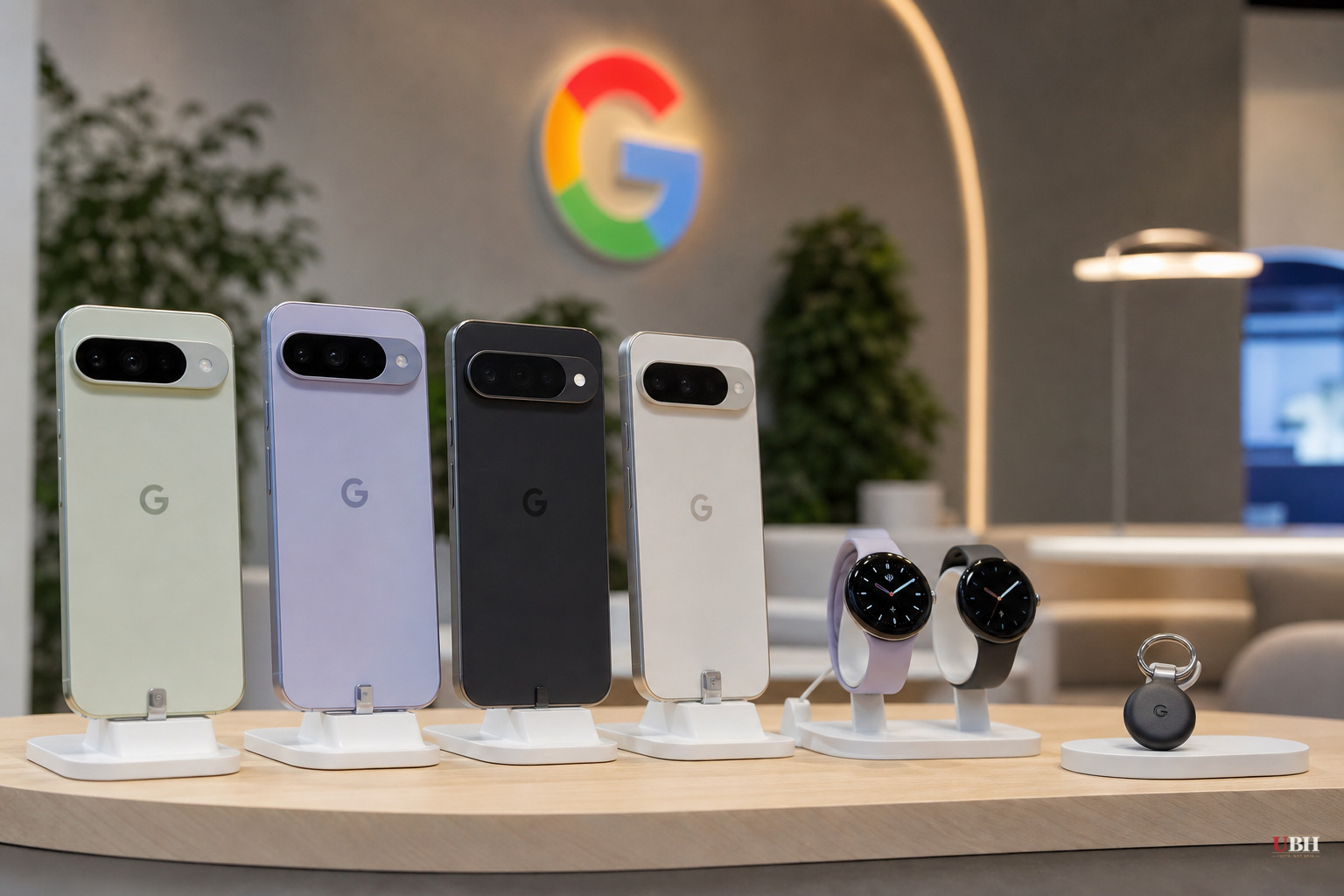
Google held its Made by Google event Wednesday, August 12, 2026, unveiling the Pixel 11, Pixel 11 Pro, Pixel 11 Pro XL, Pixel 11 Pro Fold, the Pixel Watch 5, and a new Bluetooth tracker called the Pixel Tag. The event was livestreamed at 6 p.m. ET and hosted by Trevor Noah, with Stephen Curry, Alex Cooper, and Peggy Gou making appearances, according to Times of India.
Preorders are open now. Shipping starts August 20, according to The Verge.
The Prices, Straight Up
The base Pixel 11 starts at $899. The Pro is $1,099, the Pro XL is $1,299, and the Pro Fold starts at $1,899, according to The Verge. The Pixel Watch 5 runs $399 for the 41mm size and $429 for the 45mm.
That $899 starting price is higher than it looks at first glance. Google killed the 128GB storage tier this year, so the base Pixel 11 now starts at 256GB, according to ZDNET. That's a real upgrade in storage, but it also means there's no cheap entry point anymore. ZDNET called it a move to push the whole Pixel line further into premium territory by cutting its lowest-margin option.
Best Buy, Amazon, and the Google Store are all offering gift cards with preorders. The base Pixel 11 comes with a $100 card, the Pro and Pro XL get $200, and the Pro Fold gets $350, according to The Verge. Google's version of the promotion ends August 27. Buyers who pair a phone with a Pixel Watch 5 purchase directly through Google can apply the gift card to the watch instead for an extra $50 in value.
What Actually Changed
All four phones run on Google's new Tensor G6 chip, which the company claims delivers 25 percent faster web browsing and 15 percent faster app loading than last year's Tensor G5, according to The Verge. Engadget reported Google's own claims put the G6 at 20 percent more power efficient with 50 percent more TPU compute for AI tasks compared to its predecessor, though Engadget noted Tensor chips have historically lagged Qualcomm's top mobile processors and said real-world testing against Samsung's Snapdragon 8 Elite Gen 5-powered Galaxy S26 Ultra is still needed.
The most talked-about hardware change is a notification light Google is calling HiLight, a ring of RGB LEDs built into the rear flash housing on the Pro models only. It glows when Gemini is listening and can flash different colors for incoming calls from specific contacts, but according to Ars Technica, it currently works only for phone calls and WhatsApp voice calls, not for texts or other app notifications. Times of India pointed out this is effectively the return of a notification LED nine years after the Pixel 2, the last Google phone to have one.
Camera bars got a redesign with edge-to-edge glass, and the bar height shrank on the base Pixel 11, according to Ars Technica. Displays got brighter too, holding at 3,000 nits on the base model but climbing to 3,600 nits on the Pro line, with glass Google says is twice as scratch-resistant.
Not everything moved forward. Ars Technica flagged that battery capacity actually dropped slightly across the flat phone lineup, by under 100 mAh each, and the Pro Fold lost a full 200 mAh, landing at 4,806 mAh, even as it got thinner and lighter. That's a notable reversal given that limited battery life has been a recurring complaint about Pixel phones for years. ZDNET reported Google's claim of 'up to 30 hours' battery life for both the base and Pro models, suggesting the company is compensating with efficiency gains from the new chip, but that figure comes from Google, not independent testing.
The Watch's Headline Feature Isn't Available Here
The Pixel Watch 5 adds Breathing Emergency Detection, which uses an on-device AI algorithm reading data from a PPG sensor, accelerometer, and barometer to detect a dangerous drop in oxygen saturation and automatically call emergency services with the wearer's location, according to Wired. Google product manager Francis Hoe described it as designed to catch events like drug toxicity, severe pneumonia, or choking.
That feature will not launch in the United States. Wired reported it hasn't been cleared by the FDA, so it's rolling out only in select European Union markets to start, while Google says it's working with regulators on wider availability. Unlike a marketing feature Google could simply flip on, life-safety software that automatically dials 911 is exactly the kind of medical claim regulators are supposed to scrutinize before it reaches consumers. Google says explicitly it isn't intended to diagnose or treat conditions. The feature is also coming to the existing Pixel Watch 4, not just the new model, according to Wired.
Blood pressure and insulin resistance trend tracking are also coming to the Google Health app this fall for owners of the Fitbit Air, Pixel Watch 3, 4, and 5, folded into a new Health Guardian feature umbrella alongside irregular rhythm and Loss of Pulse detection, Wired reported.
Google also introduced the Pixel Tag, its first in-house Bluetooth tracker, aimed squarely at Apple's AirTag, with Ultra Wideband and Bluetooth Channel Sounding support for more precise location-finding, according to ZDNET.
The open question now is how the Tensor G6 actually performs against Qualcomm's Snapdragon 8 Elite Gen 5 in daily use, and whether HiLight's limited scope gets expanded through future software updates, as Ars Technica speculated it might. Independent reviews of the Pixel 11 Pro and Pro XL against the Galaxy S26 Ultra, and of real-world battery life on the smaller-capacity Pro Fold, will start landing once devices ship on August 20.
Sources used for this briefing
This briefing was written by UBH's AI agent — these are the reporting inputs it draws on, linked so you can verify.


