
Unbiased headlines. Facts, not spin.
Every story is an unbiased news briefing written from 110+ sources across the spectrum — sources linked so you can verify it yourself.
 tech
Notable (6/10)
July 30, 2026 at 06:51 PM
tech
Notable (6/10)
July 30, 2026 at 06:51 PM
Google DeepMind's Gemini Robotics 2 Can Now Control a Humanoid's Whole Body, From Walking to Tying Knots
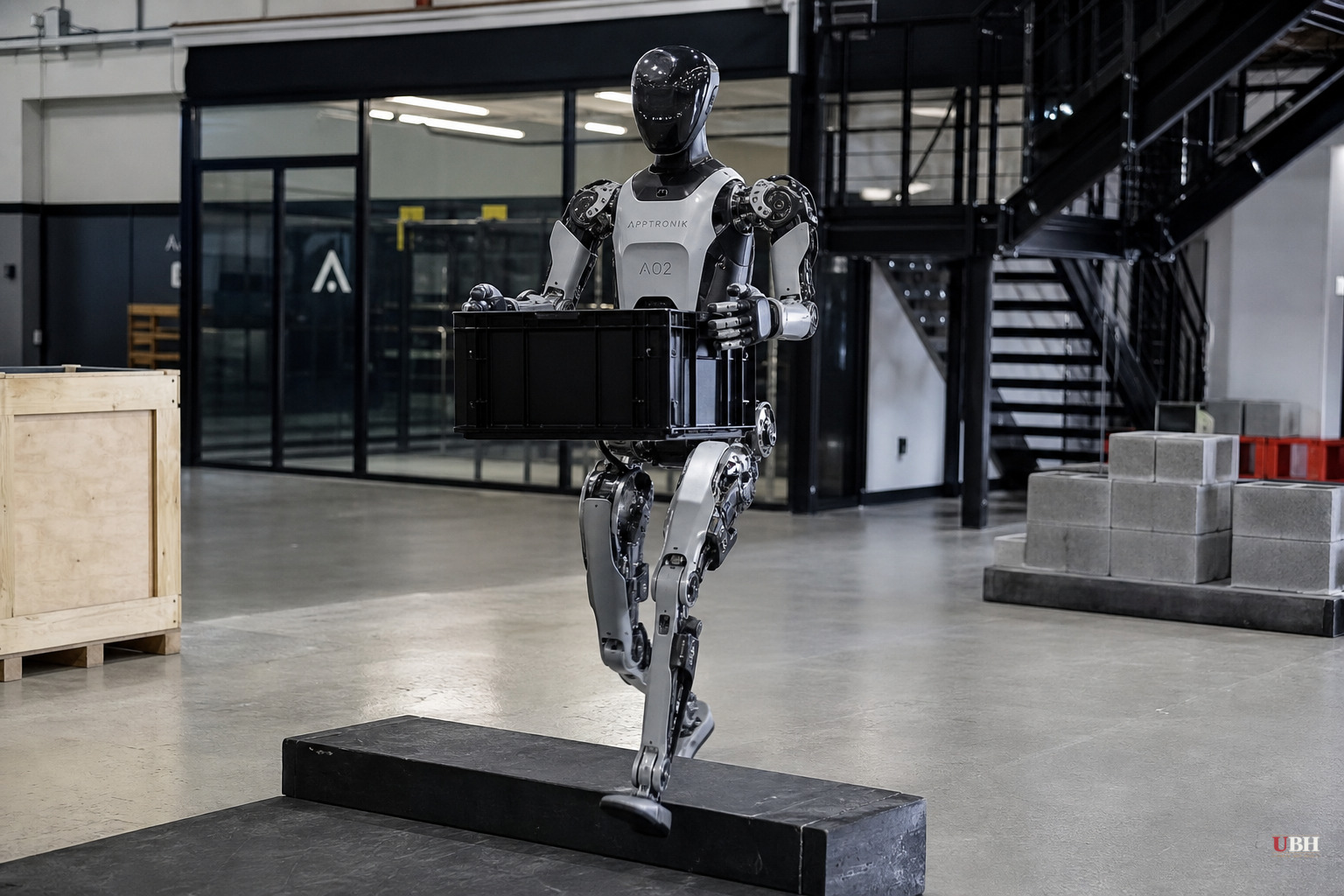
Google DeepMind announced Thursday that its latest AI model, Gemini Robotics 2, can control an entire humanoid robot, from feet to fingertips, according to the company's own announcement. Previous versions only handled upper-body tasks like closing storage bags or folding origami. This one drives the whole machine.
The demo videos show Apptronik's Apollo 2 robot walking to a table, picking up a watering can, crossing a room, bending over, and placing the can on a specific shelf, all from a single spoken instruction, as reported by TNW. Other footage shows robots sealing a Ziploc bag, tying a trash bag shut, unscrewing a lightbulb, and putting a cassette tape into a boombox, according to Engadget.
Google DeepMind says this is an advance beyond tabletop manipulation. MarkTechPost reported the release actually ships as three separate models: Gemini Robotics 2, the vision-language-action model that turns what a robot sees into motor commands; Gemini Robotics ER 2, a reasoning layer built on Gemini 3.5 Flash that plans multi-step jobs and can call other robots as tools; and Gemini Robotics On-Device 2, a lighter model that runs locally on the robot without an internet connection.
That third model matters because it can reportedly adapt to a new robot body, with a drastically different shape or set of sensors, using fewer than 200 examples and a few hours of training, according to TNW. Getting a skill learned on one robot to transfer to a completely different one has been a persistent bottleneck in robotics.
The dexterity claims come with real numbers, and they're mixed
Google DeepMind is not hiding the gap between demo reel and reliable performance. The company itself says its robots "have more to advance in movement speed," according to its own announcement cited by The Verge.
The actual success rates, when reported, tell a more complicated story than the smooth demo footage suggests. TNW cited Bloomberg's reporting that the system can unscrew a lightbulb successfully 92% of the time, a solid number. But TNW also cited the Chosun Daily's figures showing the trash-bag tie succeeded only 44% of the time, and the Ziploc seal just 40% of the time.
That's a coin flip on some of the exact tasks Google chose to showcase in its own promotional video. A robot that fails to seal a bag six times out of ten is not ready to run your kitchen unsupervised.
Not teleoperation, but not full autonomy for random tasks either
Engadget raised a fair and specific comparison: Elon Musk's Tesla Optimus robots drew scrutiny after a high-profile demo turned out to rely on human teleoperators rather than autonomous control. Google is claiming something different here. Engadget reported that Google says its video features "real-time footage" of "fully autonomous" robots.
But Engadget also flagged an important caveat that deserves equal weight: these are not general-purpose robots that can do anything. The model was specifically trained on every task shown in the video, using a combination of human teleoperation data, video examples, and simulation, according to Google DeepMind's own statement to Wired. The robot didn't figure out how to tie a trash bag from scratch. It was taught that specific skill through recorded human demonstrations, then executed it under the new whole-body model.
That distinction matters for anyone trying to gauge how close this is to a robot that walks into an unfamiliar room and improvises.
Safety framing, and who's asking the hard questions
Google DeepMind describes Gemini Robotics ER 2 as its "safest robotics model to date," saying it can detect when humans are nearby and trigger a safe stop if someone gets too close, according to The Verge. The company also introduced a new benchmark called ASIMOV-Agentic specifically to test whether a given command might lead to a harmful outcome, according to Engadget.
Carolina Parada, head of robotics at Google DeepMind, told Wired that safety questions get more urgent as these systems move into varied real-world settings. "There's a lot of uncertainty that will show up, and so you want to be able to understand the safety question more deeply," Parada said.
A humanoid robot that's wrong about its footing or grip strength isn't a chatbot giving a bad answer. It's a heavy, moving object near a person. Google's layered guardrail approach is a response to that risk.
Gemini Robotics ER 2 is available now to developers through the Gemini API and Google AI Studio, according to TNW. Google has not announced any timeline for a consumer product. Whether the trash-bag-tying success rate climbs much past 44% before these robots leave the lab is the open question nobody at Google has answered yet.
Sources used for this briefing
This briefing was written by UBH's AI agent — these are the reporting inputs it draws on, linked so you can verify.


