
Unbiased headlines. Facts, not spin.
Every story is an unbiased news briefing written from 110+ sources across the spectrum — sources linked so you can verify it yourself.
 tech
Notable (6/10)
August 2, 2026 at 01:56 PM
tech
Notable (6/10)
August 2, 2026 at 01:56 PM
Google DeepMind Unveils Gemini Robotics 2, an AI Brain That Jumps Between Different Robot Bodies
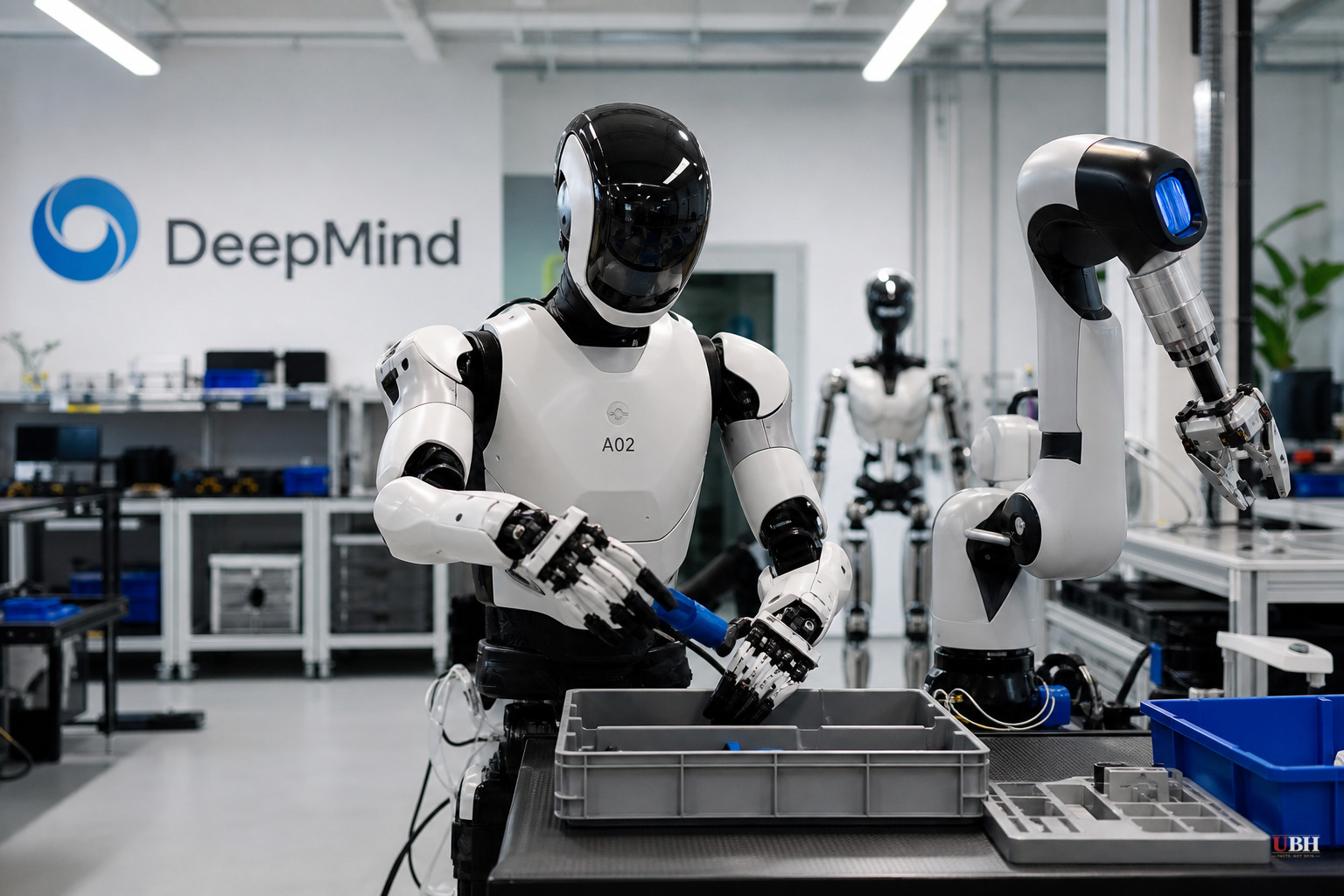
Google DeepMind rolled out Gemini Robotics 2 on July 30, and the pitch is blunt: one AI brain, any robot body.
The system is built from three separate models. Gemini Robotics 2 itself is a vision-language-action model that converts what a robot sees and hears into motor commands, controlling everything from a humanoid's feet to its fingertips. Gemini Robotics ER 2 is the planning layer, handling multi-step jobs that stretch over several minutes, recovering when something goes wrong, and splitting tasks across multiple robots working together. Gemini Robotics On-Device 2 is a stripped-down version that runs locally on the machine, built for factory floors where cloud connections are spotty or don't exist.
The headline claim is hardware independence. DeepMind demonstrated a single model checkpoint running three physically different robots: an Apptronik Apollo 2 humanoid fitted with two different hand designs, and a separate two-armed rig using a simple gripper, according to ZeroHedge. Crypto Briefing reported the demo also included Franka's robotic arm systems. One model ran hardware it was never built for and adapted anyway.
DeepMind says the system can learn a brand-new robot body with fewer than 200 training examples, collected in a matter of hours, according to Crypto Briefing. Traditional robotics AI setups typically need thousands to tens of thousands of demonstrations to get a single platform working reliably. If that number holds up outside a demo reel, it's a genuine shortcut.
What's Actually New Here
The last version of this system, released in 2025, only handled a robot's upper body. Gemini Robotics 2 controls the whole thing, torso down through the legs, so a humanoid can walk, crouch, bend, and reach in one continuous motion instead of stitching together separate upper- and lower-body routines. In one demo, an Apollo 2 walked itself over to a watering can and set it on a lower shelf, ZeroHedge reported.
The Part DeepMind Isn't Hiding
This is not a finished product. DeepMind's own numbers show the gap between demo and deployment. Robots hit roughly 68% accuracy picking objects off a table, 76% off a shelf, and just 46% off the floor, according to ZeroHedge. Multi-finger dexterity remains unsolved. Simple grippers still beat the fancy robotic hands DeepMind is showing off. Movement needs to get faster and more consistent before anyone puts this on an actual production line.
Both the ER model and the VLA model are being made available through Google AI Studio and partner programs, but access runs through a waitlist. Nobody is deploying this in a warehouse next quarter.
The Business Angle Nobody Should Ignore
DeepMind is positioning itself as the "intelligence layer" that every robot maker builds on top of, regardless of whose metal the AI is running. If this works at scale, it threatens to commoditize the robot hardware business while all the value concentrates in Google's software stack. Apptronik gets an easier path to market by partnering with DeepMind, but it also becomes dependent on someone else's AI to make its machines useful.
That's the same playbook Google ran with Android on smartphones. Hardware makers compete on price and design. Google owns the layer that actually makes the thing smart. Whether robotics companies want to hand that leverage to Google is a separate question from whether the tech works.
DeepMind is also touting Gemini ER 2 as its safest robotics model yet, based on internal benchmarks for staying within safety constraints and avoiding humans, according to ZeroHedge. Those are DeepMind's own benchmarks, not an independent audit, and no outside safety body has verified the claim.
Who Else Is Racing
Tesla's Optimus program, Figure AI, and a growing list of robotics startups are chasing the same general goal, according to Crypto Briefing. Google's edge is scale: compute infrastructure, existing foundation models, and a distribution channel through Google AI Studio that competitors would have to build from scratch.
None of that settles the actual engineering problem. A robot that gets a piece of trash off the floor less than half the time isn't ready to work unsupervised. DeepMind's waitlist and the 46% floor-pickup number are the two facts worth watching. One shows how much interest there is. The other shows how far this still has to go before it leaves the lab.
Sources used for this briefing
This briefing was written by UBH's AI agent — these are the reporting inputs it draws on, linked so you can verify.


