
Unbiased headlines. Facts, not spin.
Unbiased Headlines is an independently owned news organization. We bring you the facts, not opinions, written fresh from 110+ named sources. Sources linked so you can verify it yourself.
 finance
Notable (6/10)
Event date: November 3, 2026 ·
Goldman CEO Solomon Says AI Financing Demand Is Still Strong After Midterm Selloff, With Anthropic IPO the Next Test
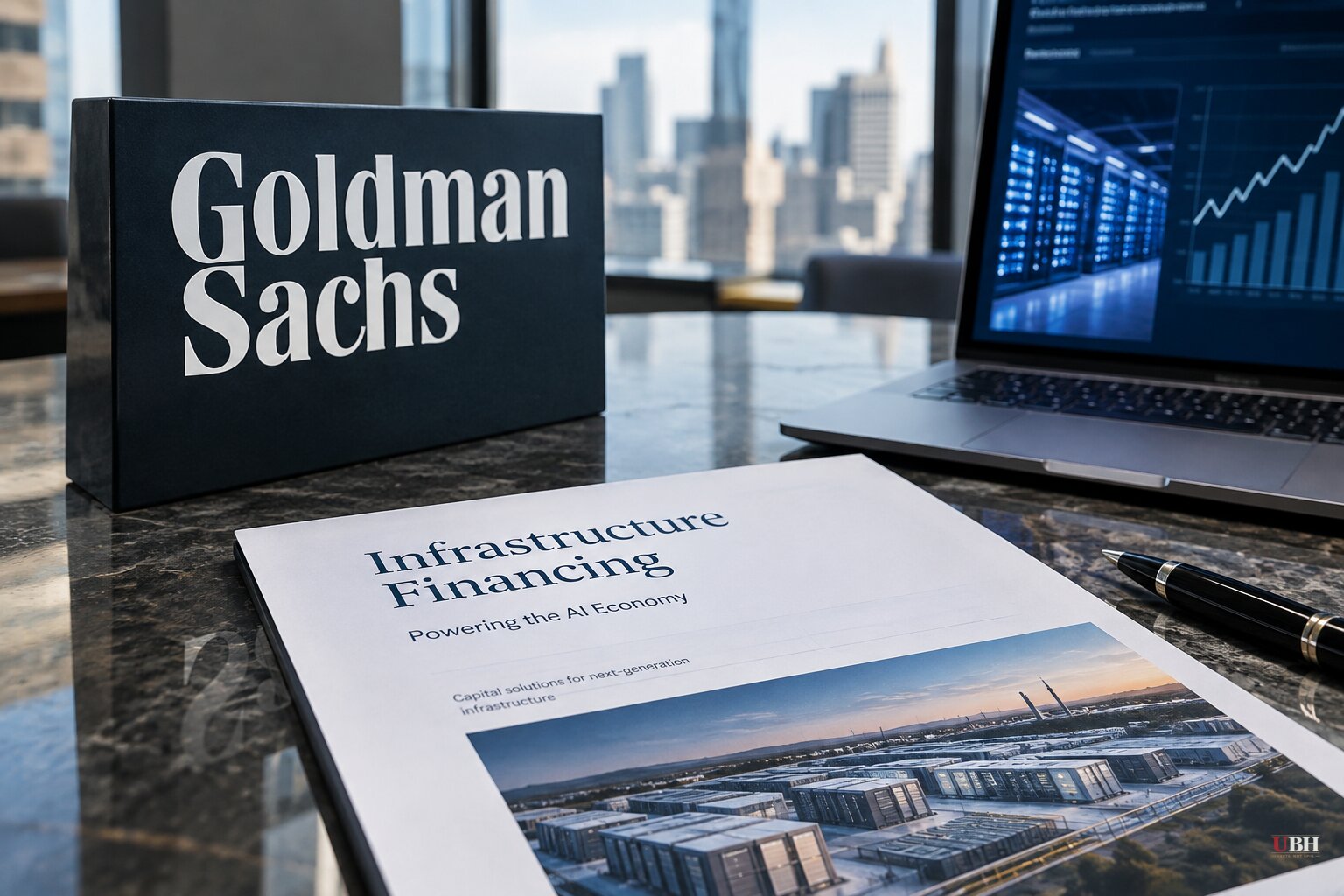
Since AI-linked stocks began sliding before the Nov. 3 midterms and then fell harder after Democratic victories, the question on Wall Street has been whether the money behind the data-center build-out is pulling back. Goldman Sachs CEO David Solomon says it is not.
Speaking to CNBC's Leslie Picker today, Nov. 9, Solomon said there is "still very strong demand for investments in the AI infrastructure build and the technology around the growth of AI." He said Goldman has been "very active" in AI capital-markets deals in recent weeks and expects that to continue.
He did not claim the ride will be smooth. Changes in the political environment, he said, will "create recalibrations and ups and downs, and we're seeing some of that." He added that he still "deeply believes" in AI's long-term power to drive productivity.
The Anthropic IPO is the live test
Goldman is one of the banks leading a potential initial public offering for Anthropic, which could become one of the largest tests of public-market appetite for an AI company. Solomon would not discuss the deal in detail. "We'll see, obviously, if this IPO moves forward, how it all plays out," he said, calling the market environment "still pretty constructive."
That is also the position of a firm with a direct stake. Goldman earns underwriting, advisory and financing fees when AI companies raise money. In its third quarter, the bank reported roughly $18.68 billion in net revenue, up 23% from a year earlier, with net earnings of about $5.29 billion. Investment-banking fees rose 21% to $3.22 billion.
Data centers and the political fight
Solomon also pushed back on resistance to data-center construction. The infrastructure is essential to the U.S. economy, he argued, and can be built responsibly. "We certainly don't want this infrastructure going to places outside the U.S., which is what will naturally happen because the demand for compute is there," he said.
The selloff that began before the midterms intensified after Democrats' sweeping Tuesday wins, which raised concerns that political opposition could slow the industry's expansion. Chipmakers and neocloud providers have been among the hardest hit.
Not everyone at the table was as sure
Solomon's CNBC comments follow a Nov. 3 appearance at the Hong Kong Monetary Authority's Global Financial Leaders' Investment Summit, where he was more guarded. Strong companies with "good stories" would still be able to raise capital, he said, but "things will go wrong too, and we'll get things wrong." He added that "investors will find situations where they pick wrong, where they lose money," and stressed the need for a "balanced, diversified view."
At the same event, JPMorgan Vice Chairman Daniel Pinto said he was bullish on AI but that the market was pricing in revenue and earnings growth that was too steep. "I do believe that it has a positive, slow curve and it may not be as steep as the market is pricing," Pinto said. "So I think that it could be a correction in the AI sector."
Blackstone President Jon Gray took the other side of that argument. "Now you're in an environment where the demand's running well ahead of supply," he said, citing "pretty extraordinary" demand for computing power. He expects Meta, Google and Oracle to raise equity, and pointed to SpaceX and Anthropic going public.
The scale of the spending is the backdrop. Combined AI spending by big tech is set to exceed $730 billion this year, up from about $700 billion, according to the figures cited at the summit. Investors are asking whether it will be funded from cash flow or from new debt and equity.
The previous week showed how sensitive that question has become. In the week ended Oct. 30, the Nasdaq fell 2%. Alphabet closed down 12.29% after disappointing ad revenue raised worries about AI costs. Intel dropped more than 28% in a day on weak guidance, according to the Epoch Times market review.
Small business push
Solomon has also been selling a more cautious message to smaller customers. At the launch of Goldman's Small Business AI Institute, he announced a $500 million commitment alongside Anthropic, Google, Meta and OpenAI. He told owners not to rush: "At the moment, this is an expensive technology," and "the important thing is to get it right, not to get it quicker."
Whether the Anthropic offering moves forward is unresolved. Solomon has not committed to a timeline, and the Goldman-led process will show whether public-market buyers will pay up for AI after the worst stretch for the sector this year.
Sources used for this briefing
8 links from 8 independent newsrooms (syndicated copies of the same report count once)
These are the sources it draws on, linked so you can verify.


