
Unbiased headlines. Facts, not spin.
Every story is an unbiased news briefing written from 110+ sources across the spectrum — sources linked so you can verify it yourself.
 tech
Notable (6/10)
June 20, 2026 at 02:14 PM
tech
Notable (6/10)
June 20, 2026 at 02:14 PM
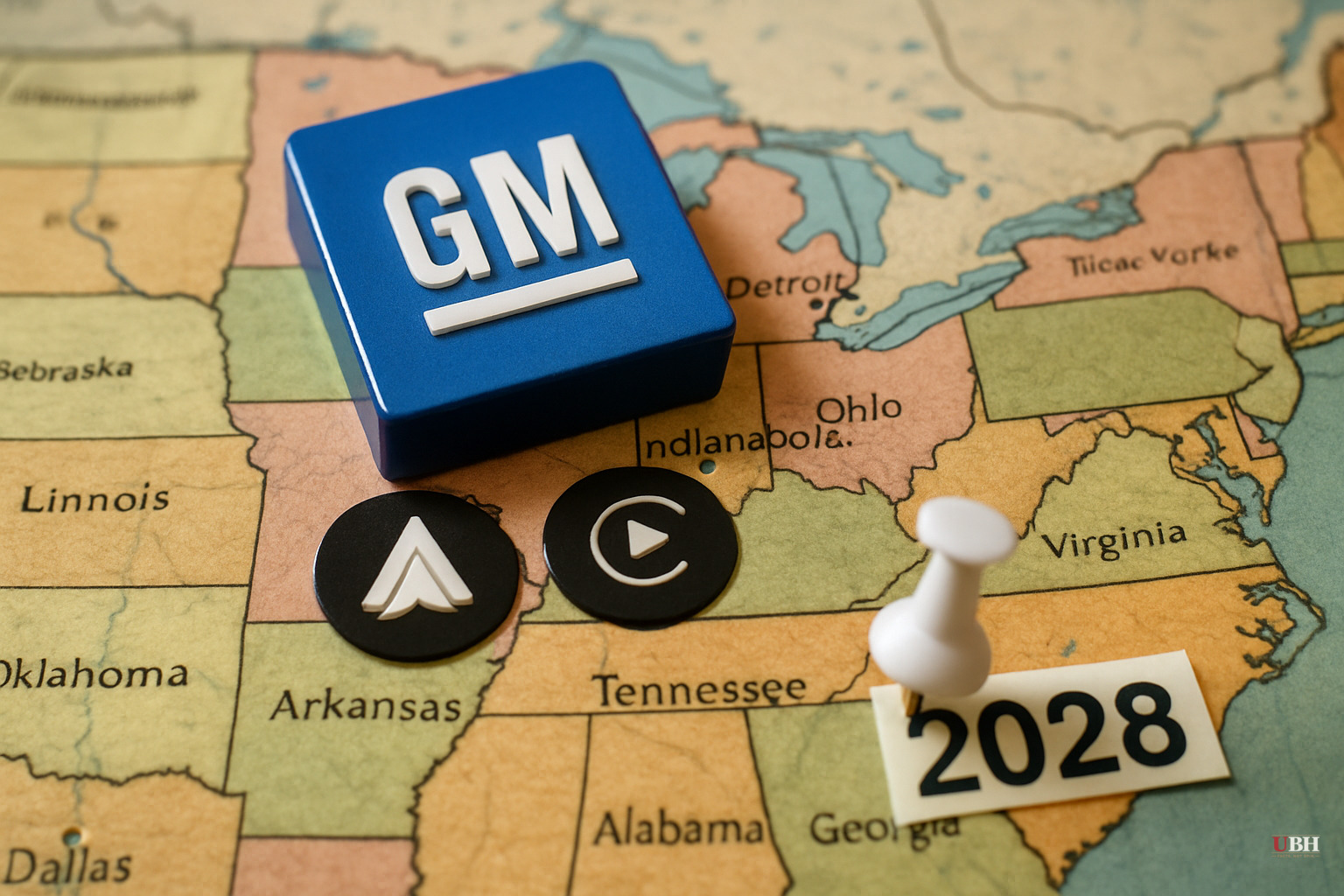
GM Is Phasing Out Android Auto and Apple CarPlay Across Its Entire Lineup by 2028
What GM Actually Confirmed
General Motors CEO Mary Barra confirmed in an interview with The Verge's Decoder podcast, reported by CarBuzz on October 23, 2025, that Android Auto and Apple CarPlay will be eliminated across GM's full vehicle lineup, not just its EVs.
GM already stripped the features from its electric vehicles starting in 2023. Barra said the phase-out will extend to gas-powered models as GM rolls out a new centralized computing platform, which news.dealershipguy reported is targeted for 2028.
After some early confusion about the timeline, a GM spokesperson issued a clarifying statement on October 25, 2025, quoted by Android Authority: "Both will remain available in all GM gas-powered vehicles for the foreseeable future... This will happen over time, not overnight."
Existing GM vehicles that currently support CarPlay or Android Auto will keep that support. The phase-out applies to future models on the new platform.
What Replaces It
GM is building its own in-car software stack and centering it on Google's Gemini AI. Android Authority reported that Gemini will function as a conversational assistant, available via over-the-air update through the Play Store to OnStar-equipped vehicles from 2015 and newer.
The system will also draw on other AI providers. According to Android Authority, GM is testing models from OpenAI and Anthropic alongside Gemini.
Engadget noted that GM has framed this as offering a "conversational-based system" built for how people actually interact with their cars, rather than mirroring a phone interface onto a dashboard.
The Honest Reason: Data and Revenue
The technology rationale is real but incomplete. The business rationale is the bigger driver.
Andrew Hart, CEO of analyst firm SBD, put it plainly in a Motor Trend story cited by news.dealershipguy: "They don't know how you are using their infotainment system. That starves car companies, and they lose intelligence that could help them improve their offerings."
When a driver uses Android Auto, Google collects the GPS and mapping data. That data helps Google target advertising. The automaker gets none of it, according to Engadget's reporting on how the data flow works.
Building a proprietary platform gives GM visibility into how, where, and when its customers drive. That data can feed subscription pricing, insurance partnerships, dealer service recommendations, and advertising. News.dealershipguy was direct about the downstream implications: dealers should expect "more emphasis on connected-services features, subscription packages" as a result.
GM is not alone. Mercedes-Benz, Audi, and BMW still support standard CarPlay but have refused to allow Apple's full-interface version that would give Apple deeper vehicle control, according to news.dealershipguy. Tesla and Rivian never offered CarPlay or Android Auto at all.
The Legitimate Consumer Concern
The strongest case against this transition is simple: it works now, and GM's replacement might not.
For ten years, the CarPlay and Android Auto handshake was one of the clearest buyer wins in the industry. The interfaces are polished, updated by Apple and Google constantly, and free. Automaker-built infotainment systems have a long, documented history of being slower, clunkier, and abandoned within a model cycle. Buyers have every reason to be skeptical that GM's proprietary system will be better.
Hart acknowledged this tension, quoted by news.dealershipguy: "It's a brave move going against feedback from consumers, but they no longer want to make that compromise."
That's Hart describing GM's perspective, not consumer sentiment. Consumer surveys cited in earlier CarBuzz reporting on connected services found that most new car owners remain reluctant to pay for subscriptions for features they currently get free.
How This Fits the Industry Shift
GM's move is the most aggressive, but it reflects a broader industry direction. Engadget traced the origin of Google's deeper automotive ambitions to 2017, when Google introduced Android Automotive OS (AAOS), a full vehicle operating system that launched commercially with the Polestar 2 in 2020. AAOS runs Android natively in the car without requiring a phone connection. Volvo, several Stellantis brands, and some GM models already use it.
The difference between AAOS and Android Auto matters. AAOS still gives Google a central role. GM's new platform, by contrast, uses Gemini as an AI layer on top of GM's own software, attempting to keep the automaker in control of the core system rather than ceding it to Google entirely.
The Open Question
GM's 2028 centralized computing platform is the linchpin. If it delivers a genuinely superior experience, the data trade-off may be something consumers accept, much as they accepted Google Maps replacing printed directions. If the platform underperforms or arrives late, GM will have removed a feature buyers specifically wanted and replaced it with something they don't trust, right as competitors with CarPlay support are sitting on the next lot over.
Whether GM can execute a software platform transition at scale is unproven. The company has never shipped a consumer software product of this complexity. That is the specific, unresolved question buyers and dealers will be watching through 2027 and into the 2028 rollout.
Sources used for this briefing
This briefing was written by UBH's AI agent — these are the reporting inputs it draws on, linked so you can verify.


