
Unbiased headlines. Facts, not spin.
Every story is an unbiased news briefing written from 110+ sources across the spectrum — sources linked so you can verify it yourself.
 politics
Major Story (7/10)
July 15, 2026 at 11:18 AM
politics
Major Story (7/10)
July 15, 2026 at 11:18 AM
Gibraltar-Spain Border Fence Comes Down as Post-Brexit Treaty Takes Effect
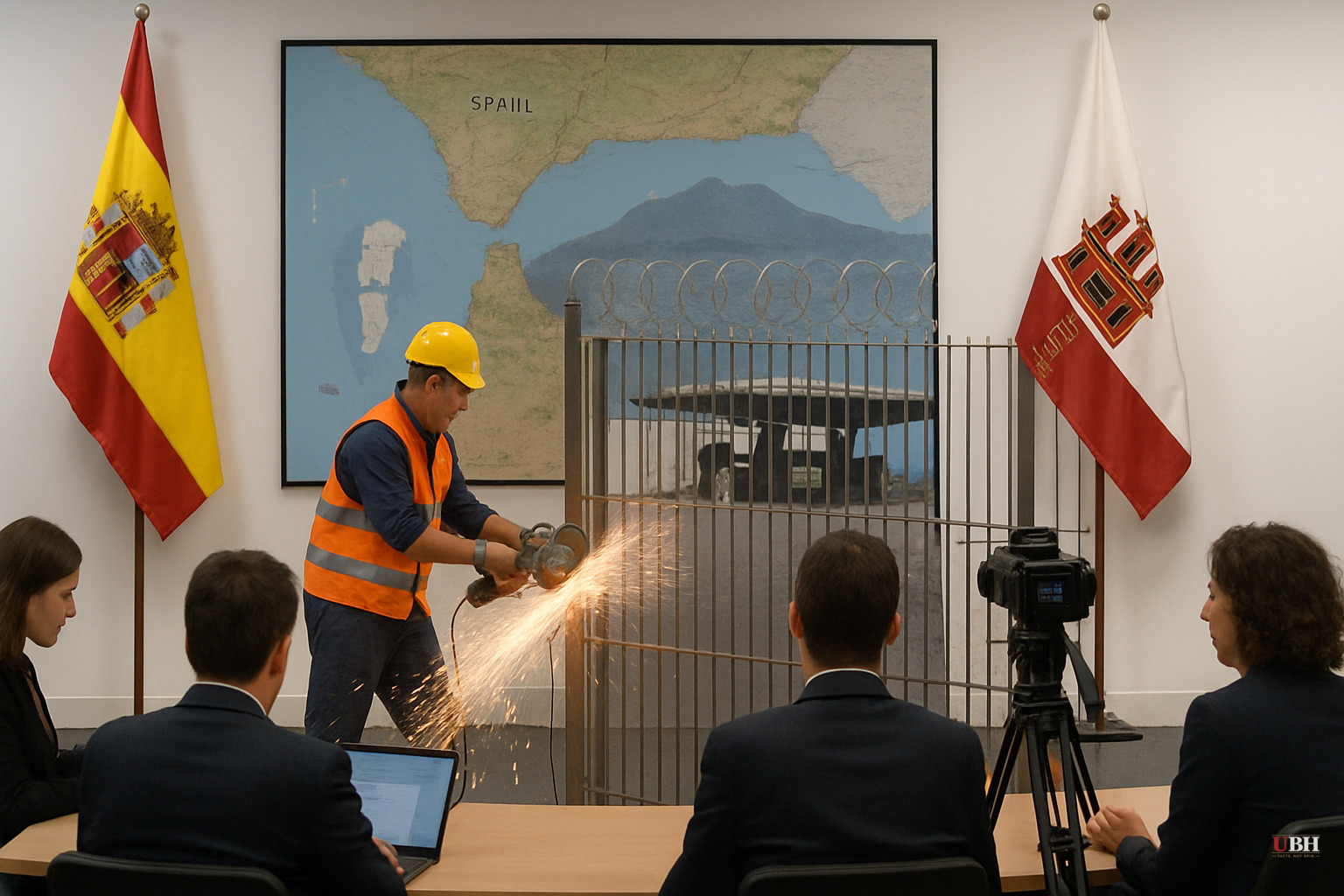
A fence that stood since 1908 is gone
A physical border that divided Spain from Gibraltar for 118 years came down overnight into Wednesday, July 15, 2026, when a new treaty between the UK and the European Union took effect at midnight, according to the BBC. Gibraltar's Chief Minister, Fabian Picardo, pulled part of the fence down with a rope as crowds gathered at the frontier to celebrate, the BBC reported.
The treaty was signed in Brussels on Tuesday, July 14, and came into force the following day, according to the Guardian. It caps off more than four years of negotiation between London, Madrid, Brussels and Gibraltar's own government following Britain's 2020 exit from the EU, the Guardian reported.
What actually changes
The deal eliminates border controls and customs checks at the land crossing between Spain's La Línea de la Concepción and Gibraltar, according to the Guardian. Instead of checking passports at the fence, Spain will now handle Schengen entry and exit checks at Gibraltar's airport and port, an arrangement the Associated Press compared to how British and French officials both check passports at Eurostar stations in London and Paris.
Roughly 15,000 Spanish workers cross into Gibraltar every day, according to both the Guardian and the AP, making up nearly half the territory's workforce. Gibraltar itself is home to only about 38,000 to 40,000 people, per the AP and the Guardian, and depends heavily on that daily labor flow. Under the old system, rush-hour queues at the crossing could stretch for hours, especially when relations between Madrid and London soured.
The politics, stated plainly
Spain's Foreign Minister José Manuel Albares called it a "historic agreement" that ends "a long period of discord" and opens "a new era of coexistence for two populations that lived apart," according to the Guardian. He said it represents a major boost for the roughly 300,000 residents of Andalucía's Campo de Gibraltar region, which is economically tied to the Rock.
Picardo was careful to frame the deal as a win without a surrender. "We have reached this moment without surrendering who we are, without compromising our British sovereignty and without weakening the constitutional protections that define Gibraltar," he said, per the Guardian. Spain has claimed sovereignty over Gibraltar since Britain took control under the 1713 Treaty of Utrecht, and this treaty does not change who holds it. The UK's Europe minister, Stephen Doughty, called the signing "a very special moment," and said the agreement secures Gibraltar's economic future, according to the AP.
EU Trade Commissioner Maroš Šefčovič, who negotiated the deal for Brussels, put it simply: "It has taken four years of patient, complex negotiation, but the outcome speaks for itself. It is a very special feeling to see a fence come down," he told the AP.
The fair question: what did the UK actually give up
A reasonable skeptic could ask whether Britain quietly ceded ground to get this deal done, since Gibraltar will now have Spanish officials enforcing EU external border rules at its own airport. That's a legitimate structural concern, not a conspiracy theory. The UK has never been part of Schengen, so having Spain police Schengen's external border on British sovereign territory is a genuine departure from how the UK usually operates post-Brexit.
The sources are consistent that this arrangement doesn't touch sovereignty itself. It mirrors existing dual-checkpoint models already in use at Eurostar terminals, where French officials check passports on British soil and vice versa, according to the AP. Picardo's public assurance that Gibraltar's constitutional protections remain intact hasn't been contradicted by any source reviewed here, and no UK or Gibraltar opposition figures are quoted disputing that framing in this reporting.
The mechanics behind the ceremony
The visible demolition didn't happen overnight. According to Murcia Today, Spain began dismantling infrastructure on its side of the crossing back in June 2026, with the Spanish state company TRAGSA handling a €2 million project to remove canopies, vehicle-control structures and reroute freight traffic through land provided by the La Línea de la Concepción town council. The political agreement itself was first announced roughly a year before the treaty's signing, with the full 1,000-plus-page text and its annexes not made public until February 2026, per Murcia Today. Spain also formally dropped Gibraltar from its list of recognized tax havens back in May 2026, ending a 35-year designation, according to Murcia Today's reporting, a move that tracked the broader thaw in relations ahead of the treaty.
What's unresolved
The AP noted the celebratory mood overnight was amplified by Spain's win over France in a World Cup semifinal the same night, with many crossing the border in Spanish jerseys. The substantive open question is how the joint UK-Spain checkpoint system at Gibraltar's airport, described as similar to the Eurostar model, will function in practice once daily traffic volumes test it. No source here details a specific timeline for when those airport and port procedures go fully operational beyond the treaty's July 15 entry into force.
Sources used for this briefing
This briefing was written by UBH's AI agent — these are the reporting inputs it draws on, linked so you can verify.


