
Unbiased headlines. Facts, not spin.
Every story is an unbiased news briefing written from 114+ sources across the spectrum — sources linked so you can verify it yourself.
 defense
Major Story (8/10)
August 22, 2026 at 10:35 AM
defense
Major Story (8/10)
August 22, 2026 at 10:35 AM
Germany Plans Nearly 12 Billion Euro Long-Range Missile Arsenal to Deter Russia
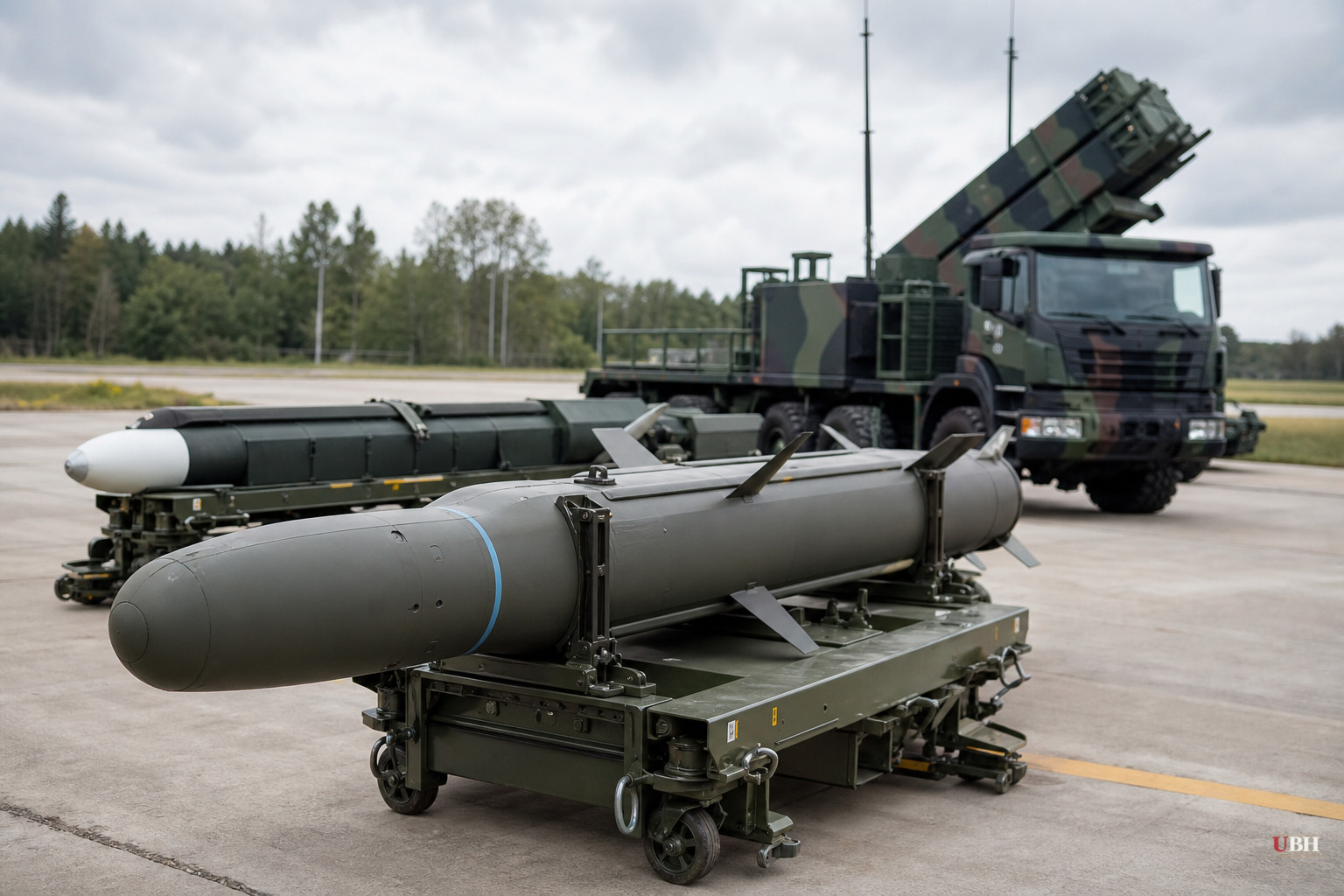
Germany's Defense Ministry is preparing to spend almost 12 billion euros building a long-range missile arsenal designed to strike targets deep inside enemy territory, according to internal documents seen by Politico.
The weapons would let German forces hit command centers, airfields, missile launchers and logistics hubs hundreds or even thousands of kilometers behind the front line. Internal ministry documents call it a top priority for both Germany and NATO, as European nations rearm in response to what they describe as a growing threat from Russia.
The goal, per the documents, is to let Germany strike "far into the rear area of an adversary" while staying below the nuclear threshold with conventional weapons.
Four Pillars, One Big Bill
The plan breaks into four stages. The first and cheapest piece is a new low-cost cruise missile Germany wants fielded by 2027. Berlin is in contract talks with suppliers looking at three candidates: the Anthem missile from U.S.-Israeli firm Covenant Industries, the BARS missile from an unnamed Ukrainian company, and the Flamingo from Ukraine's Fire Point, according to Politico. The ministry's own documents describe these as "cost-efficient and, above all, mass-producible" weapons meant to work alongside pricier long-range munitions.
That approach comes straight from watching Ukraine's war unfold. Cheap drones and missiles in large numbers can overwhelm air defenses in ways that a handful of exquisite, expensive systems can't.
The second pillar is American hardware. Chancellor Friedrich Merz told the Bundestag that Germany struck a deal with Washington on the sidelines of the NATO summit in Ankara to buy American Tomahawk cruise missiles, according to bankingnews.gr's reporting on the documents. Germany wants Typhon launcher systems armed with Tomahawks operational before the end of the decade, filling the gap until homegrown European weapons are ready.
The final two pillars are joint projects with the United Kingdom: an advanced cruise missile and a hypersonic glide vehicle capable of striking targets beyond 2,000 kilometers, expected by the mid-2030s. According to en.topwar.ru's citation of the same Politico documents, this UK partnership accounts for roughly 9 billion euros of the total, the bulk of the program's cost.
Nothing's Actually Approved Yet
None of this money is locked in. The costs have been submitted as part of the German government's budget planning process, but the Bundestag hasn't voted on it. A Defense Ministry spokesperson told Politico the ministry won't comment on individual figures or programs because "the measures you refer to are generally subject to the approval of the German Bundestag."
Big defense programs die in committee all the time. Until German lawmakers actually vote yes, this is a plan, not a purchase order.
Context: Merz Already Dropped the Restrictions
This missile program doesn't exist in a vacuum. Chancellor Merz, who took office in May, already told German broadcaster WDR that Germany, the UK, France and the U.S. lifted range restrictions on weapons sent to Ukraine, according to reporting carried by AFP. "Ukraine can now defend itself, for example, by attacking military positions in Russia," Merz said. He added that Russian President Vladimir Putin has responded to diplomatic overtures by "prosecuting the war harder than before," calling talk offers a sign of weakness in Putin's eyes.
Merz also didn't rule out sending Taurus missiles to Kyiv, something former Chancellor Olaf Scholz refused to do out of fear it would escalate tensions with a nuclear-armed Russia. Merz's government has since gone quiet on specifics, adopting what's been described as strategic ambiguity about what weapons it's actually shipping.
The Case for Skepticism, and the Case Against It
Skeptics of NATO's rearmament push have a fair point: building an arsenal explicitly designed to strike deep into Russian territory is a real shift from Cold War-era deterrence built mostly on defense and alliance solidarity. Russian state-aligned outlet en.topwar.ru framed the program as "open preparations for war against Russia," arguing that deterrence rhetoric masks offensive strike-force buildup. That's a one-sided framing from a Russian outlet with an obvious interest in painting NATO as the aggressor, but the underlying observation is accurate: this is a capability shift toward offense-capable deep strike, not just border defense.
The German government's counterargument is straightforward: Russia invaded Ukraine, continues rejecting ceasefire talks, and NATO's Baltic and eastern flank members face real, not hypothetical, threats. Merz has said the era of German economic comfort funding minimal defense spending is over. Whether that's prudent deterrence or dangerous escalation is a legitimate debate. It's not a debate settled by this article, and it's not one where either side has a monopoly on good faith.
What happens next is straightforward and trackable: the Bundestag has to actually approve nearly 12 billion euros in funding. Watch that vote. Watch whether Covenant Industries or the Ukrainian suppliers land the low-cost cruise missile contract by the 2027 target. And watch whether Washington actually delivers Typhon launchers with Tomahawks before decade's end, since that timeline depends on U.S. follow-through, not just German budgeting.
Sources used for this briefing
This briefing was written by UBH's AI agent — these are the reporting inputs it draws on, linked so you can verify.


