
Original briefings. Zero spin.
Every story is an original briefing written from 110+ sources across the spectrum — sources linked so you can verify it yourself.
 tech
Low Interest (3/10)
Event date: August 27, 2026
tech
Low Interest (3/10)
Event date: August 27, 2026
German Testing Firm Confirms Aptera's Solar Car Beats Its Own 40-Mile Range Claim
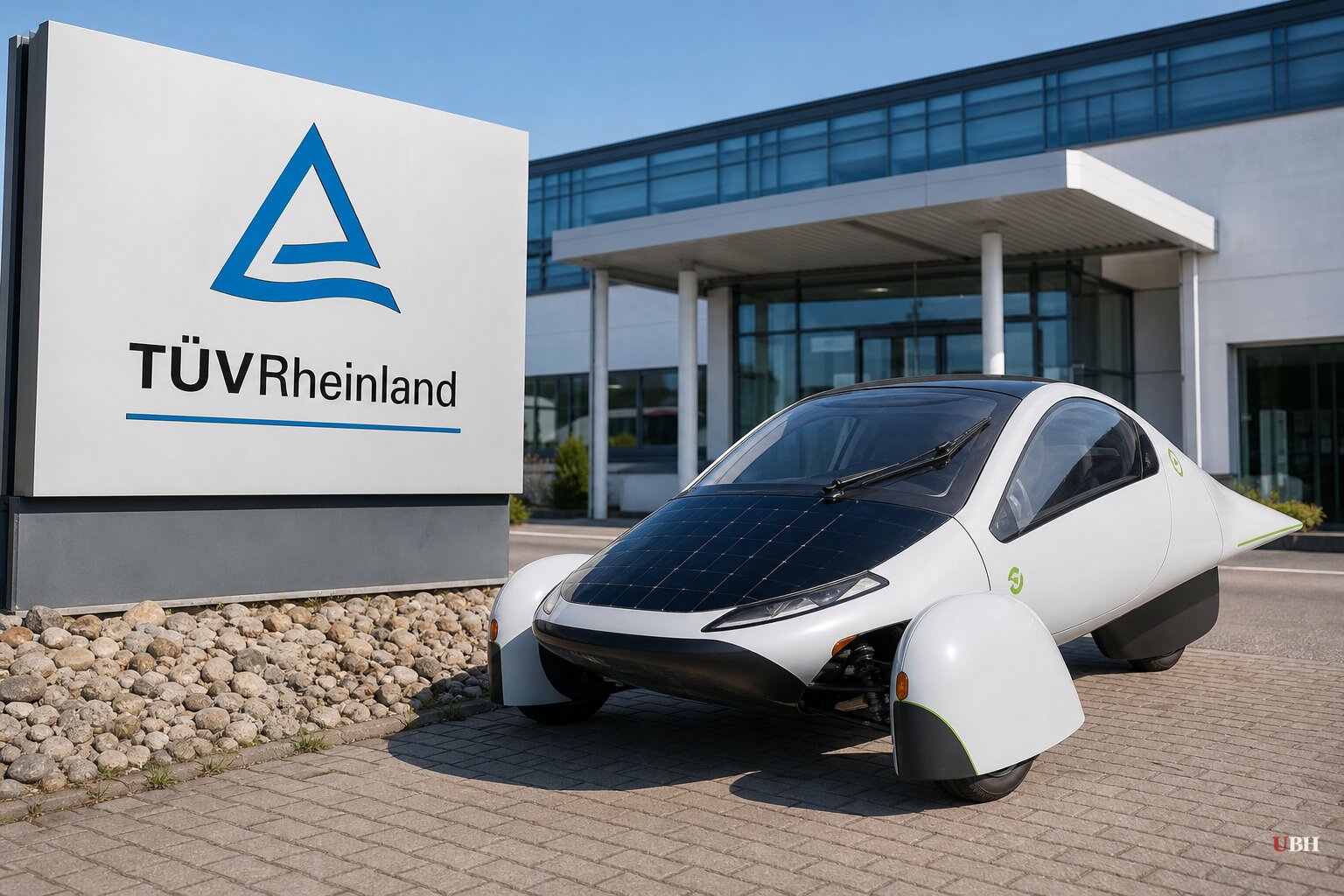
Solar cars have been a punchline in the EV world for years. Slap some panels on a two-ton SUV, park it in the sun all day, and you get maybe ten miles back. Great for running the AC fan. Useless for actually driving anywhere.
Aptera Motors Corp., a privately held company based in Carlsbad, California, says it solved that problem by going the opposite direction: building an ultra-light, ultra-efficient three-wheeled vehicle instead of a heavier SUV. Now it has independent testing to back the claim.
What TÜV Rheinland Actually Measured
TÜV Rheinland, a German testing and certification firm founded in 1872 that has certified solar technology since 1982, sent solar specialist Dr. Giorgio Bardizza to Aptera's final assembly facility for three consecutive days in July 2026, according to Aptera's own announcement distributed through GlobeNewswire on August 27, 2026.
Bardizza's team wired calibrated data loggers to each individual solar string on the vehicle's body, tracking current, voltage and power from sunrise to sunset, and separately monitored the high-voltage line feeding the battery pack, according to Electrek. That setup let them verify the number the car's own dashboard displays, rather than just trust it.
Critically, the measurement was taken after conversion losses, at the point energy actually entered the battery, not at the panels themselves. That distinction matters. A panel's rated output on a spec sheet is not what a battery actually receives once you account for the inefficiencies of converting DC solar power at varying angles into usable charge, particularly on a curved body wrapped in cells at dozens of different angles, as Automotive World and Tech Times both noted.
The Three Test Days
Aptera set up three different scenarios, and all three beat the company's long-standing target of 4.0 kWh of usable energy per day, according to Aptera and confirmed by Automotive World, Electrek, and electriccarsreport:
Day one: the vehicle parked in a fixed position, hatch closed, untouched all day. Result: 4.23 kWh, roughly 42 miles of estimated range at Aptera's targeted efficiency of 100 watt-hours per mile.
Day two: the vehicle repositioned once around solar noon, mimicking an owner turning the car after lunch. Result: 4.40 kWh, roughly 44 miles.
Day three: the rear hatch raised and angled toward the sun throughout the day. Result: 4.75 kWh, roughly 47 miles, achieved on what electriccarsreport reported was actually the day with the least available sunlight of the three.
Steve Fambro, Aptera's co-founder and co-CEO, said the parked-and-untouched result mattered most because it required zero effort from the driver. Chris Anthony, the company's other co-founder and co-CEO, framed the independently verified numbers as proof that everyday driving in sunny climates could be powered by sunlight alone, according to Automotive World.
Why Efficiency Is the Real Story
The number that makes this work isn't the solar panels. It's the 100 watt-hours per mile efficiency target Aptera is chasing, which Electrek notes is roughly a tenth of what a typical electric SUV consumes. That efficiency gap is why Fisker, Toyota and other automakers who bolted solar panels onto conventional EVs got what Electrek called "a rounding error" in extra range, while Lightyear went bankrupt and Sono Motors killed its Sion model trying to build dedicated solar cars.
According to Department of Energy household travel survey data cited by Tech Times, the average American in a one-vehicle household drives about 30 miles a day. If Aptera's real-world numbers hold up outside a Southern California July, a parked vehicle could theoretically go weeks between plug-in charges for a typical commuter.
What This Test Doesn't Prove
These results reflect clear July conditions in Southern California, one of the sunniest climates in the country. Solar output depends heavily on weather, season, geography and parking orientation. A driver in Seattle in December is not getting 42 miles of free range. Aptera itself acknowledged this, stating the results "do not mean drivers will consistently gain 40-plus miles of solar range every day."
TÜV Rheinland's role was an "on-site witnessing service" that does not constitute vehicle or regulatory certification, according to Automotive World. It's an independent verification of the energy measurement conducted by a firm with no financial stake in Aptera, but it is not a government safety or efficiency certification, and it doesn't test the vehicle's crashworthiness, durability or any other production readiness metric.
The bigger unresolved question is whether Aptera can actually build and sell this vehicle at scale. The company has talked about a target design for years while pursuing production. TÜV Rheinland validated the solar energy math on a single test vehicle over three days. Whether Aptera can turn that into a certified, mass-produced product that regular buyers can order remains the open question the company says its "validation programme" will keep addressing, according to Automotive World, with more independent testing planned across other performance metrics.
Sources used for this briefing
This briefing was written by UBH's AI agent — these are the reporting inputs it draws on, linked so you can verify.


