
Unbiased headlines. Facts, not spin.
Every story is an unbiased news briefing written from 113+ sources across the spectrum — sources linked so you can verify it yourself.
 politics
Major Story (7/10)
Event date: September 14, 2026
politics
Major Story (7/10)
Event date: September 14, 2026
German Parties Across the Spectrum Threaten Never-Used 'Federal Coercion' Clause If AfD Takes Power in Saxony-Anhalt
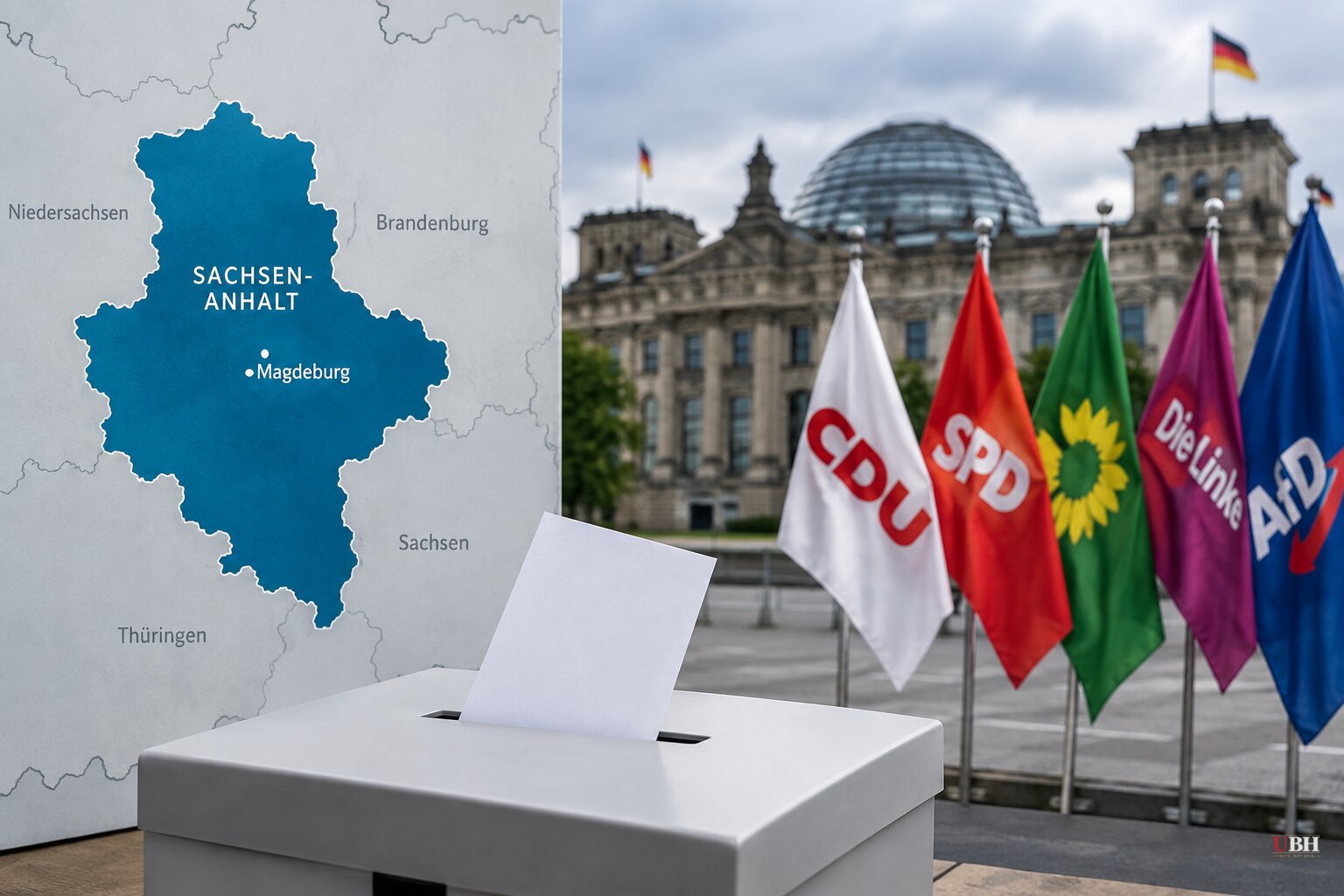
Since the AfD's 44% plurality win in the September 6 Saxony-Anhalt state election, Germany's political class has spent nearly three weeks debating an emergency constitutional power that has sat unused since the Federal Republic was founded in 1949.
The Alternative for Germany, led locally by 35-year-old Ulrich Siegmund, finished three seats short of an absolute majority in the state parliament. It could still take power in Magdeburg if it wins support from Sahra Wagenknecht's BSW party or peels off defectors from rivals, according to ZeroHedge and Vijesti. No coalition has been formed as of this week.
That uncertainty is enough for Berlin to be war-gaming Article 37 of the Basic Law, known as "Bundeszwang" or federal coercion. The clause lets the federal government issue binding orders to a state, or appoint a federal representative with that power, if a state violates its constitutional duties. It requires approval from the Bundesrat, Germany's upper legislative chamber.
A tool nobody has ever pulled
Anna-Bettina Kaiser, a law professor at Humboldt University in Berlin, told Deutsche Welle the bar for using it is "dramatic." "This is why federal coercion has never been introduced in the history of the Federal Republic. It is treated as a last resort," she said.
That hasn't stopped politicians from all four major non-AfD parties from raising it publicly. SPD parliamentary director Dirk Wiese told Redaktionsnetzwerk Deutschland the Basic Law provides mechanisms to compel a state to act constitutionally if AfD and BSW form what he called a "Putin coalition." Green parliamentary director Irene Mihalic told the same outlet that Siegmund's comments about using military weaponry against citizens who don't conform to the AfD's nationalist worldview show the party is ready to operate outside the rule of law. CDU group leader Thorsten Frei and Justice Minister Stefanie Hubig have also cited Article 37, according to news.osna.fm.
The Left party's Clara Bünger went further, telling RND that federal coercion alone isn't enough and accusing the federal government of "wasting time in working groups" instead of filing for a constitutional review that could ban the AfD outright.
Not everyone in Germany's legal establishment thinks this is smart politics. Law professor Alexander Thiele, in comments summarized by Ground News from a German-language interview, questioned how realistic the clause's use actually is and suggested threatening it before AfD has even governed looks less like strength and more like helplessness.
Merz calls AfD policy 'ethnic cleansing'
Chancellor Friedrich Merz escalated the rhetoric further in a Bundestag speech, accusing the AfD of pursuing what he called an "ethnic cleansing" policy through its "remigration" platform, according to The Guardian. "The term 'remigration' is nothing but a synonym for ethnic cleansing based on origin and skin colour," Merz said, drawing applause from other parties while AfD lawmakers heckled him.
Merz warned that mass deportations would gut Germany's care homes, hospitals and restaurants, which depend on immigrant labor. He also canceled a planned phone call with President Trump that week; his spokesperson declined to explain why but noted Merz objects to foreign leaders commenting on German elections, an apparent reference to Trump's Truth Social post calling AfD's result a "really big night."
CNN's review of the AfD's 258-page Saxony-Anhalt manifesto documents the policies driving the fight: immediate deportation of irregular migrants, expanded detention facilities, and a "remigration offensive" aimed even at Ukrainians, on the grounds that "large parts of Ukraine are considered safe." Siegmund has said people ordered to leave "must be placed in deportation custody under our government."
The other side of the ledger
The AfD didn't seize power. It won a plurality in a free election that Germany's own institutions haven't invalidated. No charges, no court ruling, and no completed party-ban proceeding exist against the AfD as of today, despite the Greens' Mihalic calling for the Constitutional Court to rule on one. Saxony-Anhalt's state intelligence office classifies the AfD as "provenly extreme right-wing," an official designation, not a criminal finding, and that classification predates this election.
CBS News reported that the CDU's own coalition is cracking under the strain. Merz's approval has fallen sharply, unemployment hit 3 million in August (up 36,000 year over year), and journalist Kerstin Münstermann told CBS the party faces "a genuine crisis of authority and leadership." A Konrad Adenauer Foundation analysis cited by CBS found 91% of AfD voters in Saxony-Anhalt fear a new migrant influx and 85% worry about societal change from immigration, numbers that suggest the AfD's surge is driven by a real policy grievance, not just protest.
Whether Siegmund actually becomes minister-president now depends on coalition arithmetic that hasn't resolved. If it does, and Berlin follows through on Article 37 for the first time in 77 years, the fight almost certainly lands at the Federal Constitutional Court, the same body Kaiser says has always been where these disputes get settled instead.
Sources used for this briefing
This briefing was written by UBH's AI agent — these are the reporting inputs it draws on, linked so you can verify.


