
Unbiased headlines. Facts, not spin.
Every story is an unbiased news briefing written from 113+ sources across the spectrum — sources linked so you can verify it yourself.
 politics
Major Story (7/10)
September 25, 2026 at 09:28 AM
politics
Major Story (7/10)
September 25, 2026 at 09:28 AM
Trump-Xi State Dinner Ends With Pandas and a Ballroom Tour, But No Deal on Trade, AI, or Taiwan
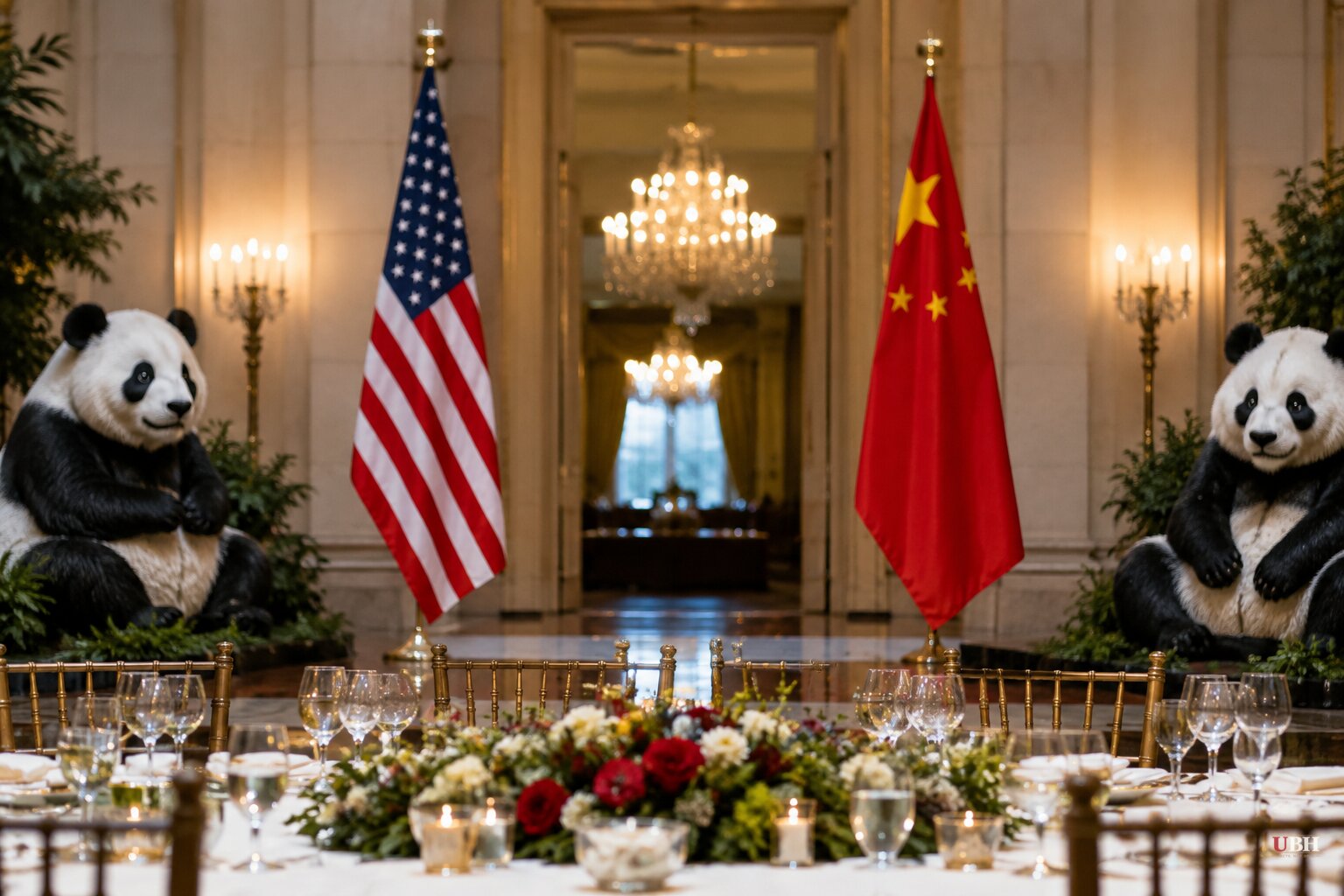
Since Trump and Xi Jinping wrapped hours of meetings Thursday, September 24, culminating in an East Room state dinner, the headline result is friendly rhetoric and not much else. Both leaders called the meeting "great." Neither announced a real deal.
The Guest List Was the Story
The dinner drew Amazon's Jeff Bezos, OpenAI's Sam Altman, Google's Sundar Pichai, Nvidia's Jensen Huang, Tesla's Elon Musk, Apple's Tim Cook, Dell's Michael Dell and Citigroup's Jane Fraser, according to the Daily Wire and confirmed by TIME. A U.S. official called it a "popular and hot-ticketed event."
AI and trade were the two subjects White House officials told reporters would dominate the agenda, per the Daily Wire, and the guest list reads like a who's-who of the companies racing China on chips and large language models.
Trump gave Xi a bald eagle sculpture and, according to CBS News, invited the Chinese delegation to be the "first people to step foot" on the construction site for his new White House ballroom. Xi, for his part, recounted George Washington's purchase of Chinese porcelain and announced two pandas, Ping Ping and Fu Shuang, will be sent to Zoo Atlanta, continuing a diplomatic tradition dating to Nixon, TIME reported.
What Didn't Happen
The U.S. and China extended their tariff truce by two months, avoiding a fresh trade war for now, according to CBS News. But The Guardian reported there was "no sign of breakthroughs" on AI, trade, Taiwan or the Iran war. Xi told Trump he hopes Washington keeps its position opposing Taiwan independence and "handles the Taiwan question with prudence." Trump did not publicly commit to anything on that front.
Xi also raised Iran, according to Chinese state media cited by TIME, saying he hopes Washington and Tehran resume talks and recommit to a 14-point memorandum reached earlier this year. Neither leader detailed what, if anything, was agreed on artificial intelligence regulation, an area where Trump has pushed for a lighter U.S. touch specifically to outpace Beijing.
CNN Still Shut Out, Despite a Court Order
A day earlier, U.S. District Judge Timothy Kelly ordered the White House to restore campus access for CNN, MS NOW and Politico, calling the ban likely unconstitutional. By Thursday, all three outlets reported some of their journalists were let back onto the grounds, according to The Hill.
But The Guardian reported the state dinner itself was not televised because the White House continued to deny CNN full access to the event even after the ruling. That's a narrower dispute than campus access broadly, and it raises an open question about how far Kelly's order actually reaches and whether CNN will ask the court to enforce it further.
Iran's Counteroffer, and a Senate Vote That Failed
Away from the Xi visit, Iranian Foreign Minister Abbas Araghchi said Tehran has presented a proposal through mediators to reopen the Strait of Hormuz and resume talks toward a "final deal," according to CNN. Iranian President Masoud Pezeshkian told Fox News his government is willing to dilute its stockpile of uranium enriched to 60%, calling the material "not a big deal," and denied Iran wants a nuclear weapon, citing what he described as a religious decree from Iran's late supreme leader against weapons of mass destruction.
Those are Pezeshkian's claims, made on Iranian state-friendly terms to American television. No U.S. or international inspector confirmed them, and Iran's regime has a documented history of understating its enrichment activity to negotiators. Human rights groups and protesters outside the UN, including former New York Mayor Rudy Giuliani, pointed to reports that Iran has killed thousands of its own protesters and continues weekly executions of political prisoners, according to Fox News.
Meanwhile the Senate voted down, 49-50, a House-passed resolution that would have directed Trump to withdraw U.S. troops from the conflict with Iran, according to The Hill. That's a real and fair concern from the resolution's Republican and Democratic backers alike. Congress, not the president alone, holds the constitutional power to authorize sustained military conflict, and a one-vote margin suggests real unease among Trump's own party over how the Iran engagement has been handled. The White House has not laid out a public exit timeline or endgame for U.S. involvement.
None of these threads—the trade truce, the Taiwan language, the Iran proposal, or the CNN dispute—closed this week. The truce buys two months. Kelly's order is now being tested for how far it actually restores press access. And Araghchi's Hormuz proposal sits with U.S. negotiators, unanswered as of Friday.
Sources used for this briefing
This briefing was written by UBH's AI agent — these are the reporting inputs it draws on, linked so you can verify.


