
Unbiased headlines. Facts, not spin.
Every story is an unbiased news briefing written from 110+ sources across the spectrum — sources linked so you can verify it yourself.
 politics
Major Story (7/10)
August 1, 2026 at 03:34 AM
politics
Major Story (7/10)
August 1, 2026 at 03:34 AM
Georgia's Flock Camera Arrests Hit 20 as Deputies and Investigators Keep Getting Caught Stalking Exes
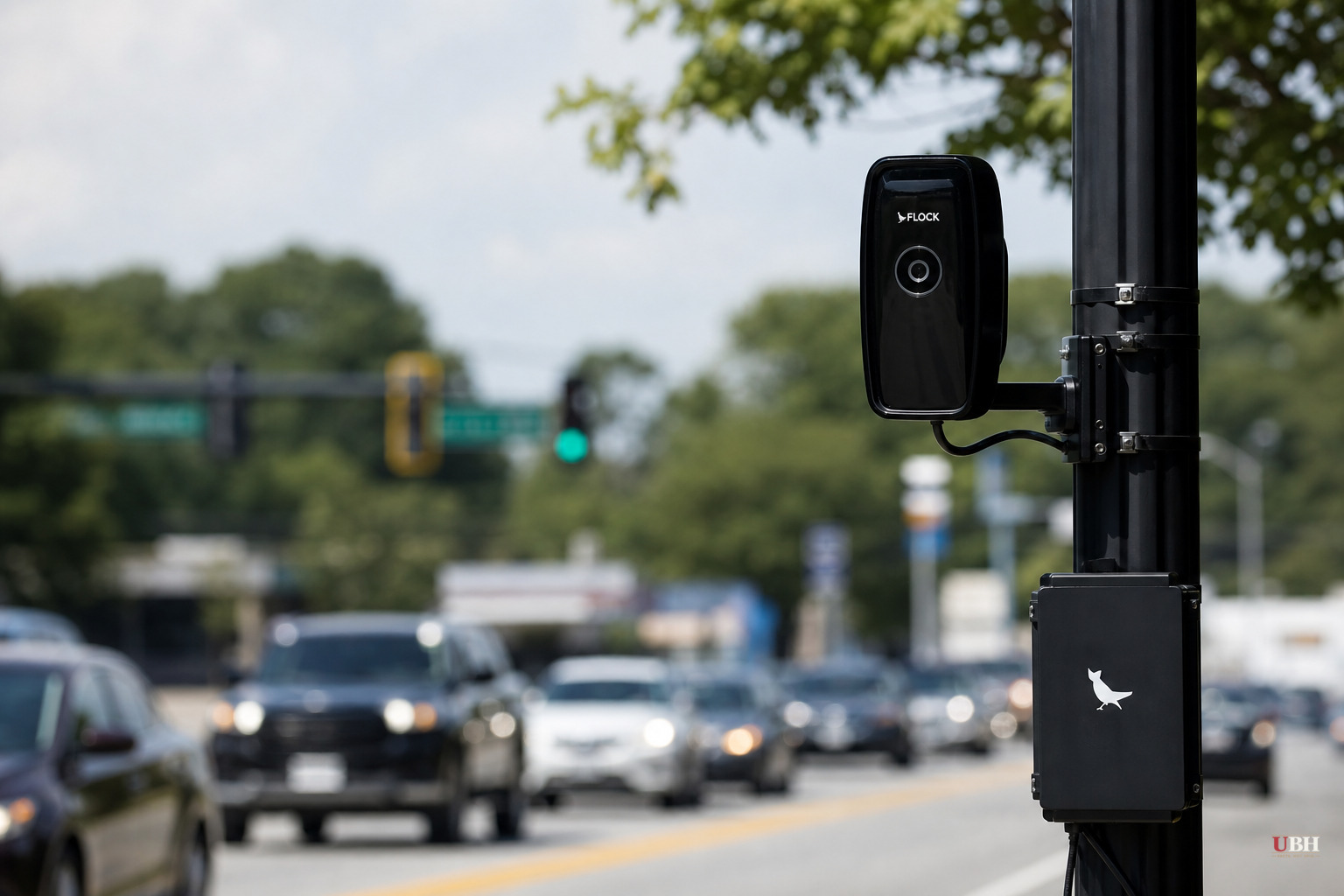
Georgia's license plate reader scandal keeps growing. As of this week, at least 20 officials statewide have been arrested for misusing the Flock Safety surveillance database, a number that has climbed steadily since cases first surfaced this spring.
The newest arrest came Monday, when Andrae Wright, an investigator with the Ogeechee Circuit District Attorney's Office northwest of Savannah, was charged with allegedly accessing the license plate reader system more than 60 times between June 15 and July 5, according to WSB-TV Atlanta.
Days later, the Habersham County Sheriff's Office announced that Deputy Christian Brewer had been fired and arrested after an internal audit found he'd used license plate data for non-law enforcement purposes, according to CBS News. Brewer was charged with felony violation of oath of office and two counts of misdemeanor misuse of license plate data. Investigators say the case involved "an individual with whom Brewer had a personal relationship at the time," according to NowGeorgia.com.
Sheriff Robin Krockum didn't downplay the seriousness. "The people of Habersham County trust us with authority and access to sensitive information," Krockum said, according to CBS News. "This trust is earned every day and can be lost in a single decision. Any misuse of our authority or the tools provided to your deputies is a betrayal of that trust." Brewer, who'd been with the agency since May 2024, will have his case reviewed by the District Attorney's Office once the investigation wraps.
A Pattern, Not an Isolated Incident
Krockum called the Brewer case "isolated." The statewide numbers say otherwise.
Over the past two months, Georgia has also announced misuse cases involving three Cherokee County sheriff's deputies, five Albany police officers, three Richmond County officers, a Gwinnett County police officer, a Coffee County deputy, an employee of the Echols County Sheriff's Office, and the former Braselton police chief, according to CBS News. Cherokee County's sheriff's office said its own internal audit caught the misuse there. "We found misuse and we addressed it head on," the office said in a statement to CBS Atlanta.
Sarah Hunt-Blackwell, senior policy counsel with the ACLU of Georgia, says the pattern points to something bigger than a few bad actors. "Seeing that there are officers misusing this technology for personal reasons really just kind of indicates a larger problem in general of the fact that we have no idea what this technology is being used for and who really has access to it," Hunt-Blackwell told CBS News.
The Tool That Catches Abuse Is Also the Tool Nobody Can Verify
Flock Safety, the Atlanta-based company that runs the largest ALPR network in the country with more than 120,000 cameras nationwide, rolled out an "Audit Assistance" tool in April specifically to catch this kind of misuse. The company says the tool "has helped several agencies identify misuse cases that might otherwise have gone undetected."
The audit logs are how Cherokee County, Habersham County, and others actually caught these officers. Every search gets recorded, including who ran it and what reason they gave. That's a real accountability mechanism, and it's already producing arrests, not just headlines.
But Michael Soyfer, an attorney at the Institute for Justice who works on Fourth Amendment cases, says the auditing tool doesn't solve the underlying problem. "There isn't much public information on how they work," Soyfer said, describing the system as a "black box" and noting that "Flock's ultimate customer is the police department." Relying on police departments to audit their own officers, Soyfer argues, is "leaving the police to police themselves."
Soyfer says the 20 known Georgia arrests are "just the tip of the iceberg." He points to a lawsuit the Institute for Justice filed in April against San Jose, California, where the city's 474 Flock cameras were searched nearly 2.5 million times in the last six months of 2025, an average of more than 15,000 searches a day, with almost no independent oversight. Officers often justify searches with vague language like "criminal justice," Soyfer says, which makes real misuse nearly impossible to distinguish from legitimate police work using audit logs alone.
Flock and Georgia sheriffs point to a growing arrest count as proof the system works: bad actors get caught, fired, and charged. Civil liberties advocates counter that a self-policing audit trail, controlled by the same agencies doing the searching, will always undercount abuse, because it depends on police departments deciding to look and prosecutors deciding to charge.
No federal or Georgia state law currently requires warrants or reasonable suspicion before an officer searches the license plate database, according to Reason. That's a policy gap state lawmakers haven't closed, even as arrest numbers climb. Georgia's legislature reconvenes in January, and whether lawmakers add statutory search standards, or leave the audit-log system as the sole check on officers with access to a nationwide vehicle-tracking network, remains an open question.
Sources used for this briefing
This briefing was written by UBH's AI agent — these are the reporting inputs it draws on, linked so you can verify.


