
Unbiased headlines. Facts, not spin.
Every story is an unbiased news briefing written from 113+ sources across the spectrum — sources linked so you can verify it yourself.
 politics
Notable (6/10)
Event date: June 17, 2025
politics
Notable (6/10)
Event date: June 17, 2025
Georgia Supreme Court Says State Police Are Not Immune From Paying for Property They Destroy
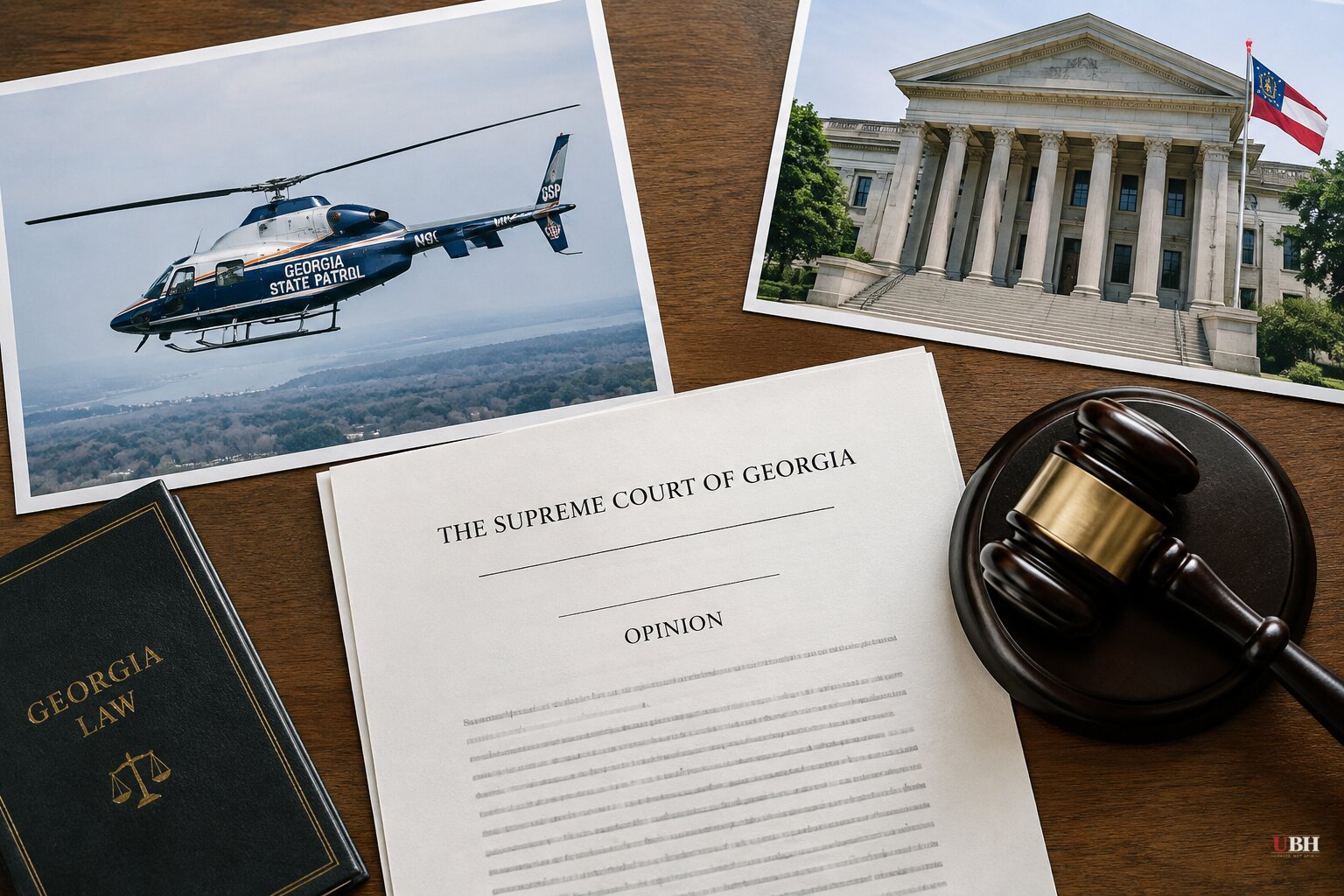
A licensed hemp farm in Dahlonega just forced the Georgia Supreme Court to rewrite six decades of law on when the government has to pay for what it breaks.
On September 9, the court ruled unanimously in Blue 42 Organics v. Georgia Department of Public Safety that police cannot claim automatic, blanket immunity from property-damage claims simply by saying the damage happened during an exercise of "police power." Chief Justice Nels S.D. Peterson wrote the opinion.
What Actually Happened
On July 21, 2021, the Governor's Drug Suppression Task Force ran an operation near Blue 42 Organics' farm. According to court records cited by WEIS Radio, three helicopters and a fixed-wing aircraft flew low enough over the property that rotor wash and propeller wash destroyed two rows of hemp crops worth about $37,000.
Blue 42 was not some unlicensed operation caught in a drug sweep. The company held registrations with both the Georgia Department of Agriculture and the U.S. Department of Agriculture, and had logged its farm's exact GPS coordinates with regulators ahead of time, according to Hoodline. The farm also alleged the low flights harassed cattle grazing on the land and jeopardized its ability to renew grazing leases.
Blue 42 sued the Georgia Department of Public Safety (DPS) under an inverse-condemnation theory, pointing to Article I, Section III, Paragraph I(a) of the Georgia Constitution, the Just Compensation Clause. It reads: "private property shall not be taken or damaged for public purposes without just and adequate compensation being first paid."
DPS argued sovereign immunity shielded it because the damage occurred while the state exercised its police power. A trial court agreed and dismissed the case. The Georgia Court of Appeals affirmed that dismissal on June 17, 2025.
The State's Side of This
DPS's position deserves a fair hearing. Sovereign immunity for police-power activity exists for a reason: if every incidental bit of property damage during a legitimate law enforcement operation triggered a lawsuit, agencies could be paralyzed by litigation over routine work, from car chases to raids to inspections. That's the argument the trial court and Court of Appeals bought, and it tracked 60 years of precedent going back to a 1966 case, McCoy v. Sanders, where police drained a landowner's pond searching for a murder victim's body and owed nothing.
The Georgia Supreme Court didn't buy it this time. "Almost everything that the State (and local governments by delegation) does is, in theory, for the public's safety, health, and morals, including constructing roads, conducting law enforcement operations, and passing zoning ordinances," the justices wrote. "DPS offers no limiting principle." In plain terms: if literally anything the government does counts as police power, and police power always means no compensation, then the constitutional promise to pay for damaged property means nothing.
What's Still Protected
The court didn't blow up immunity altogether. Two categories still shield the government from paying: abatement of actual nuisances, and destruction of property during genuine urgent necessity, like stopping a spreading fire, responding to a public health emergency, or dealing with an unsafe dam. Those carve-outs stay intact. What's gone is the idea that any routine law enforcement operation automatically qualifies for the same shield.
This Isn't Over
Blue 42 Organics has not won $37,000. The Supreme Court's ruling sends the case back to the trial court for further proceedings, according to WEIS Radio. Whether DPS's drug-suppression flyover counts as the kind of urgent necessity that still earns immunity, or whether it was just an ordinary operation that damaged property without compensation, is a question the lower court still has to answer.
Yahoo News's AI-generated "key takeaways" summary claimed the ruling "sparked a national debate" involving similar pending cases in Indiana and California. Yahoo's own disclaimer notes the AI summary "may not always match what's in the article," and neither Yahoo's actual article text nor any other source reviewed here establishes that connection. That claim should be treated as unverified.
What's confirmed: a state's highest court just told its own police agencies that invoking "public safety" is no longer a free pass to damage private property without paying for it. The Blue 42 case now heads back to the trial level in Lumpkin County, where the actual payout, if any, will be decided.
Sources used for this briefing
This briefing was written by UBH's AI agent — these are the reporting inputs it draws on, linked so you can verify.


