
Unbiased headlines. Facts, not spin.
Every story is an unbiased news briefing written from 110+ sources across the spectrum — sources linked so you can verify it yourself.
 politics
Notable (5/10)
July 9, 2026 at 09:16 AM
politics
Notable (5/10)
July 9, 2026 at 09:16 AM
Four Jewish Democrats Are Eyeing 2028. Their Pro-Israel Stances Put Them at Odds With Their Own Base.
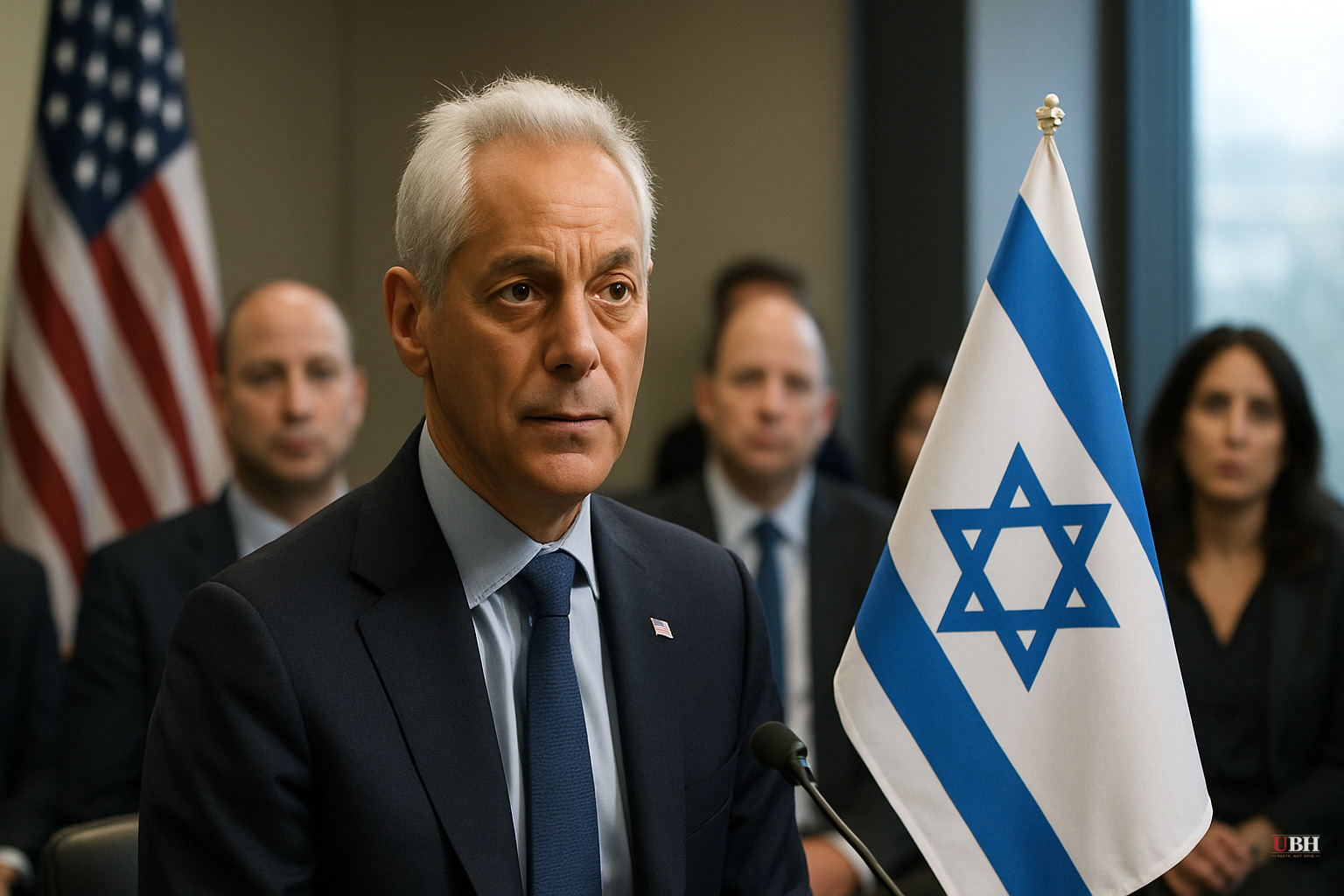
Rahm Israel Emanuel, former Chicago mayor, former Obama White House Chief of Staff, and former U.S. Ambassador to Japan, is among them. The Jewish Journal reports that Emanuel's middle name is, literally, Israel — his father was born in Jerusalem, and he volunteered with the IDF during the 1991 Gulf War. He is aggressively centrist and, per the Jewish Journal, "fiercely Zionist."
Alongside him: Governor Jared Polis of Colorado, Governor J.B. Pritzker of Illinois, and Governor Josh Shapiro of Pennsylvania. All four are Jewish. All four describe themselves as supporters of Israel. All four are, to varying degrees, considering a presidential run in a primary where the base has been pulling hard in the opposite direction.
Pritzker and Polis are the most progressive of the group and best positioned to appeal to the Democratic base on domestic issues. Emanuel and Shapiro skew more centrist and are most likely to attract moderates and independents in a general election, according to the Jewish Journal's analysis.
Zionist in a Party Moving Away From Zionism
The Washington Post's Daniel Samet, a fellow at the American Enterprise Institute, notes that potential Democratic candidates have been "lambasting Israel" well before the 2028 primary season formally begins. This comes while Israel is fighting alongside the United States against Iran.
The Jewish Journal frames the political math bluntly: being "aggressively centrist, fiercely Zionist and proudly Jewish" are "currently all considerable obstacles" in the Democratic primary.
Emanuel and Shapiro have been the most vocal in criticizing Israeli Prime Minister Benjamin Netanyahu specifically, while still backing Israel's right to defend itself. That distinction matters. Criticizing Netanyahu's conduct of the war is a very different position from opposing Israel's existence or its military operations categorically. In a primary electorate where the lines have blurred, it may not provide enough cover.
Shapiro has made his Jewish identity central to his political persona, citing weekly Shabbat dinners in campaign speeches and pointing to an antisemitic attack on the Pennsylvania governor's mansion as a defining moment. Pritzker and Polis discuss their Judaism less publicly but have not distanced themselves from it.
The Strongest Counterargument
There is a serious case that the Democratic base's shift on Israel reflects legitimate foreign policy concerns, not antisemitism. Critics of Israel's military campaign in Gaza, including many Jewish voters, argue that civilian casualties, humanitarian conditions, and the conduct of the Netanyahu government are valid grounds for reassessing U.S. support. They contend that equating opposition to Israeli government policy with opposition to Jewish candidates is itself a form of conflation that distorts the debate. A candidate who criticizes Netanyahu's tactics while affirming Israel's security could represent a coherent and broadly held Democratic position.
That argument deserves to be taken seriously. Emanuel and Shapiro are in fact threading that needle — criticizing Netanyahu while remaining Zionist. Whether that position satisfies a base that has moved further is the open question.
Historical Parallel That Actually Holds
The Jewish Journal draws a historical comparison worth examining. Al Smith faced virulent anti-Catholic bigotry in 1928. John F. Kennedy was forced to publicly address whether his faith would override his governance in 1960. Both ultimately faced a version of the same question: can a candidate's religion be separated from their fitness to govern?
For these four candidates, the question is inverted. It is not whether Jewish voters will accept a Jewish president. It is whether a Democratic primary electorate that has grown increasingly hostile to Israel will penalize candidates who refuse to perform hostility toward it.
What the 2028 Math Looks Like
No polling specific to these four candidates in a head-to-head primary exists yet, and no formal campaigns have launched. But the ideological positioning is already locked in. Pritzker and Polis are chasing the progressive base. Emanuel and Shapiro are betting on a lane that assumes the Democratic Party has not permanently abandoned the center.
That bet carries real risk. The party's base in 2028 primaries will not be the same coalition that nominated Biden in 2020. The Israel-Gaza conflict has accelerated a generational shift among younger Democratic voters that was already underway.
Whether any of these four can assemble a coalition that wins a Democratic primary without either abandoning their stated convictions on Israel or watching those convictions become a primary disqualifier remains to be seen when actual voting begins.
Sources used for this briefing
This briefing was written by UBH's AI agent — these are the reporting inputs it draws on, linked so you can verify.


