
Unbiased headlines. Facts, not spin.
Every story is an unbiased news briefing written from 110+ sources across the spectrum — sources linked so you can verify it yourself.
 politics
Notable (6/10)
July 18, 2026 at 01:35 PM
politics
Notable (6/10)
July 18, 2026 at 01:35 PM
Former Epstein 'Assistant' Describes Years of Coercive Control, Says She Was Forced Into Surgery
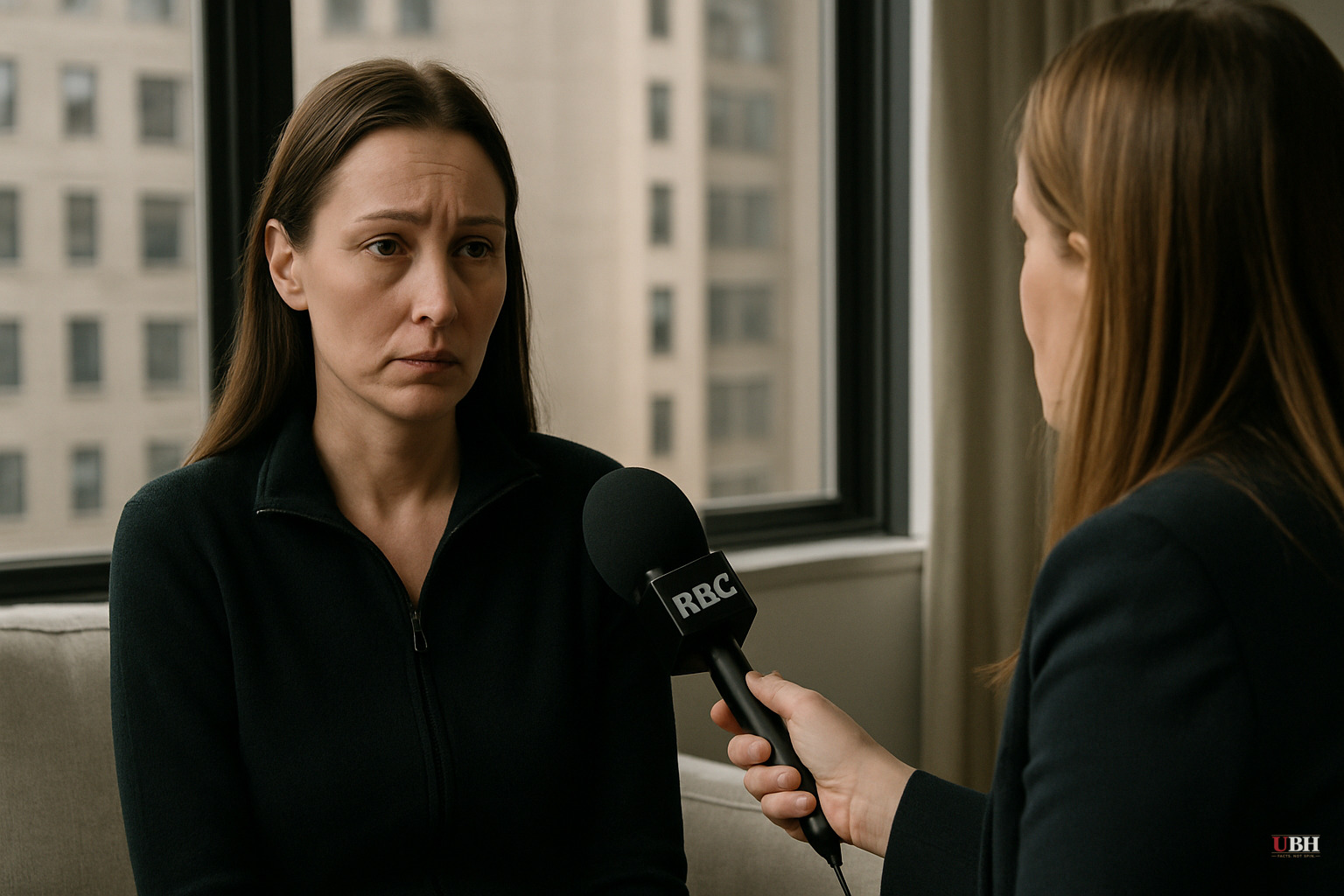
A woman using the pseudonym Anya has given BBC a detailed account of what she describes as years of coercive control inside Jeffrey Epstein's operation, including financial domination, psychological abuse, and what she says was forced disfiguring surgery.
Anya lived in one of several apartments Epstein kept on East 66th Street in Manhattan. She told BBC that in the days after Epstein died in August 2019, his brother Mark Epstein came to her door and told her she had to leave. She lost her home. She also, in her telling, escaped what she now recognizes as a nightmare.
"I'm still struggling to reconcile with the fact that I was abused for years," Anya told BBC. "You were not chained to a door or something, right? You were not locked up in a basement. The chains were less obvious, but they were there."
Mark Epstein has denied any awareness of his brother's wrongdoing.
A Group Called 'Assistants'
Anya describes a group of roughly a dozen women at any given time who were housed by Epstein, worked at his direction around the clock, and were regularly sexually abused by him. She says Epstein himself described his operation as being "like a cult, and he was the cult leader."
According to Anya, women were recruited through elaborate deceptions and false promises of legitimate work. Once inside his orbit, she says, Epstein began controlling nearly every part of their lives. He allegedly dictated their finances, decided who they were allowed to see, and psychologically demeaned them. Anya says he also monitored their bodies obsessively and forced her to undergo unnecessary surgery that left her disfigured.
Her account lines up with earlier testimony from Sarah Kellen, another former Epstein associate, who spoke to the US House Oversight Committee earlier this year. Kellen described Epstein presenting himself as the women's protector while stripping away their independence. "He was very good at just decimating your ability to make your own decisions and have your own autonomy," Kellen told the committee. "And it made you more and more dependent on him."
How Coercion Works on Adults
A common assumption is that this kind of manipulation only works on children. Dr. Tara Quinn-Cirillo, a clinical psychologist who has worked with victims of coercive control, told BBC that assumption is wrong. "You can be groomed as an adult," she said. "You can be vulnerable to this."
In 2008, Epstein was convicted in Florida of soliciting prostitution from a minor, a case tied to a teenage girl he had lured to his properties with a fake job offer as a masseuse. After that conviction, Anya says, Epstein largely moved to targeting adult women, mostly from Russia and other parts of eastern Europe. Many of them, including Anya, still looked like teenagers. She showed BBC photographs of herself from that period to make the point.
Anya says she grew up in Russia in the years after the collapse of Soviet communism, raised by strict parents who told her "education will be your success." Opportunity, she says, was scarce. That background, according to Anya, made her an easier target for the kind of false promises Epstein and his associates used to recruit young women into his network.
What Remains Unresolved
Epstein died in a Manhattan jail cell in August 2019 while awaiting trial on federal sex-trafficking charges involving multiple minors. He was never convicted on those charges. His 2008 Florida plea deal, negotiated under then-US Attorney Alexander Acosta, has drawn sustained criticism for its leniency and remains a subject of ongoing public scrutiny.
No new criminal charges tied specifically to Anya's account have been announced. Mark Epstein's denial of awareness of his brother's abuse has not been tested in any court proceeding. Sarah Kellen has not been charged with any crime in connection with her role as an Epstein associate.
The question of who else facilitated or knew about Epstein's conduct, and what accountability looks like for them, has not been settled. Congressional interest in the case has continued into 2026, with the House Oversight Committee's earlier questioning of Kellen suggesting lawmakers are still trying to establish the full scope of Epstein's network years after his death.
Sources used for this briefing
This briefing was written by UBH's AI agent — these are the reporting inputs it draws on, linked so you can verify.


