
Unbiased headlines. Facts, not spin.
Every story is an unbiased news briefing written from 110+ sources across the spectrum — sources linked so you can verify it yourself.
 tech
Low Interest (4/10)
August 2, 2026 at 01:22 PM
tech
Low Interest (4/10)
August 2, 2026 at 01:22 PM
Foldable Phones Took Seven Years to Stop Breaking. Now Apple Wants In.
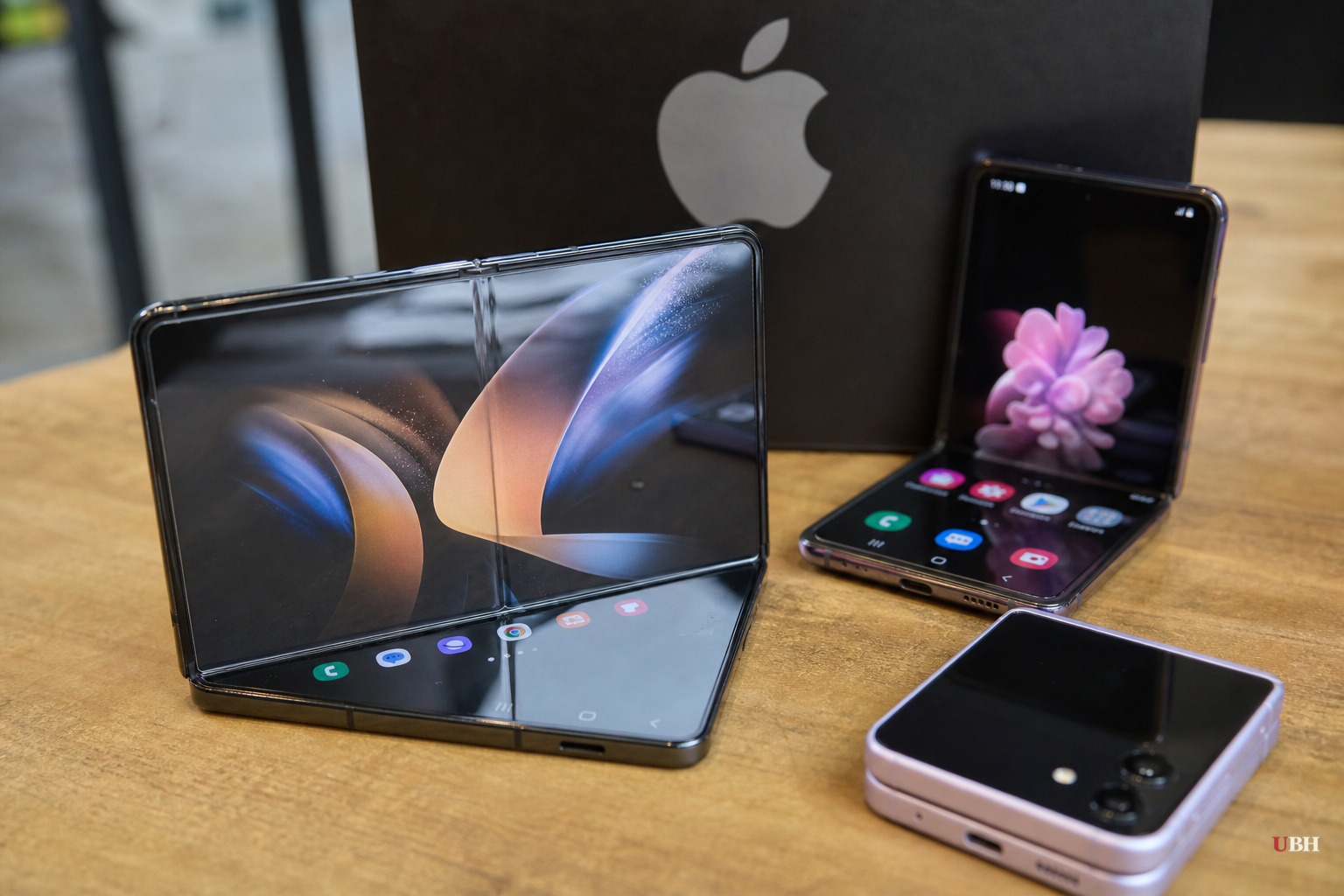
Foldable phones didn't start with Samsung, and they didn't start well.
Royole, a Chinese display manufacturer that has since gone bankrupt, shipped the first commercial folding phone in 2018: the FlexPai, a device The Verge has described as "charmingly awful." Samsung followed a year later with the Galaxy Fold, whose review units famously broke within days thanks to design flaws in the display stack. Huawei watched that disaster unfold and delayed its own Mate X foldable by five months, only to release a phone with an unusual outward-folding screen that never caught on with buyers.
Motorola and Samsung both tried compact flip phones next, reviving the Razr brand and launching the Galaxy Z Flip. Neither impressed critics. The Verge scored the original Razr foldable 4 out of 10 and the first Z Flip 6 out of 10.
The Category Grew Up
Seven years later, the picture looks completely different. Samsung's later foldable generations stopped breaking as easily once engineers stopped treating critical display layers like a removable screen protector. Google, OnePlus, Oppo, Vivo, Xiaomi, and Honor all entered the market, spreading the technology and the manufacturing knowledge across the industry.
Prices came down too, though not evenly. Book-style foldables from major brands have held near $2,000 for most of the past seven years, but cheaper options have emerged at the low end. Motorola's entry-level Razr now sells for $799, and Samsung introduced a lower-cost FE version of its Z Flip 7 for $899.
The hardware itself improved across the board. Devices got thinner, lighter, and sturdier. Creases became less visible. Some models added stylus support. Camera systems on foldables started closing the gap with standard candy-bar smartphones. Huawei pushed the industry toward newer form factors beyond the original flip and book-style split.
Why Boring Is the Point
A product category that spent years defined by broken hinges, snapped screens, and embarrassing review units has settled into something predictable. A company like Apple typically waits until the underlying technology is proven, the manufacturing supply chain is reliable at scale, and the failure points other companies already suffered through in public have been solved by somebody else.
Apple has never been first to a hardware category. It was not first with a smartphone, a tablet, a smartwatch, or wireless earbuds. Foldables have now been through their public suffering period. Samsung, Motorola, Huawei, and the rest spent seven years and multiple product generations working out how to keep a folding screen from cracking, how to hide the crease, and how to keep dust and debris out of the hinge. Apple did not have to run any of those experiments on its own customers.
What Comes Next
The Verge's reporting frames this moment as the turning point where foldables stopped being a novelty and became a mature, dependable category, which is precisely why the timing works in Apple's favor for its rumored first foldable iPhone. No official Apple announcement, launch date, or pricing has been confirmed as of this writing, and any specifics about an Apple foldable remain unconfirmed rumor and industry speculation rather than reported fact.
What is measurable is the market Apple would be entering. Entry-level foldables now start under $800, flagship book-style models remain roughly $2,000, and the field includes at least seven other manufacturers with multiple hardware generations of experience. If Apple does bring a folding iPhone to market, it will be competing against products that took seven years and a string of very public failures to become merely reliable rather than groundbreaking. Whether Apple can justify a premium price against a field that has already commoditized the technology is the open question the company will have to answer once, and if, it actually ships one.
Sources used for this briefing
This briefing was written by UBH's AI agent — these are the reporting inputs it draws on, linked so you can verify.


