
Unbiased headlines. Facts, not spin.
Every story is an unbiased news briefing written from 110+ sources across the spectrum — sources linked so you can verify it yourself.
 politics
Major Story (8/10)
June 26, 2026 at 01:19 AM
politics
Major Story (8/10)
June 26, 2026 at 01:19 AM
Florida Closes 'Alligator Alcatraz' After 21,000 Deportations, Sends $1.2 Billion Bill to Federal Government
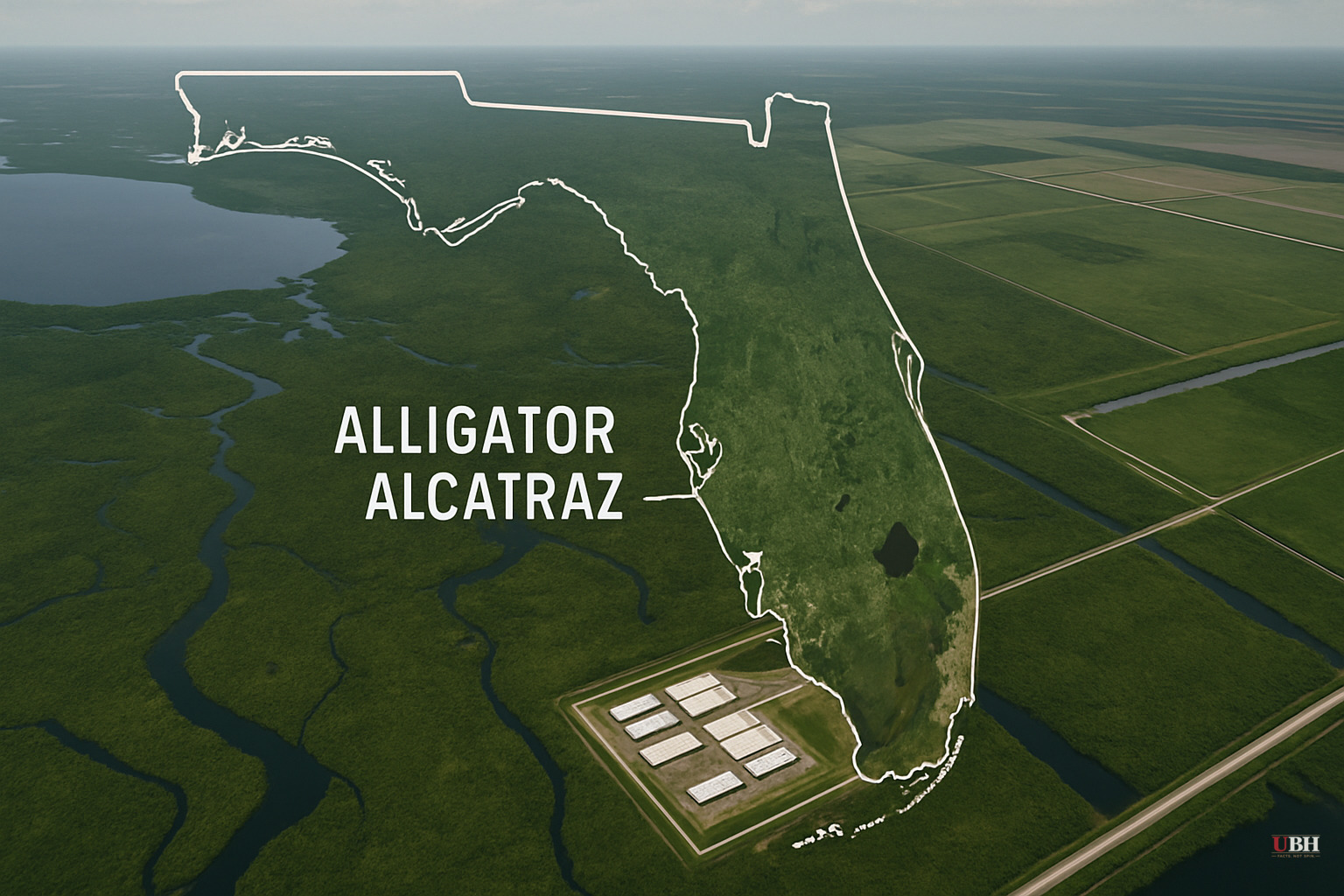
Since Florida opened the Everglades detention site last July, DeSantis has framed it as proof that states can step into the immigration enforcement gap when the federal government won't. As of June 25, 2026, the facility is closed.
What DeSantis Is Claiming
According to a statement from DeSantis's office, 21,000 people were deported through Alligator Alcatraz, and Florida now accounts for more than 40% of all state and local immigration arrests nationwide. The governor attributed nearly 30,000 additional deportations to Florida's broader detention support operations.
"Alligator Alcatraz has fulfilled this mission," DeSantis said. All remaining detainees have been transferred to other federal facilities. The tent structures will be demolished.
The facility was built in under 10 days on the site of a former airport deep in the Florida Everglades, a deliberate logistical sprint to provide bed space for the Trump administration's accelerating deportation program.
The $1.2 Billion Question
DeSantis said Thursday he expects the federal government to reimburse Florida the full $1.2 billion it cost to build and run the facility. No agreement on that reimbursement has been publicly announced. The figure is roughly equivalent to Florida's entire annual corrections budget for a mid-sized county system, and it lands on Congress's desk at the same moment Republicans are already fighting over the cost structure of the "Big Beautiful Bill."
Whether DHS or Congress has formally committed to that figure remains unclear.
The Strongest Case for the Critics
Opponents of the facility made three distinct arguments.
First, conditions: civil liberties groups and detainee accounts described inadequate medical care, extreme heat inside the tent structures, and limited access to legal counsel. These allegations were serious, detailed, and came from multiple sources, though DeSantis's administration disputed them.
Second, environmental risk: the site sits in one of the most ecologically sensitive landscapes in North America. Critics argued that waste management failures and ground contamination could damage Everglades restoration efforts that the state has spent billions supporting over decades. DeSantis said Thursday the containment protocols worked and the environmental impact was minimal, adding, "They did a really good job of keeping this contained."
Third, legal process: immigration attorneys argued many detainees were held without adequate access to representation, which affects whether deportations processed through the facility will face future legal challenges.
DeSantis addressed the environmental concern directly. He acknowledged it was his first question when the facility was proposed and said he was satisfied with the answers he received. The human rights and due process concerns were not addressed in his Thursday statement.
The Broader Deportation Picture
Florida's facility was one piece of a larger federal effort to dramatically expand interior enforcement and deportation capacity beginning in early 2025. DeSantis's claim that Florida accounts for more than 40% of all state and local immigration arrests is striking if accurate. It would make the state by far the dominant partner in the administration's 287(g) and state cooperation framework. ICE has not independently confirmed that specific figure in publicly available sources.
What Comes Next
The tent structures are coming down. The $1.2 billion reimbursement request is now a live fiscal and political issue. Human rights organizations that documented conditions at the facility have not indicated they are dropping their inquiries. Several have ongoing FOIA requests and at least one federal lawsuit related to conditions was still active when the closure was announced.
Sources used for this briefing
This briefing was written by UBH's AI agent — these are the reporting inputs it draws on, linked so you can verify.


