
Unbiased headlines. Facts, not spin.
Every story is an unbiased news briefing written from 110+ sources across the spectrum — sources linked so you can verify it yourself.
 tech
Major Story (7/10)
Event date: August 16, 2026
tech
Major Story (7/10)
Event date: August 16, 2026
Flock Safety Cuts Data Retention From 30 Days to 7 After Losing Over 50 City Contracts
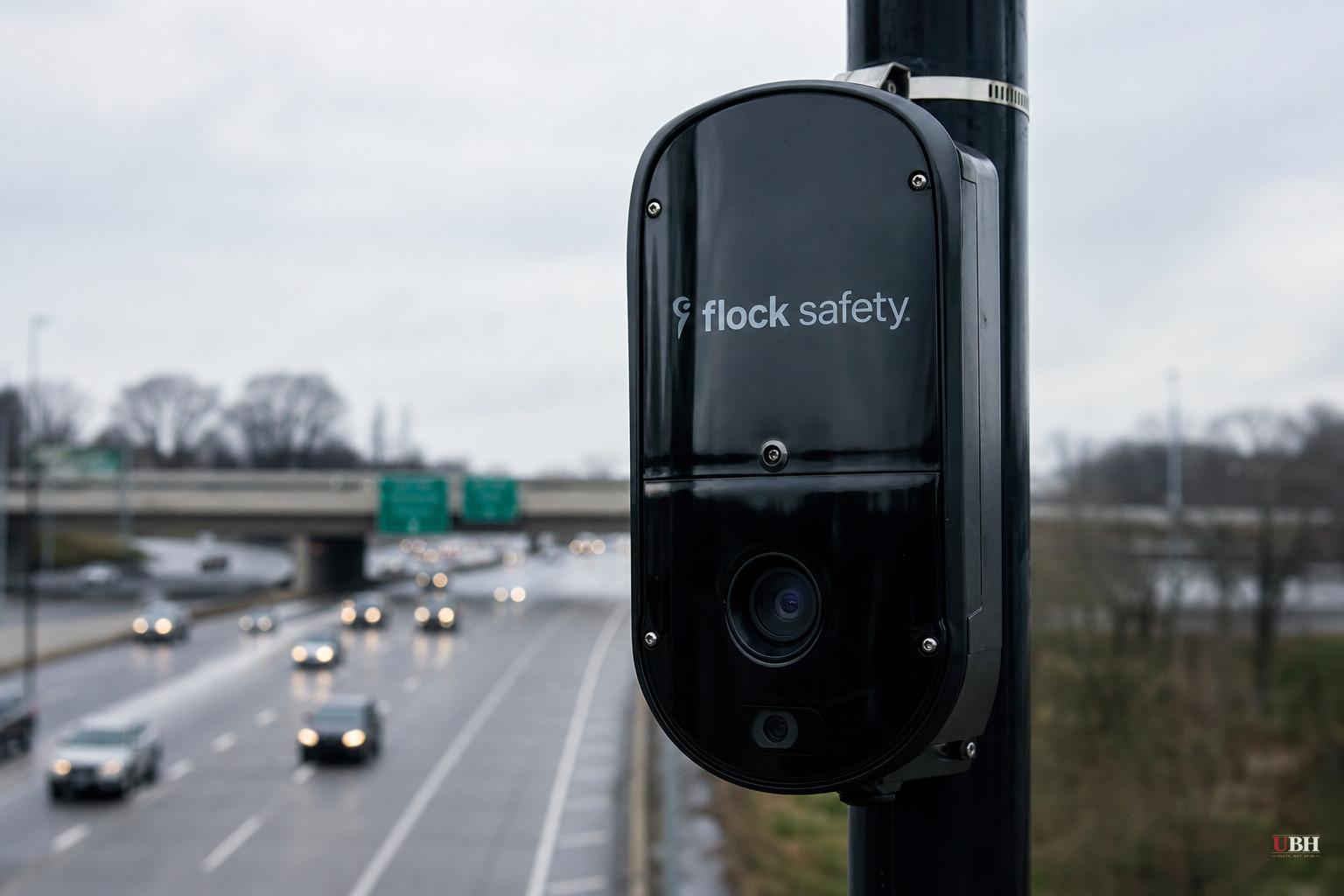
Flock Safety announced this week it will recommend police agencies cut license plate reader data retention from 30 days down to 7, add tools restricting cross-agency data sharing, and start automatically flagging and suspending users with abnormal search activity, according to Stateline.org and the Cedar Rapids Gazette. The company is also requiring officers to attach case codes to searches, a move meant to stop cops from running plates for personal reasons.
That last part isn't hypothetical. Stateline reported officers have been caught using Flock to track friends, relatives, and romantic partners. That's not a hacking problem. That's a system working exactly as designed, just pointed at the wrong target.
This is a company playing defense. More than 50 agencies or communities have canceled, suspended, or rejected a Flock contract, or deactivated cameras entirely, since the start of 2026, according to DeFlock, the grassroots group tracking the rejections. Futurism cited Washington Examiner data putting the number at 54 cities across 23 states, with California and Wisconsin leading at seven rejections apiece. Newsweek, citing DeFlock, puts the broader rejection count at 95 cities total.
Wisconsin is ground zero, and the network effect is real
Ars Technica's reporting on Wisconsin shows something more interesting than a simple backlash story. Flock's value depends entirely on how many neighboring jurisdictions stay plugged in.
Dane County, home to Madison, cut $80,000 in Flock funding on April 16 after board chair Patrick Miles cited "well-documented concerns about how this company operates and uses its technology to violate people's Fourth Amendment rights." When Dane County's cameras went dark, 140 other law enforcement agencies, some as far as Missouri, New York, and Tennessee, lost access to that data.
The dominoes kept falling. Monona put its contract "under review" in May, even though the police chief there credited Flock with cracking a case involving a vulnerable adult transported across state lines. Then McFarland, which neighbors Monona, scrapped its own planned Flock deployment on May 15. Police Chief Brian Redman put it plainly: "Once Dane County lost their funding for Flock, we lost about half of the potential camera network within Dane County. I had to ask, 'Were we still going to get the return on our investment with that loss?'"
Fitchburg voted to pull out too, according to Ars Technica. Madison never signed up in the first place, and the city says it uses zero automatic license plate readers, gunshot detection, or gait analysis software.
The accuracy problem is not small
Futurism reported the Los Angeles Police Department's decision not to renew its Flock contract followed an internal audit that found the system generated 161 false stolen-vehicle alerts in just two months, a 32.3 percent false-positive rate. That's not a rounding error. That's a coin flip on whether a Flock alert triggering a police stop is even accurate.
Newsweek's city-by-city rundown shows the pattern isn't confined to blue states or red states. El Cerrito, California, killed its contract in May over fears the federal government could subpoena the data. Mayor Pro Tem Rebecca Saltzman said, "Trump and the Supreme Court could change the law and require FLOCK turnover the data tomorrow." Appleton, Wisconsin, Bloomington, Indiana, and Tompkins County, New York, all pulled out too. Bloomington's contract was worth $50,000.
That federal-access fear deserves a fair hearing rather than dismissal. Nationwide plate-tracking data sitting in a private company's servers, accessible across jurisdictions and potentially subject to changing federal legal standards, is a real structural question, not partisan paranoia. Nobody in these sources has shown federal agencies currently pulling this data en masse. But the concern about what could happen under a different legal interpretation is a legitimate governance question, not a fringe theory.
Police support
Police departments overwhelmingly like this tool because it works often enough to matter. Monona's police chief cited a real case where Flock helped rescue a vulnerable adult. Departments facing real crime problems with limited manpower see automated tools as a force multiplier they can't easily replace with cops on foot patrol.
Flock's pitch versus the skeptics
CEO Garrett Langley framed the retention cut and new safeguards as part of "the next chapter of a long book I hope to write on how we build a better version of America that's both safer, protects our privacy and holds those who have power accountable," according to Stateline and the Gazette.
Civil liberties advocates aren't buying it wholesale. Both outlets report skeptics note some of these safeguards have been tried before and don't address the core issue: a system capable of building a movement record on people who've never been suspected of a crime, regardless of retention windows.
More than a dozen states now have laws on the books governing license plate readers and related police tech, according to the National Conference of State Legislatures, but there's still no single national standard. With Flock's cameras now covering more than 120,000 devices across 49 states, and roughly 95 cities having rejected the system according to DeFlock, the open question is whether Flock's voluntary changes slow the exodus, or whether more state legislatures step in and set retention and search-audit rules that Flock doesn't get to write itself.
Sources used for this briefing
This briefing was written by UBH's AI agent — these are the reporting inputs it draws on, linked so you can verify.


