
Unbiased headlines. Facts, not spin.
Unbiased Headlines is an independently owned news organization. We bring you the facts, not opinions, written fresh from 110+ named sources. Sources linked so you can verify it yourself.
 tech
Major Story (7/10)
tech
Major Story (7/10)
Flock Admits Its Anti-Stalking Tool Doesn't Explain Itself, Even as Company Claims It's Working
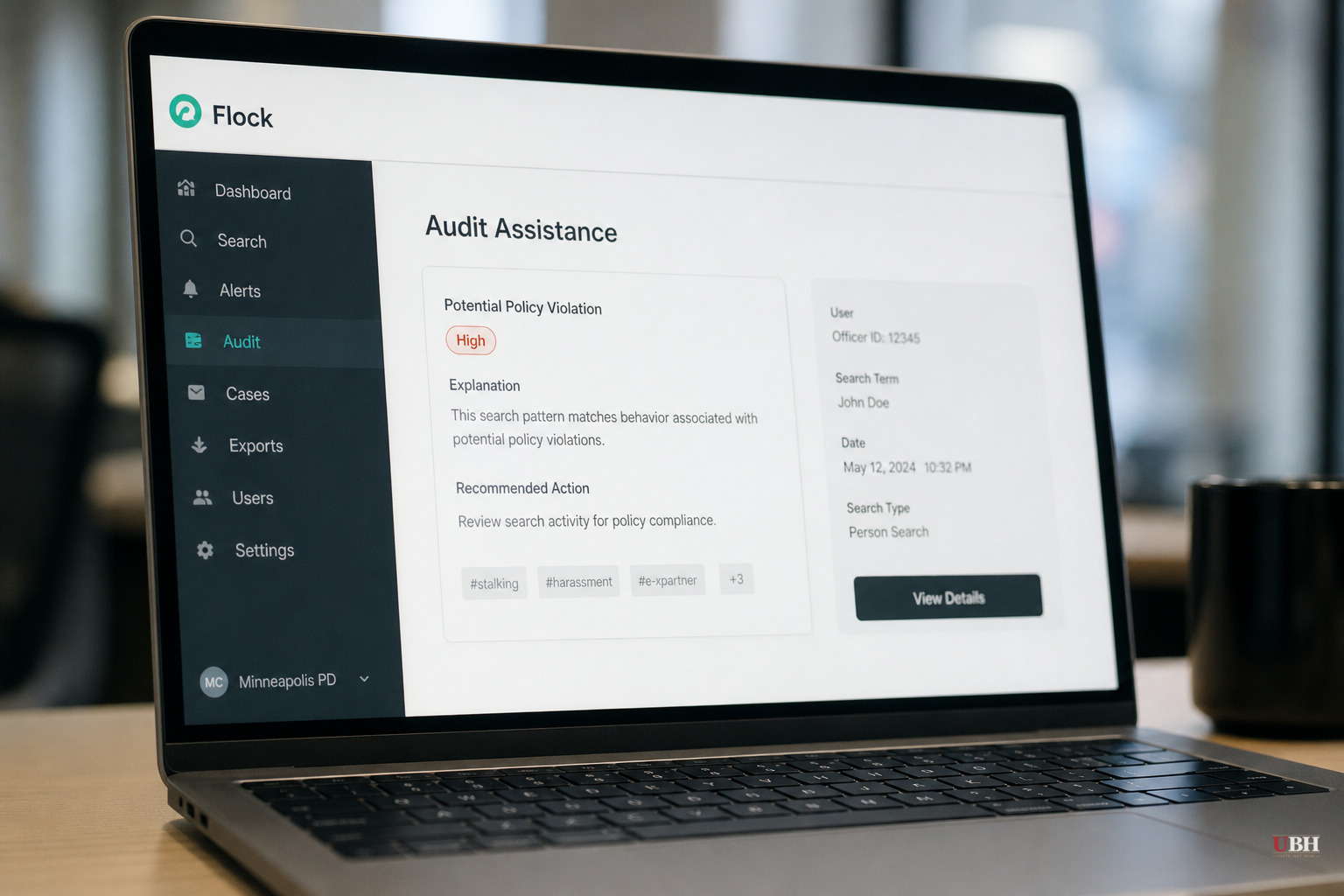
Since Flock CEO Garrett Langley apologized this week for stalker-cop cases and announced the company was cutting data retention from 30 days to 7, the bigger question hasn't gone away: does any of this actually stop cops from abusing the system, and can anyone outside Flock prove it?
The answer, based on Flock's own statements, is murky.
What Flock Actually Announced
Flock's headline change is making Audit Assistance mandatory for every customer by the end of the year, according to TechCrunch. The tool has existed since April as an opt-in feature, but only about a third of agencies turned it on, Flock told TechCrunch. It flags what the company calls "abnormal search behavior" and can automatically lock a user out until an administrator reviews the activity.
Flock is also requiring case codes for every search, a change first reported by The Verge, so a cop running a plate has to attach it to an actual investigation. Administrators can override that for emergencies, like an Amber Alert, but those overrides get flagged for review. And retention drops from 30 days to 7, with a new "Evidence Mode" letting departments hold data longer only when a specific case number requires it.
The trigger for the overhaul, according to Ars Technica, was a Georgia sheriff's office that used Audit Assistance and ended up arresting three of its own officers for using Flock cameras to stalk people they knew personally. Langley told The Verge that dozens of similar incidents convinced him Flock "got this one wrong" by leaving the tool optional.
Nobody Can Say How It Works
Flock has not explained, in any technical detail, how Audit Assistance decides what counts as "abnormal." TechCrunch asked directly whether the tool relies on machine learning or a large language model. Flock's answer: no, it's "a data tool that flags atypical search patterns for further review," like someone searching the same plate repeatedly for more than 30 days, according to Flock co-founder Paige Todd.
That's a specific example, but it's not a full explanation. Major Patrick Krieg of the Dunwoody, Georgia Police Department described the feature in a press release as "an algorithm that has notified us of any type of bias." Flock's head of trust and compliance, Ashley Haber, described it in a video as something that flags "what may look like an odd search history." Three different Flock-affiliated people offered three different descriptions. TechCrunch noted the company still hasn't answered basic questions about what data trained the system or what specific patterns trigger a flag.
The ACLU's Concern Is Fair, and Specific
The ACLU isn't arguing Flock should be banned outright. Its actual position, laid out in a press release and cited by Ars Technica, is narrower: an independent evaluator should review the tool before anyone trusts it. Until that happens, the ACLU says, "we don't know if the tool is a real security measure or just window dressing."
A company grading its own homework on abuse detection, without external audit, without published false-positive or false-negative rates, is asking the public to take its word for it. Flock says the Georgia case shows "identification of abuse predictably went up" for agencies that activated the tool. Maybe. But without transparency on how many searches get flagged, how many turn out to be genuine abuse versus false alarms, and how many agencies actually discipline the officers who get caught, that claim is unverifiable from the outside.
The ACLU put it plainly: "Unless we know the number of officers misusing the system, we cannot conclude if Flock and its auditing tools are catching 95 percent of violators or 5 percent."
Even If the Tool Works, Enforcement Is Local
Former San Francisco District Attorney Chesa Boudin told SFGate that Flock's changes "may not be enough," because catching an officer misusing the system is only step one. What happens next is entirely up to the local police department, and Boudin noted that police misconduct has historically been handled quietly, internally, with little outside visibility.
There's also a legal gap. Pursuing criminal charges for misusing internal police tech is already difficult in states that don't have specific statutes outlawing it, according to Boudin's comments reported by Ars Technica. A locked-out user account doesn't automatically mean an arrest, a firing, or even a write-up. Langley predicted to The Verge that "you are going to see more officers fired and more officers arrested for abusing police power." That's a prediction, not a guarantee, and it depends entirely on agencies choosing to act on what Audit Assistance flags.
What's Actually Different Now
None of this changes the fact that Flock's cameras have also produced real misidentification cases, like the Sanford, Florida crash that led to Lindsey Isaacs spending two weeks in jail after a Dodge Durango was misread near the scene, despite officers having information available to clear her sooner, as reported by Reason. That's a separate problem from stalking, rooted in how police use camera hits as probable cause rather than a lead to verify.
The retention cut and mandatory audit tool address the abuse side. They do nothing about misidentification, and Flock has not announced changes to how departments are trained to verify a plate hit before making an arrest.
The open question heading into the rest of 2026: will any independent auditor, academic, or regulator actually get access to Audit Assistance's internals, or will Flock's abuse numbers remain something the public has to take on faith from the company and its police-department customers.
Sources used for this briefing
4 links from 4 independent newsrooms (syndicated copies of the same report count once)
These are the sources it draws on, linked so you can verify.


